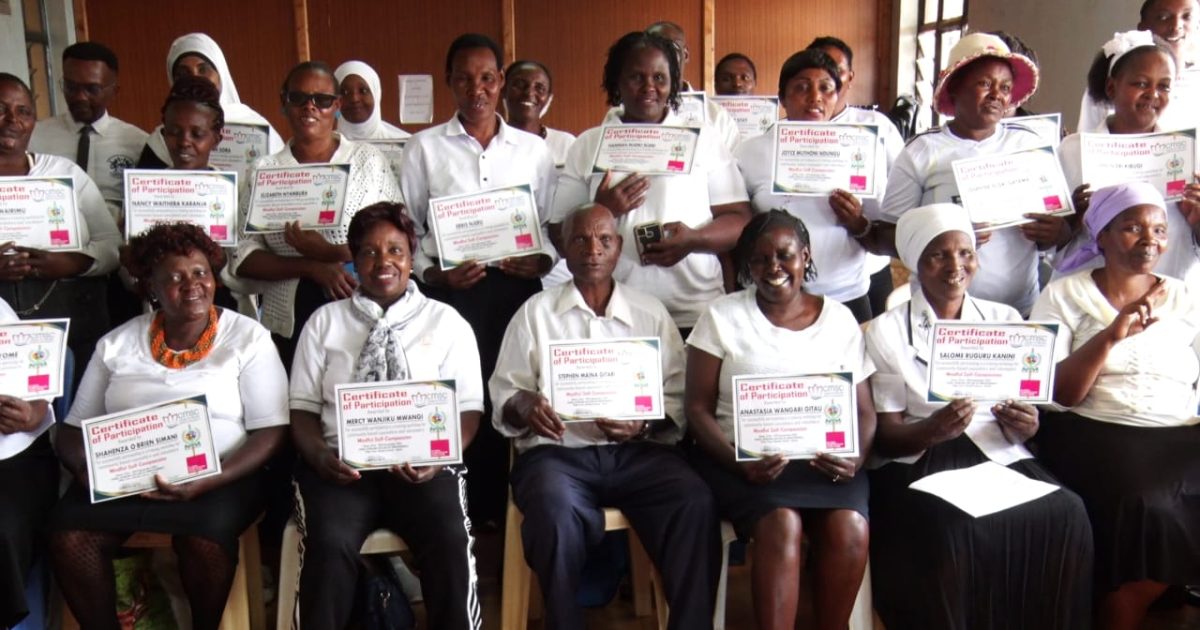
The mounting mental health crisis in the country has received a major boost after 32 newly trained community-based counselors graduated in Thika and are expected to bring psychological support to the grassroots.
The graduates, led by Ernest Ndung’u and Perpetual Wanjiku, who completed a three-month “Mindful Self-Compassion” course at Africana College, said they are ready to work with community members grappling with depression, trauma and substance abuse.
“With this course, we can be there for people struggling with economic pressure, family issues and other social problems,” said Ndung’u.
Speaking after the graduation, the counselors called on the government to back their efforts with financial support, stressing that mental health services remain scarce in many parts of the country.
“We ask the government to stand with us and provide a platform to reach more people in need,” Wanjiku urged.
Africana College Director and Counseling Psychologist Dr. Susan Gitau said the new cohort of counselors will provide a boost to the country’s fight against depression.
Dr. Gitau said the graduates have already worked with victims of depression and intervened in cases of substance abuse, sexual violence, and child exploitation, often making referrals to chiefs or police where psychiatric or legal action was required.
She explained that depression often goes untreated at the grassroots due to stigma, lack of awareness, and limited access to professionals.
The Director, who is also a renowned psychologist in the country, said community-based counsellors can bridge this gap by offering immediate support and connecting victims to proper treatment before their conditions worsen.
She further stressed that early intervention remains critical; thus, training local counsellors gives communities a trusted first line of defense against escalating crises such as suicide and family breakdowns.
“These counsellors are volunteers who have shown they can transform lives, but they need resources to sustain and expand their work,” Dr. Gitau emphasised.
She warned that without structured government support, the momentum could stall, leaving communities vulnerable.
Dr. Gitau further appealed for at least one counselling centre in every county or sub-county, arguing that such facilities would ease the burden on police and courts by resolving psychosocial problems early.
“If counties were to set up community counseling centers, we would see fewer cases of suicide, homicide and substance abuse,” she said.
By Kelvin Kathurima and Muoki Charles