Kenya’s push toward a green, youth-driven economic transformation took centre stage at the 2025 Annual Conference of the Economists Society of Kenya (ESK), which concluded this week in Mombasa.
The event, themed “The Kenya We Want”, spotlighted the Treeconomy Programme, a bold, bottom-up framework linking trees, communities, and innovation to national development.
In his closing address, Member of East African Legislative Assembly (EALA) Shahbal Said Suleima called on the Kenya Kwanza Government to allocate at least 1.5 percent of its annual budget to transformative, youth-led initiatives such as Treeconomy.
“When you empower the youth, you empower the future. Treeconomy is a prime example of how a people-centred model can industrialise agriculture, restore ecosystems, and create green jobs for millions,” said Mr Suleiman.
The model, which is spearheaded by the Director of Economic Planning and Patron of the programme under Elawnet Foundation and Consortium, Mr Lawrence Mwiti Muthamia, was presented as a blueprint for sustainable development.
Structured around four pillars including One Tree, One Life; (A grassroots tree-planting initiative supported by Eco-Schools, Eco-Hubs, and community nurseries), Eco-HOPE (Community mobilization anchored in values, faith, and moral stewardship), AfroAfrica Forest Alliance; (A continental collaboration platform aligning with AU Agenda 2063 to promote carbon markets, agroforestry, and green industrialization), and Eco-GDP, (Integrating green economy accounting into national planning using the SEEA–NCA framework and linking it to Kenya’s Kenmod fiscal model), the model integrates tree planting, education, community mobilization, and green economy metrics into Kenya’s planning architecture.
A key highlight was the launch of the Treeconomy agenda at Kiamweri Model Village in Meru County.
The pilot site features eco-schools, eco-hubs, and eco-nurseries, demonstrating how grassroots institutions can collaborate to green their environment while generating livelihoods.
Another pilot in the Turkana Basin is transforming drylands into productive ecosystems through tree planting, water harvesting, and climate-smart agriculture.
Suleiman illustrated the model’s potential through the honey value chain, noting that Kenya’s annual demand for honey stands at 100 metric tonnes, while local production meets only 17 metric tonnes.
“Every deficit in our economy is a disguised opportunity. We need to invest in modern beekeeping and forest management to close the gap and create thousands of rural jobs,” said Mr Suleiman.
The Treeconomy programme aligns with Kenya’s Vision 2030, the Bottom-Up Economic Transformation Agenda (BETA), and the 15 Billion Tree Campaign.
It also contributes to global frameworks including the Paris Agreement and the Sustainable Development Goals.
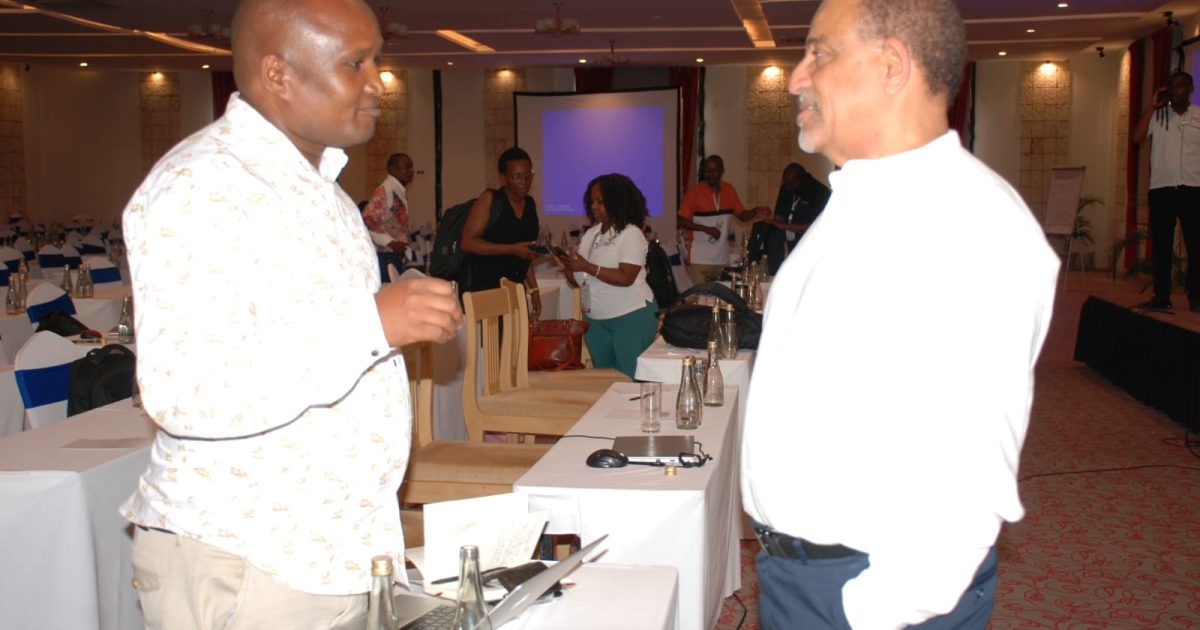
Following the conference, Mr Suleiman and Mr Muthamia pledged long-term collaboration to institutionalise the Treeconomy as a cornerstone of Kenya’s economic agenda.
“Treeconomy is a Kenyan idea, but it carries a global message. It must be scaled, supported, and institutionalised,” said Mr Suleiman.
Central to Treeconomy’s approach is the creation of a new green GDP metric that values forests, water, carbon, and biodiversity as national economic assets, a move Mr Muthamia said is vital to rethinking Kenya’s development indicators.
By Dickson Mwiti