East African Community (EAC) member states have endorsed a joint plan to strengthen maritime safety and curb pollution in Lake Victoria.
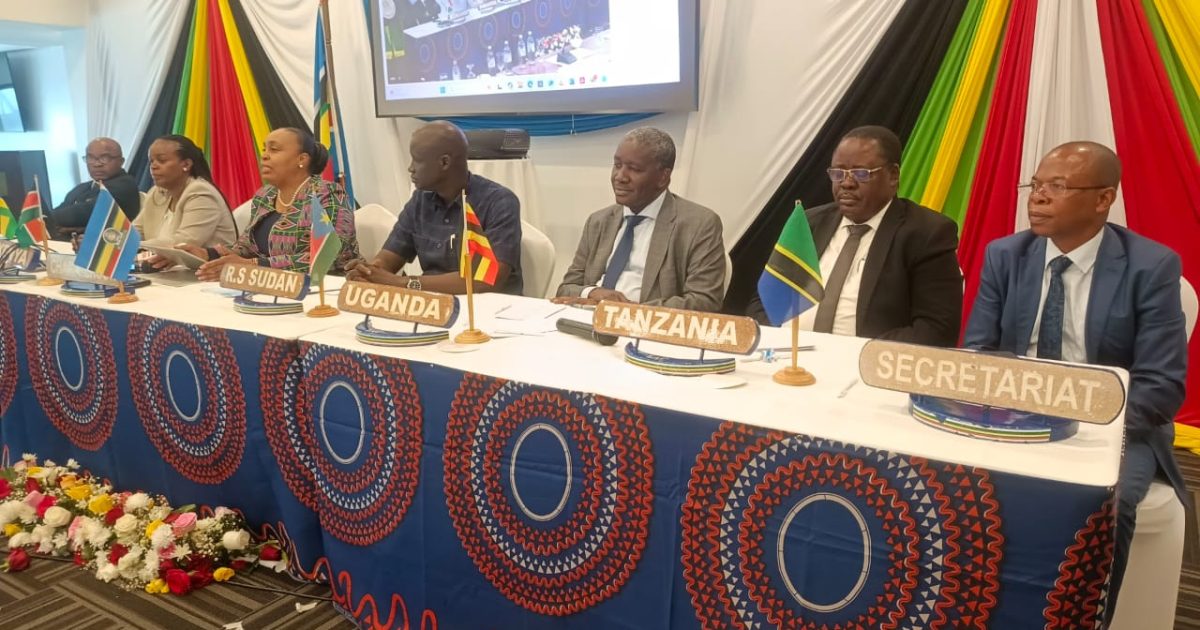
The resolution was reached during the first extraordinary council of ministers’ meeting of the Lake Victoria Basin Commission (LVBC) convened in Kisumu, where senior officials from partner states charted new measures to enhance safety, environmental protection, and sustainable use of the shared resource.
The meeting, chaired by Kenya’s Principal Secretary (PS) for East African Community (EAC) Dr. Caroline Karugu, on behalf of Cabinet Secretary Beatrice Askul, reached consensus on two key issues — the operationalization of the Lake Victoria Maritime Rescue Coordination Centre (MRCC) and the allocation of €15 million (Sh2.2 billion) from the Government of Germany through KFW Development Bank to support pollution control and environmental sustainability efforts across the basin.
Dr. Karugu said the initiative marks a major milestone in ensuring the safety of communities that depend on the lake for transport, trade, and livelihoods.
“According to the International Federation of Red Cross and Red Crescent Societies, we lose nearly 5,000 East Africans annually on Lake Victoria. One death is one too many especially when these are preventable. Our collective goal is to make Lake Victoria safe for transport, for our fishermen, and for all who depend on it,” she said.
The meeting attended by representatives of ministers from Kenya, Uganda, Tanzania, Rwanda, Burundi and South Sudan resolved that the main Maritime Rescue Coordination Centre will be headquartered in Mwanza, Tanzania, with two subsidiary centres in Kisumu, Kenya, and Entebbe, Uganda.
The centers will coordinate a network of 16 search and rescue stations—nine in Uganda, three in Tanzania, and four in Kenya to improve emergency response times and ensure faster rescue operations in the event of accidents and emergencies in the lake.
Dr. Karugu said that a toll free number has been secured adding that the partner states were engaging telecommunications operators in Kenya, Uganda and Tanzania to integrate it on their respective networks to aid in the search and rescue operations within the lake.
“The idea is that anyone navigating Lake Victoria should have a number to call and the assurance that help will come. We want the lake to be safe to spur economic growth,” she said.
The council also approved the use of €15 million (Sh2.2 billion) from Germany’s KFW Bank to implement measures aimed at reducing pollution, rehabilitating wetlands, and strengthening waste management systems around the lake.
LVBC Executive Secretary, Dr. Masinde Bwire, lauded the ministers for their decisive guidance, describing the resolutions as a new chapter for regional cooperation.
“Pollution remains one of the greatest threats to the lake’s survival. By allocating these funds to combat it, the partner states have taken a bold step towards reversing years of environmental degradation,” he said.
He added that the LVBC Secretariat has been directed to fast-track staffing and operational arrangements for the Mwanza centre to make it fully functional.
Uganda’s Permanent Secretary for Water and Environment, Mr. Alfred Okidi, who represented the Minister for Water and Environment, said the agreement underscored the essence of regional integration.
“Lake Victoria binds us, sustains us, and reminds us of our shared destiny. This project will not only improve safety on the lake but will also strengthen our management of water as a critical resource. Protecting it requires united action, and what we have witnessed in this meeting is exactly that,” he said.
He urged citizens across the basin to support pollution control efforts by adopting environmentally friendly practices and safeguarding water resources for future generations.
From South Sudan, Undersecretary for Water Resources and Irrigation, Achier Manyuat, termed the meeting as a model of regional cooperation, saying the safety of one partner state translates into safety for the entire community.
“The €15 million resource will benefit all of us, especially the three countries bordering the lake. The safety of one member state is the safety of all,” Manyuat said. “We deeply appreciate Kenya’s leadership and the chair’s moderation of this successful session.”
Rwanda’s representative, Glory Mbabazi, the Second Counsellor at the Rwandan High Commission in Nairobi, lauded the establishment of the maritime rescue centres as a historic milestone for the region.
“We have lost lives before, but this initiative brings renewed hope. It shows what we can achieve when we come together as East Africans. Integration gives us unity, social cohesion, and collective strength. This is a proud moment for the community,” she said.
Tanzania’s Deputy Permanent Secretary in the Ministry of Transport, Ludovick Nduhiye, reiterated his country’s commitment to hosting the regional rescue coordination centre in Mwanza.
He added that the government of Tanzania will second staff to the maritime center to ensure that operations kick off at the earliest opportunity possible.
“Tanzania welcomes the responsibility to host the MRCC and will ensure its full operationalization. Lake Victoria is central to our people’s livelihoods and trade. Strengthening safety and reducing pollution are priorities we share with all partner states,” he said.
by Chris Mahandara