Interior Cabinet Secretary (CS) Kipchumba Murkomen has commended residents of Kerio Valley for voluntarily surrendering illegal firearms, saying their cooperation marks a major step towards ending banditry and restoring lasting peace in the region.
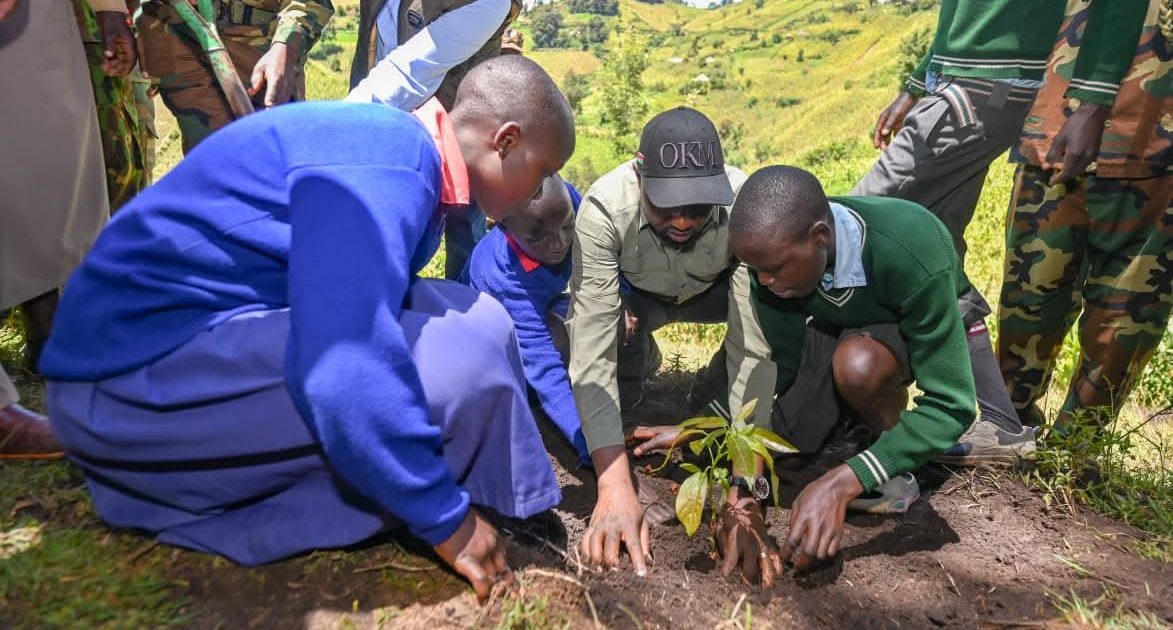
Speaking during the Mazingira Day tree planting held at Chawis Primary School in Embobut, Marakwet East Sub-county in Elgeyo Marakwet, Murkomen praised the residents for embracing peace efforts and responding positively to the government’s amnesty call.
“I take this opportunity to commend the residents of Kerio Valley for heeding our amnesty call and surrendering firearms. This is a significant boost to our ongoing efforts to eradicate banditry and enhance security in the North Rift,” said Murkomen.
He noted that the government’s strategy goes beyond disarmament, emphasising that sustainable peace requires a multi-sectoral approach, combining security operations, development initiatives, and community empowerment.
“As we roll out infrastructure development projects and empowerment programmes, I urge local leaders and communities to continue working with us to sustain these efforts and secure lasting peace in the region,” he stated.
The CS, who joined pupils from his former school, Chawis Primary School, and St. Michael’s Primary School in planting trees to mark the Day, also highlighted the link between environmental conservation and national security.
“Climate change poses an existential threat to our national security, peaceful co-existence, and human survival. We must take decisive action to restore our environment by growing enough trees to ensure ecological balance and resilience,” said Murkomen.
He reaffirmed the government’s commitment to achieving the ambitious target of planting 15 billion trees by 2032, terming it a vital step toward restoring degraded ecosystems and mitigating the impacts of climate change in fragile areas such as Kerio Valley.
“This initiative is not only about greening our environment but also about strengthening peace and security by reducing resource-based conflicts that arise from environmental degradation,” he explained.
By Rennish Okong’o