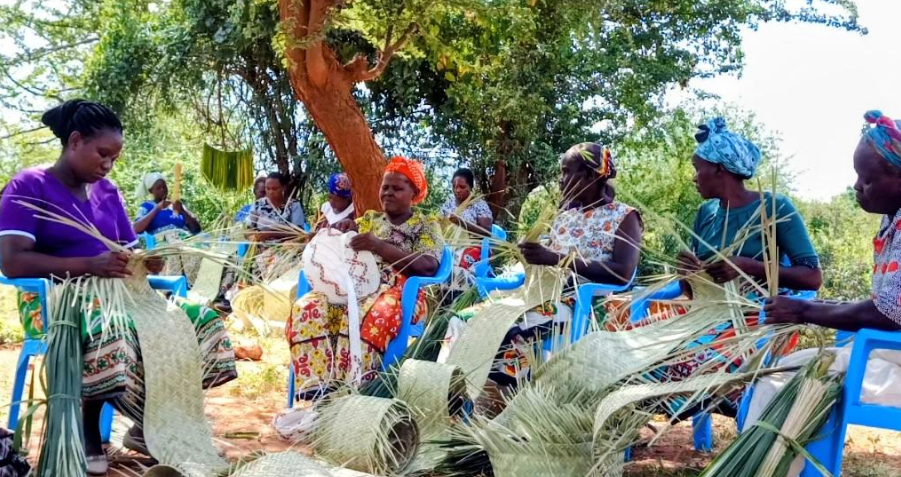
Women groups in Tharaka Nithi County involved in basket weaving and palm-reed products have received a major boost after the Kenya Forestry Research Institute (KEFRI) pledged support to help them improve their skills and access wider markets.
The weavers who hail from two community-based organizations (CBOs), Rwakinanga and Makomango in Marimanti Ward, said the weaving industry has for years failed to provide sustainable income despite the labor-intensive work involved.
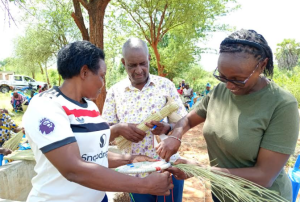
Speaking during a meeting held at Gituma Chief’s Camp, the women said low market demand and poor returns have discouraged many artisans from continuing with the traditional craft.
“We sometimes earn as little as Sh50 after spending many hours weaving baskets, mats and brooms. The income is too little to support our families,” said Mercy Kawira John, Chairlady of the two groups.
She added that the women still rely on traditional weaving styles and locally sourced materials such as sisal and reeds collected from forests, a process she described as exhausting and risky.
“We even get injuries while sourcing the raw materials, yet the products fetch very low prices because many people no longer value them,” she said.
KEFRI Research Officer Dr. Albert Ruvanda said the institution had identified the need to help the women improve product quality and value addition through training and partnerships with experienced stakeholders in the weaving industry.
“They are making very unique products and all they need is exposure and modern skills. We will organize workshops to help them improve designs and increase the value of their products,” said Dr Ruvanda.
He noted that improved product quality would enhance the competitiveness of the items in both local and international markets.
“Once value addition is achieved, it becomes easier to penetrate international markets because such handmade products are highly valued abroad,” he added.
Dr. Ruvanda cited communities such as those in Turkana County that have successfully formed cooperatives to access foreign markets and improve earnings from traditional crafts.
The women appealed to government agencies, private institutions and non-governmental organizations to support them through marketing and publicity initiatives to help preserve the weaving culture while improving their livelihoods.
KEFRI officials assured the groups of continued collaboration, aimed at reviving the weaving industry in the area through skills development and market linkages.
By Dickson Mwiti and Beatrice Mwende