The government has launched the Amboseli Irrigation Project in Meshenani village, Kajiado South Constituency to boost food security, improve livelihoods, and cushion residents against effects of climate change.
The Sh253 million water project seeks to promote irrigated agricultural enterprises, enhance the livestock value chain, and strengthen community resilience against drought through sustainable water management.
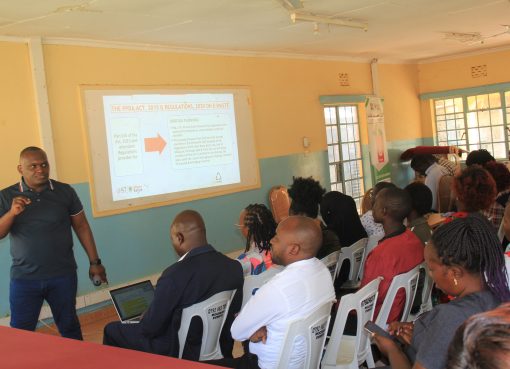
Speaking during the launch, Irrigation Principal Secretary Euphantus Kimotho noted that the initiative was part of the government’s plan to expand irrigation infrastructure in arid and semi-arid counties under the Bottom-Up Economic Transformation Agenda (BETA) on food security.
The PS revealed that the project has the potential to pump up to three million litres of water per day, benefitting over 5,000 residents and transforming agricultural productivity in the area.
“The launch of this project marks a major step towards sustainable water access and agricultural development in Amboseli. Once completed, it will empower the community economically and improve food security,” said Kimotho.
Kajiado South Member of Parliament Sakimba Parashina welcomed the initiative, saying it will significantly improve access to water for both domestic and agricultural use.
“The water project will change the lives of the residents of this area. Women have been walking long distances in search of water for domestic use, but that will be a thing of the past once the project is complete,” said Parashina.
For years, residents of Meshenani and neighbouring villages have faced acute water shortages forcing them to walk long distances in search of the commodity or buy a 20-litre jerrican of water at Sh50, a situation that has burdened many households financially.
Naomi Lemomo, a resident of Meshenani village, expressed optimism that the project will uplift the living standards of the community once operational. She said women in the area have been walking for several kilometres daily in search of water for domestic use and their livestock, a struggle that has persisted for years.
“We have suffered for so long without reliable water. This project gives us hope that we can finally have access to water for domestic use and grow our own food,” she said.
Another resident, Joseph Ole Kuya, said the project will greatly benefit local farmers by enabling them to engage in irrigation farming and diversify their sources of income. He added that the availability of water will also reduce overreliance on livestock, which has been severely affected by recurring droughts in the area.
The Amboseli Irrigation Scheme, which will be implemented over a two-year period, will draw water from Olgulului Springs and an artesian well, ensuring a steady and reliable supply for both domestic and agricultural use.
The project involves the laying of 21.8 kilometres of conveyance lines and last-mile infrastructure, including distribution and infield systems, road crossings, and livestock watering troughs. It will serve about 15,000 livestock units
Once operational, it is expected to deliver far-reaching benefits, including enhanced food and nutrition security, increased water availability for livestock, and the creation of employment opportunities for local residents. It will also play a key role in supporting the government’s efforts to build climate resilience and secure sustainable livelihoods for pastoral and farming communities.
By Rop Janet