The Ethics and Anti-Corruption Commission (EACC), in partnership with Kirinyaga University, hosted a Campus Edition event as part of a series of activities leading up to the International Anti-Corruption Day celebrated annually on December 9.
This year’s theme is “Uniting Youth Against Corruption, Shaping Tomorrow’s Integrity.” The global commemoration seeks to raise awareness about the effects of corruption and inspire collective action against the vice.
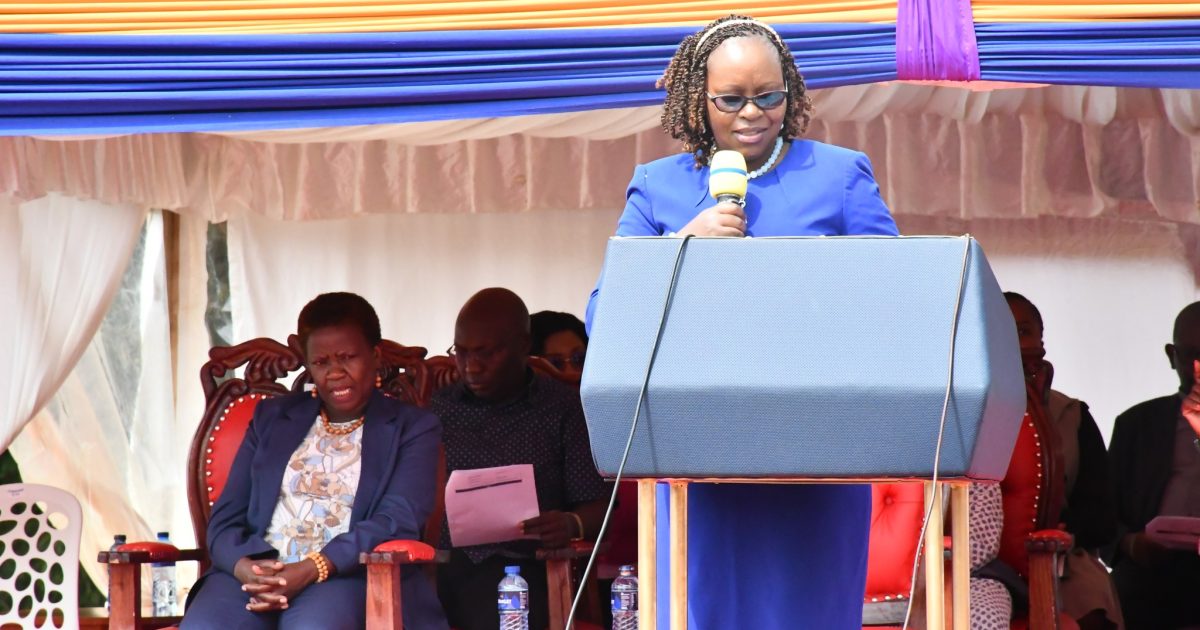
EACC Vice Chairperson, Dr Monica Wanjiru, said the Commission is mandated to establish and maintain strategic linkages with stakeholders in governance and the rule of law.
She noted that collaborating with Kirinyaga University provides an opportunity to engage young people and empower them to champion integrity among their peers.
According to Dr Wanjiru, this year’s theme underscores the need to involve youth in the anti-corruption movement not merely as future leaders but as active changemakers of today.
“In recognition of the vital role youth play in promoting integrity, we organised a series of initiatives targeting university students, dubbed Campus Editions. This year, the activities are being held at Kirinyaga University and Egerton University,” she said.
She emphasised that the main objective of the Campus Edition initiative is to empower young people to actively engage in advancing transparency and uniting against corruption. The programme focuses on raising awareness of corruption and its impacts, amplifying youth voices, and inspiring innovative solutions.
Dr Wanjiru urged the students to bring in new solutions for strengthening integrity and combating corruption through research and innovation as corruption has penetrated into the digital world and therefore there is a need to prevent the loss of public funds through the digital space.
“I know this university is about technology. We are urging you to come up with new ideas, especially as we are faced with the issue of dealing with corruption, which is perpetuated through digital means, the cryptos, the blockchains of this world,” she added.
Kirinyaga University Vice-Chancellor, Prof. Mary Ndung’u, noted that universities work with young people who are hopeful about their futures, yet corruption threatens that hope. She said the Campus Edition engagements help restore trust by involving youths in conversations around integrity and seeking their ideas on tackling corruption.
“We should be a platform of high moral authority in matters of ethics and integrity so that the young people we are training today go on to serve with exactly those values,” she said.
Prof. Ndung’u announced that the university will establish an Integrity Club, envisioned as a multiplier channel through which integrity-related matters will be promoted among students.
Gal Levin, Advisor to the British High Commission, reaffirmed the UK’s longstanding partnership with Kenya in promoting transparency, accountability, and good governance. She emphasised the critical role of young people in shaping an integrity-driven future.
“Young people are not just the leaders of tomorrow—they are the changemakers of today. Their voices, ideas, and actions are essential in dismantling corruption and building a culture of integrity,” she said.
Levin observed that corruption undermines education, healthcare, innovation, and public trust. However, she stressed that youth are uniquely positioned to disrupt this narrative.
She added that the Campus Edition offers more than dialogue; rather, it provides innovation opportunities for young people to transform ideas into projects that combat corruption and enhance accountability, whether through technology, social entrepreneurship, or advocacy.
Levin also highlighted the UK’s continued commitment to supporting Kenya’s anti-corruption efforts through initiatives such as the New Kenya Institutional Strengthening Program.
She emphasised that fighting corruption is not only a moral responsibility but also a strategic necessity for economic growth, security, and stability.
By Mutai Kipng’etich