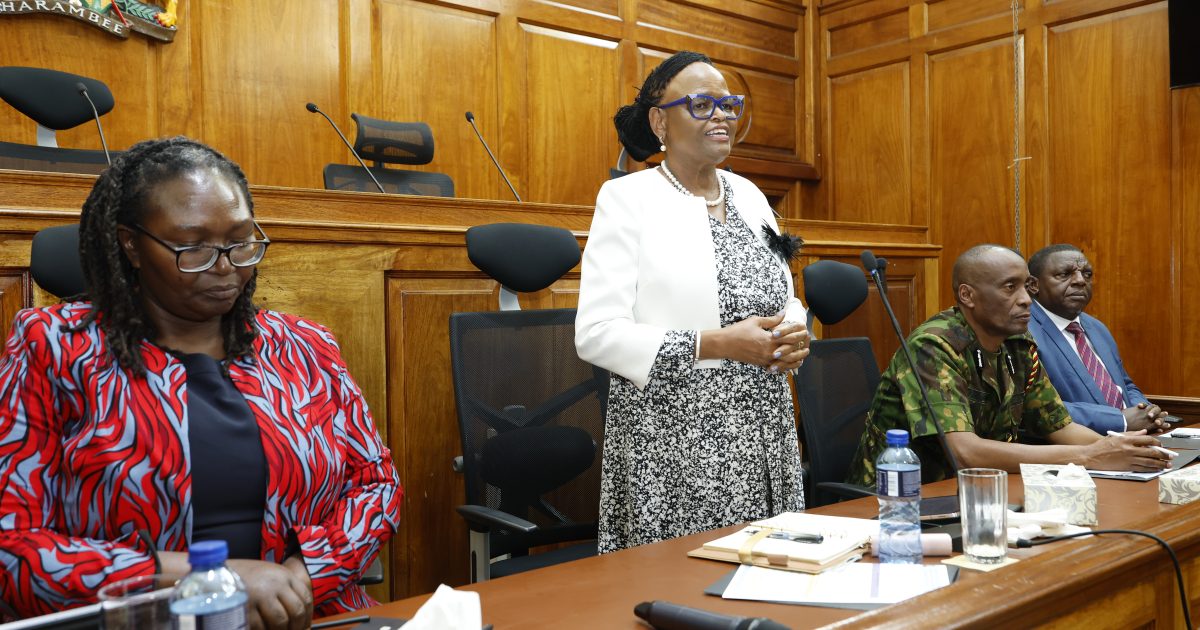
Chief Justice (CJ), Martha Koome, has reaffirmed the Judiciary’s commitment to protecting the rights and dignity of every child in Kenya, stressing that this obligation is firmly anchored in the Constitution, the Children Act 2022, and the international commitments the country has undertaken.
Reiterating the Judiciary’s commitment to fully implement the Children Act 2022—describing it as a transformative legal framework—Koome announced that the Judiciary will establish dedicated Children’s Courts staffed by trained personnel who understand child psychology and child-sensitive procedures.
“We will continue strengthening the Office of the Deputy Registrar of the Children’s Court and ensuring that children’s cases are heard and concluded within the legally mandated period of six months,” assured the CJ.
Additionally, she urged the National Police Service to fully operationalise the Children Protection Units and the Children Police Unit to ensure that children are handled in ways that prioritise their protection, emotional safety, and well-being.
“As justice actors, we must prioritise diversion programmes that redirect children away from the formal justice system and towards restorative, rehabilitative processes that avoid stigma and disruption to their education,” she urged.
Speaking in Nairobi during the CJ’s Dialogue with Children drawn from borstal institutions, remand homes, rehabilitation schools, reception centres, probation hostels and children’s homes to commemorate World Children’s Day and the Annual Child Justice Service Month, 2025, themed ‘My Day, My Rights’, CJ Koome emphasised that institutionalisation of children must remain a measure of last resort and, when absolutely necessary, be used for the shortest time possible.
“As we celebrate World Children’s Day, I want to reaffirm the Judiciary’s and the NCAJ’s commitment to ending unnecessary institutionalisation and ensuring that every child who interacts with the justice system is treated with dignity, compassion, and fairness,” she emphasised, adding that children in institutions are not offenders to be punished but young people in need of guidance, protection, and a second chance.
Importantly, the CJ noted that before any child is committed to institutional care, all alternative family and community-based options must be thoroughly explored. Even where placement is unavoidable, she stressed, children must be treated in ways that preserve their dignity, nurture their potential, and honour society’s obligation to guide and protect them.
Further, Koome observed that many children in institutional care continue to face gaps in education, healthcare, psychosocial support, nutrition, and access to safe recreational spaces.
She insisted that for such institutions to fulfil their rehabilitative purpose, they must be equipped to meet the developmental, educational, and emotional needs of children.
“Every child, irrespective of their circumstances, is entitled to free and compulsory basic education, and this right cannot be taken away simply because a child finds themselves within the justice system,” stated Koome.
Similarly, the CJ explained that a rehabilitative environment must be grounded in safety, learning, and psychosocial well-being, noting that strengthening family and community-based rehabilitation is essential.
In this regard, she called for an upgrade of children’s institutions across the country to ensure decent, dignified, and child-friendly living environments
“We must therefore strengthen programmes that protect children’s mental health, build their confidence, and equip them with life skills for meaningful reintegration. Mentorship, counselling, mediation, and psychosocial care all contribute to creating a supportive ecosystem that allows children to grow and thrive,” she highlighted.
In line with the broader justice transformation agenda, Koome revealed that the Judiciary is exploring restorative and community-based alternatives that offer children opportunities for healing, reconciliation, and reintegration without the trauma associated with formal processes.
The CJ also encouraged courts across the country to activate Children Court User Committees—bringing together magistrates, police, probation officers, children’s officers, legal aid providers, civil society, and community representatives—saying that these committees are crucial in ensuring coordinated support and timely resolution of children’s matters.
She also called on the Prisons Department to develop tailored rehabilitation programmes for older adolescents aged 16 to 20 who may be entangled in gangs or violent lifestyles, noting that young people require structured, supportive interventions—not punitive environments—to redirect their lives and regain hope for a productive future.
By Michael Omondi