Peasant farmers in Nyakach East will soon reap big from their consolidated smallholder acreages after adopting a nature-positive farming technique that is expected to turn around their fortunes.
The farmers, who had for decades recorded poor harvests in successive seasons, can now enjoy better yields and food security, despite the challenges posed by vagaries of climate, thanks to the Alliance for Diversity–CIAT initiative.
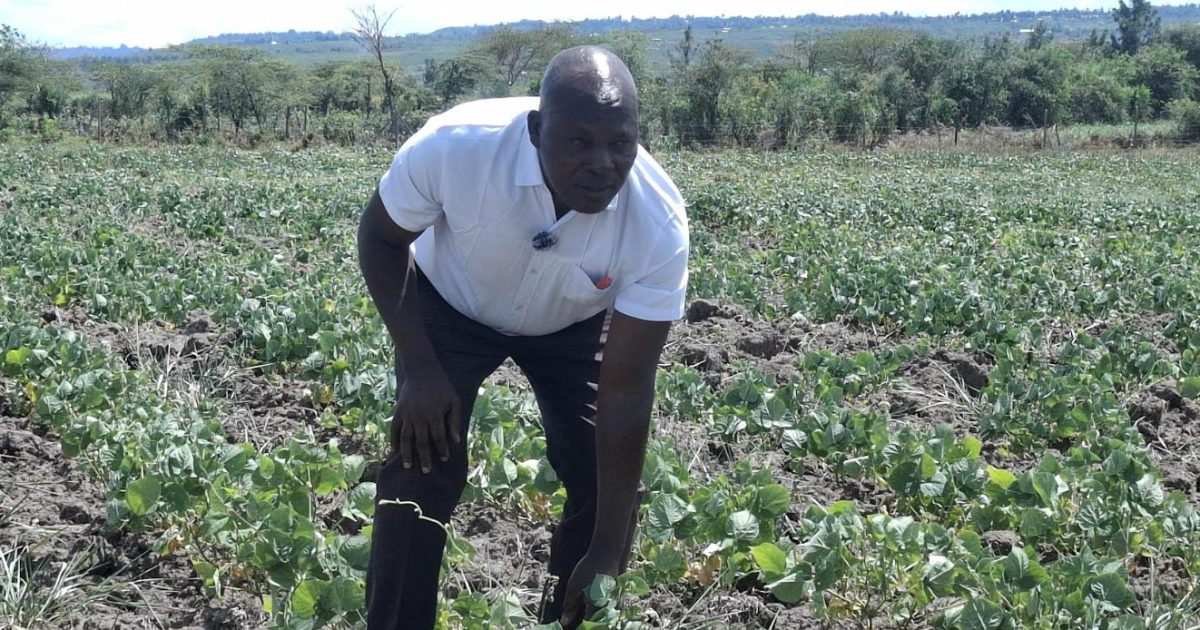
The Initiative has seen farmers transform their degraded and fragmented communal land into large tracts of viable, fertile, and arable land, suitable for commercial agriculture under the nature-positive farms system.
Through the CGIAR Initiative on Nature-Positive Solutions, the smallholder farmers pool land or aggregate for sustainable larger scale by diversifying food production to enhance their livelihoods from subsistence to commercial farming ventures.
The concept focuses on permaculture, value addition and food security to overcome land fragmentation, reduce costs, and improve market access through collective action.
Beatrice Okello, a Senior Climate Change Officer at the Kisumu County Department of Water, Environment, Climate Change, and Natural Resources, says the Directorate was mainstreaming changes in all the sectors, including health, energy, agriculture, and also lands.
“As we look around Kisumu right now, we feel the extreme heat because the weather conditions have changed, making it difficult for the farmers to predict rainfall patterns for timely plantation of crops during the seasons,” she says.
She adds that the extreme weather conditions have led to a reduction of crop production and further exposed people to health challenges due to the extreme heat.
However, the County has promoted adaptation and mitigation technologies to contain the worsening situation by planting trees to sequester the carbon from the atmosphere, to reduce the heat stress through a partnership with Biodiversity CIAT, and to improve the livelihood of the affected community.
She says the initiative targets women due to their resilience, since they are the backbone of the community in terms of food security for households through largely subsistence farming.
“Through the partnership, we have seen improvement in livelihood after initiating soil fertility ventures that have positively impacted production, where drought-resistant crops like millet, sorghum, and cassava have registered improved yields,” she said.
Okello expressed optimism about the project of nature-positive solutions through agronomic practices in two Sub-counties in Kisumu, where a pilot Phase was rolled out in Nyakach, recording impressive feedback during a recent baseline survey in that area.
“In Agoro, we have two farmer groups that were facilitated to develop seed banks for drought-resistant crops that were almost extinct but now are being produced en masse for propagation to the local communities,” she added.
She says such crops were promising in the lower part of Kisumu County, especially in Nyakach and Seme, where the ravages of climate change were severe, as floods were a common occurrence during the long rains, which were later taken over by an extremely dry spell.
The Climate Officer added the traditional crop species had proven to be more resilient to such weather patterns, but farmers were tipped to adopt integrated farming through cultivation of different types of crops to diversify risks in the event of a failed season.
Okello told KNA in an interview that the integrated farms offered the communities a learning experience on best practices to improve their soil fertility because the aggregated farms were used as demonstration sites.
“In the aggregated farms, we practice what is called agroforestry, where we plant forest belts or fruit orchards and at times include fish ponds, where farmers practice fish farming as an alternative supplement for the general food security of the community,’ she added.
Okello further added that the initiative was deliberately pulling the communities out of the old ways of farming, where maize, being the staple food, was the only crop planted in successive seasons without regard to the fertility status of the land, which in most cases was depleted of the required nutrients to support the crop.
She says the farmers were also encouraged to venture into beekeeping initiatives, which were completely independent of the erratic weather patterns, as well as poultry for commercial purposes.
Ms. Okelo says the project, which has been running in Nyakach for the last eight years, has encouraged smallholder farmers to consolidate their harvest under a single group pool to fetch better market prices collectively.
“These farmers’ cooperatives to undertake joint purchasing and marketing and such collective initiatives help them get linkages with other stakeholders in the sector, especially now when we require their input for the development of the agroecology policy, currently at the public participation stage,” she stressed.
Carlo Fadda, a Lead Researcher, who works for the Alliance of Biodiversity International and CIAT said the project was developing nature-positive solutions for sustainable agriculture to cope with emerging challenges in the wake of climate change and population explosion.
He says the consolidation of small farms into larger commercial holdings offers farmers an advantage through the creation of an economy of scale and gives them an edge to start building some facilities to improve the diversification of the value chain to boost their livelihood from different streams.
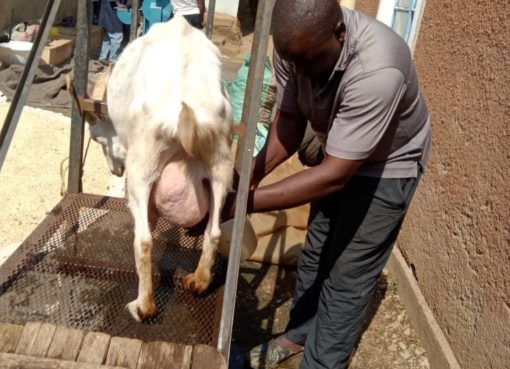
“We also insist on the production of safe and healthy food because we discourage the use of damaging chemicals as we work on different value chains, like goat rearing, to use their droppings as bio inputs to fertilise the land,” he said.
Fadda, however, challenged other stakeholders, especially development partners, to chip in with subsidies to help promote the bulk of investment in the initiative for replication in all parts of the country.
“This needs to be replicated. Some other investors need to chip in because the transition to a more nature-positive sustainable agroecological system needs money and someone needs to put up the money to allow for the transition to happen,” he retorted.
The Chairman of Agoro East Aggregated farm, Philip Okinyo-Atieno, says the group had consolidated their inherited ancestral land, totalling more than 52 acres, from at least 108 farmers since they embraced the initiative in 2022.
He says during the First Phase, the Kenya Agricultural Livestock and Research Organization (KALRO) had offered them vegetable and potato seedlings, ostensibly for the production of seeds for propagation in the area.
“We were also facilitated to put up a greenhouse for the production of black soldier flies for the later sale of larvae to farmers to control pests and it was at this initial period that we also dug out a fish pond and established a poultry farm,” he said.
He said women farmers were majorly involved in seed banking activities primarily through the Kabudi-Agoro Community Seedbank, one of two such facilities established in Kisumu County, with support from the Alliance of Diversity International and CIAT.
The Chairlady of the Seed Bank, Evalyn Adhiambo Okoth, said the Kabudi-Agoro Community Seed Bank says the group had established at least 25 regular clients, with another 83 farmers showing interest, bringing the total number of customers to 108 since its inception in 2020.
“With the support of the Alliance of Diversity Seed, we have been conserving indigenous seeds, including eighteen different varieties of sorghum and seven varieties of finger millet that were missing in the local market,” she said.
Adhiambo said the group had 15 varieties of traditional leafy vegetables and 69 types of indigenous beans, as they keep expanding their collection and producing more seed varieties for posterity.
The government has developed several policies and programmes, often in collaboration with international partners, that integrate food security with natural resource management to build resilient and sustainable agricultural systems. Key initiatives emphasise climate-smart agriculture and ecosystem restoration.
By Wangari Ndirangu