By M, KNA
Migori County Government, in conjunction with the Journey by Grace Mission of Compassion, a United States of America (USA) organization, will construct the first-ever sickle cell anaemia hospital at Igena Centre, Kehancha Town, in Kuria West constituency, to give hope to those affected by the condition.
The charity-based organization is constructing the facility to provide specialized treatment to patients.
Migori Governor Ochilo Ayacko highlighted the prevalence of sickle cell anemia in the Kuria region, emphasizing the need to identify affected individuals, develop effective treatment solutions and provide hope.
Additionally, Ochilo said that he will work closely with the national government to ensure that unnecessary barriers are removed to ensure that Migori County residents receive support from international partners like Journey by Grace Mission of Compassion.
He explained that his administration was grateful for the support that would not only bring hope to those suffering from sickle cell, but also cut on unnecessary travel expenses, while seeking the services within and outside the country.
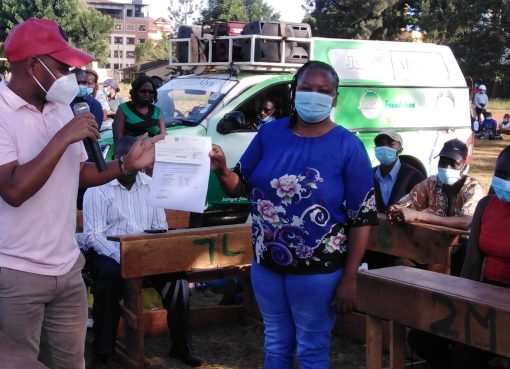
The Journey by Grace Mission of Compassion also conducted a two-day medical camp in Kuria West Sub-County, where over 800 patients benefited from free medical, sickle cell assistance and other healthcare services.
Dr. Duchess Joyce El from the mission said that the partnership with Migori County was historic in nature, meant to help the sickle cell patients, create sickle cell Warriors in public education and offer dignity Sickler patients.
“Personally, I started the journey a decade ago to alleviate the pain of sickle cell anaemia patients when I saw their struggle as a medical doctor,” she said.
For instance, Evy Oluoch and Stacy Rioba, two sickle cell champions who were diagnosed with the disease as infants, said the hospital will be a big welcome in the county.
“We always go through pain, and we rely on caregivers, parents and even teachers as we often drop out of school for long hours. We also face a lot of stigma from society, and we are humbled by this gesture,” Oluoch said.
Rioba said that the facility will not only be a hospital, but a place of hope for the Sickler’s.
Since 2023, the sickle cell anaemia clinic in Rongo, started by The Journey by Grace Mission of Compassion, started with 92 patients, but currently the facility has over 362 patients in active care.
The charity-based organization has also helped by offering financial support to patients through subsidized Medicare, alongside emotional and psychological support.