By D, KNA
Ndia constituency, Kirinyaga county is witnessing significant road and electrification projects, aimed at fostering economic growth, thus enhancing livelihoods.
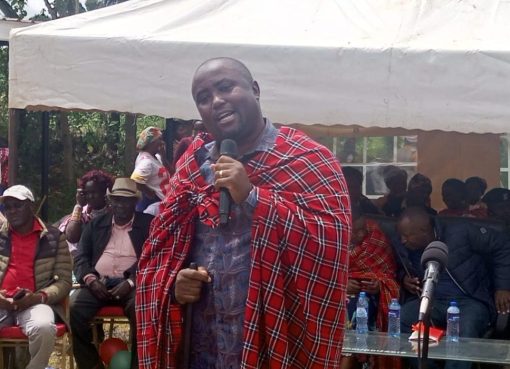
Speaking during the official launch of the Riamugaa–Kiandangae road Project, Ndia Member of Parliament George Kariuki said infrastructure and energy remain at the core to his development agenda, noting that the government is keen on delivering projects that directly touch on lives of the people.
“Better roads foster economic growth by enabling efficient transportation of goods and services, connecting businesses to markets and allowing people to access education and health care. When we build roads, we create opportunities for growth,” said Kariuki.
For instance, in Sagana town, the tarmacking of the Sagana Town–Sagana secondary school–highway road is progressing steadily. Once complete, the road will ease transport, open up business opportunities and uplift the face of the town.
Local traders interviewed by Kenya News Agency (KNA) expressed optimism that the ongoing road projects will finally put an end years of struggling with dust during the dry season and mud during the rains.
At the same time, the MP highlighted the ongoing works in Kagio Town, mentioning that President Dr. William Ruto’s recent pledge of Sh100 million for Kagio roads has since been fulfilled, and was being implemented.
The construction of a modern Kagio market was equally underway, a project that will give traders a cleaner, safer and more organized space to conduct their businesses.
“This market will not only boost the dignity of our traders, but also support small enterprises, which forms the heart of our economy,” he said.
Other roads earmarked for construction before the end of the year include the Kagio Town road, Kiangwaci–Kibirigwi road and Kwa Njeci–Ngongoi–Kiangai road.
Additionally, feeder roads in the constituency will be improved to facilitate the movement of people and goods.
Additionally, the MP officially launched the Ngoka area electrification project, a significant initiative aimed at achieving 100 per cent electricity connectivity in Ndia. This project marks a historic milestone in the region’s electrification efforts.
With the constituency currently at 90 percent coverage, only 12 projects remain before Ndia becomes one of the most electrified constituencies in the country.
“Electricity is not just about lighting homes. It is about powering businesses, enabling industries, and giving our children the ability to study in the evening. With 100 percent connectivity, Ndia will stand out as a model of progress in Kenya,” said Kariuki.
On education, the MP called on youths in the area to embrace technical and vocational training as a pathway to self-reliance and job creation.
He noted that the Ndia Technical and Vocational College is already offering a variety of courses tailored to equip youths with practical skills relevant to today’s job market.
“I want to encourage our youth not to sit idle waiting for white-collar jobs. The world is moving towards skills, and Ndia Technical College is here to provide them. Whether it is in engineering, ICT, or agriculture-based technologies, these courses will open doors to employment and entrepreneurship,” he said.
The legislator emphasized that technical education is the surest way to fight unemployment, adding that graduates from the institution will be able to create jobs rather than depend on them.
He called upon parents to support their children in enrolling at the college, stressing that investment in skills development will secure the future of Ndia and the nation at large.
Residents welcomed the development initiatives, saying this would change their day-to-day lives. Farmers noted that improved roads will ease transportation of produce to markets, while parents welcomed the electrification program, saying it will support education and improve security.
Karuiki assured residents that his leadership would continue to work hand in hand with the national government to ensure that no village is left behind in the development journey.
“These projects are not mere promises; they are now a reality. Step by step, we are transforming Ndia into a better place to live, work, and do business,” he said.