Friday, January 23, 2026
Home > Counties > South African firm in deal with GDC on geothermal power

South African firm in deal with GDC on geothermal power

A South African firm has expressed interest to partner with the Geothermal Development Company (GDC) to commercialize use of geothermal steam for industrial purposes.

Iroko Africa and GDC are set to jointly conduct technical and financial feasibility studies on commercializing the direct use of raw steam and heat from the GDC Menengai wells in Nakuru.

The South African based Iroko Africa is an engineering and consulting firm that specializes in industrial decarbonization, energy efficiency, and climate adaptation, operating as the African subsidiary of the France based Manergy Group.

The company which also has offices in Ivory Coast focuses on building eco-resilient industries across the continent and aims to facilitate Africa’s industrial transition by integrating energy efficiency, low-carbon systems, and climate resilience into real-world operations.

Nakuru Deputy Governor Dr David Kones announced that a team from the devolved unit will work with GDC and Iroko in carrying out the studies at the Menengai Crater Geothermal-Powered Industrial Park noting that besides electricity, geothermal energy provides direct heat to industrialists.

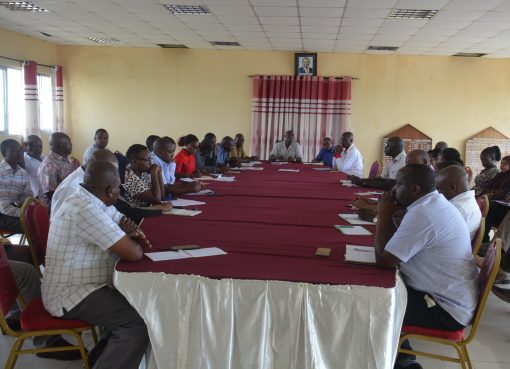
Speaking during a meeting with representatives from Iroko Africa, Dr Kones noted that the use of geothermal steam in industrial processes will reduce greenhouse gas emissions and that it was a reliable and available source of energy through all seasons.

Dr Kones indicated that these innovations will make Kenya a competitive investment hub as industrialists will save a great deal on energy costs when they invest in geothermal steam powered facilities.

This is the second of this kind of agreement with GDC where an industrialist is seeking to generate own geothermal power for the manufacturing process.

GDC has so far signed a 25-year deal to supply cement manufacturer Karsan Ramji and Sons Limited with steam and brine, as the State Corporation targets more revenue from its fields on the Menengai Crater floor through the sale of steam to industries that rely on power to fuel their heating process.

In the deal, GDC will provide Karsan Ramji with 40 tons per hour of geothermal steam to be used for power generation and the heat to dry during cement production.

Dr Kones stated that such arrangements between the corporation and industries could dramatically cut the cost of production.

The Deputy Governor explained that the Menengai Geothermal-Powered Industrial Park once fully actualized, was poised to create thousands of jobs for the people, positioning Nakuru County as a leader in the green industrial revolution.

Dr Kones elaborated that geothermal energy was versatile and prolific where apart from its uses in the generation of electricity, geothermal had dozens of other uses such as in heating greenhouses, milk pasteurization, laundry, leisure, and recreation, among many other uses.

While acknowledging that Geothermal energy was the country’s natural heritage as it was not imported like oil, the deputy governor said the geothermal energy was abundant in Kenya with a potential of about 10, 000MW in addition to being clean, reliable, and affordable.

He said the country had also a vibrant homegrown geothermal expertise, hence the right ingredients to drive a geothermal boom.

“This model is the future of geothermal. We are optimistic that more investors will find value by emulating this approach”, Dr Kones added.

He stated that the arrangement will heighten Kenya’s competitiveness as an investment destination adding that policymakers, investors, academia, and financiers must consider geothermal energy more aggressively.

Further, he said, the Menengai Crater Geothermal-Powered Industrial Park will attract investors in the manufacturing sector angling for affordable and reliable heat. He affirmed that the provision of green energy GDC is helping to decarbonize the economy and open vast new job opportunities.

Geothermal steam is primarily used for electricity generation but can also be used by other industries.

Aside from wellness and hospitality as is the case with geothermal spas, the steam can also be used in dairy processing and greenhouse farming, which GDC plans to do even as the private sector contracted to build power plants continue with electricity generation.

Chief Executive Officer of Karsan and Ramji Sons Limited Mr Kishor Varsani said the Clean and renewable energy transition will accelerate global ambition to achieve net-zero emissions as geothermal power investment led to reliable and sustainable climate-smart activities.

County Executive Committee Member (CECM) for Environment, Energy, Climate Change, and Natural Resources, Dr Nelson Maara noted that a clean and renewable energy transition will herald nature’s adaptation and sustainable livelihoods.

He explained that Clean smart activities and renewable energy shifts were potential solutions to extreme climate conditions, where to address climate change required a fundamental shift.

Geothermal energy, he added was a reliable form of energy that uses steam to run industrial operations adding that the steam produced by GDC was clean and could support various industrial processes ranging from industrial, agriculture, tourism, leisure and domestic, depending on the resource temperature and usage.

According to Dr Maara, the use of geothermal steam instead of fossil fuels in manufacturing, positions GDC as a vital component in Kenya’s energy transition strategy and could make Kenya a more attractive investment destination for companies seeking green energy.

GDC has been demonstrating direct-use technology in the Menengai geothermal field since 2015where five (5) demonstration projects have been set up and commissioned.

The demonstration projects include steam heated green houses, steam heated aquaculture ponds, geothermal milk pasteurizer plant, geothermal laundry unit and geothermal grain dryer.

The direct use demo project was set up to showcase the viability of direct use technology and act as a marketing tool for GDC to potential investors, research and learning institutions and the community that surrounds Menengai Crater.

The steam powered grain dryer, the first of its kind in Kenya and the region has a capacity of drying 20 tonnes of cereals per day.

Dr Maara observed that if efficiently harnessed, geothermal heat will deliver energy that will enable farmers and food processors to increase production and improve food security.  The steam, he explained, can also be used in the industrial drying of fish, vegetables, tea, and pyrethrum and in brewing.

A feasibility study conducted by GDC indicated that a medium sized milk processing plant using geothermal energy for milk processing resulted in energy cost reduction of up to 60 per cent.

Geothermal is widely considered a preferable, low-cost renewable energy source due to low emissions when compared to thermal sources.

 It is also cheaper than thermal power when used as an alternative to mitigate depressed hydropower generation due to drought. Kenya has a target of 5 gigawatts (GW) geothermal capacity by the year 2030.

Geothermal is widely considered a preferable, low-cost renewable energy source due to low emissions when compared to thermal sources. It is also cheaper than thermal power when used as an alternative to mitigate depressed hydropower generation due to drought.

Kenya has a target of 5 gigawatts (GW) geothermal capacity by the year 2030 with Green energy power plants under development in the country including the 300 MW Lake Turkana Wind Power Plant, which is the single largest wind power plant in Africa, the 70 MW Olkaria 1 and the 140 MW OlKaria V.

By Esther Mwangi

Leave a Reply