The government has reached an agreement allowing creative economy activities at Mombasa’s Little Theatre Club to continue alongside the establishment of a Kenya Railways Training Institute at the facility.
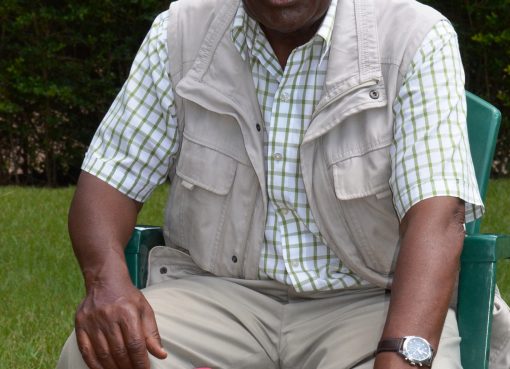
Transport Principal Secretary (PS) Mohamed Daghar announced the breakthrough at the venue, saying a joint committee formed last Friday had resolved all outstanding issues within seven days.
“I am happy to announce that within a record time of seven days, the teams came together and agreed to iron out all the concerns that were there,” said Daghar.
The nine-member committee comprised representatives from the Kenya Railways Corporation, the Office of the Mvita Constituency Member of Parliament, and creative economy stakeholders.
Daghar assured creatives that their activities would continue under improved conditions, even as Kenya Railways moves to operationalise the training institute.
“We will work internally to improve this space to ensure that it accommodates both practices, that is the railway institute and the creative arts that have been going on here,” he said.
The PS commended Mvita MP Mohamed Machele for playing a key role in facilitating dialogue between the parties and fast-tracking the agreement.
Machele welcomed the outcome, noting that initial consultations had been expected to take at least 30 days.
“Last Friday we were here to start talks and we thought the discussions would take 30 days, but after just one week they have agreed, and it is a joy for us,” said the MP.
He added that the Railway Training Institute would benefit local youth, while his office would support sponsorships for both creative talents and other young people to enrol in courses starting in March.
The agreement follows concerns raised by creative stakeholders over possible disruption of activities at the Little Theatre Club, which was established in 1948 and gazetted as a national monument in 2002.
The facility has long served as a major hub for performing arts at the Coast, hosting plays, musicals, and cultural events for decades.
Kenya Railways plans to use part of the premises to train professionals in railway operations, maintenance, and engineering, leveraging its management of both the metre-gauge and standard gauge railway networks.
Daghar reiterated that the creative economy remains a key pillar of the Bottom-up Economic Transformation Agenda (BETA), assuring stakeholders of the government’s commitment to protecting livelihoods and preserving cultural heritage.
The signed agreement resolves a potential standoff by enabling the two initiatives to coexist through shared and upgraded facilities.
By Chari Suche and Sitati Reagan