By P, KNA
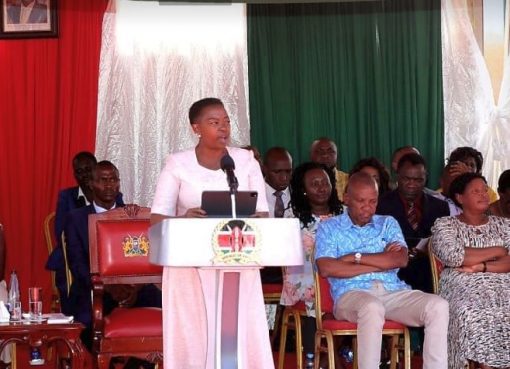
West Pokot Women Representative, Rael Kasiwai has officially launched a bursary programme, aimed at supporting vulnerable learners across the county.
Kasiwai was speaking at Tomena primary school and senior school grounds, Kapenguria sub county, while presenting cheques worth Sh4.6 million to various schools heads.
She noted that the bursary programme seeks to promote inclusive and equitable access to education at all levels from basic schooling to tertiary institutions.
The event also marked the rollout of sanitary towels distribution to school-going girls, alongside the awarding of scholarships to tertiary students in colleges, universities and driving schools, under the National Government Affirmative Action Fund (NGAAF).
The women representative noted that since inception of the program in 2015, the kitty had supported individuals who have turned into professionals like doctors and teachers.
“I want to urge all the students who receive government funds to work hard and focus on their studies, as education is one of the major channels to fight against poverty and illiteracy within our society,” she added.
On the other hand, the distribution of sanitary towels, aims to ensure that female students remain in school throughout the term, promoting consistent attendance, improved academic performance, and proper hygiene during their menstrual periods.
Kasiwai promised to continue with the distribution of the towels across the county, in line with her pledge before elections, while calling for support from NGOs and other well-wishers, sharing similar vision.
Philis Ayeta, one of the beneficiaries of the sanitary towels expressed relief from embarrassment experienced during their menstruation cycle, saying the recipient girls would now exuded confidence throughout the term.
Peter Njuguna, the area Assistant County Commissioner (ACC) in attendance, praised the legislator’s initiative, noting that rising cases of student absenteeism caused by lack of sanitary towels remain a big challenge in the area.
He said the support would go a long way in addressing the existing gap, taking into account that the affected girls can miss up to five days in a month, translating into to two months in a year.
The ACC further noted that as the first cohort Grade 10 learners transited into senior school, many families faced challenges in meeting school fees and uniform requirements, but the government has since directed that all children must report to school.
Njuguna said the entire lineage of the national government administration structure from Assistant Chiefs to the County Commissioner will work tirelessly to ensure 100 percent transition of all children at the various levels of learning, as per the presidential directive.
Parents and guardians present expressed appreciation to the government, noting that the bursary scheme would relieve them of the burden to raise school fees, amid the tough economic times.