Absa Bank Kenya PLC has reported a 9 percent growth in profit after tax for the first half of 2025, buoyed by cost containment, increased non-funded income, and prudent risk management, despite a sharp drop in interest rates that slowed lending growth.
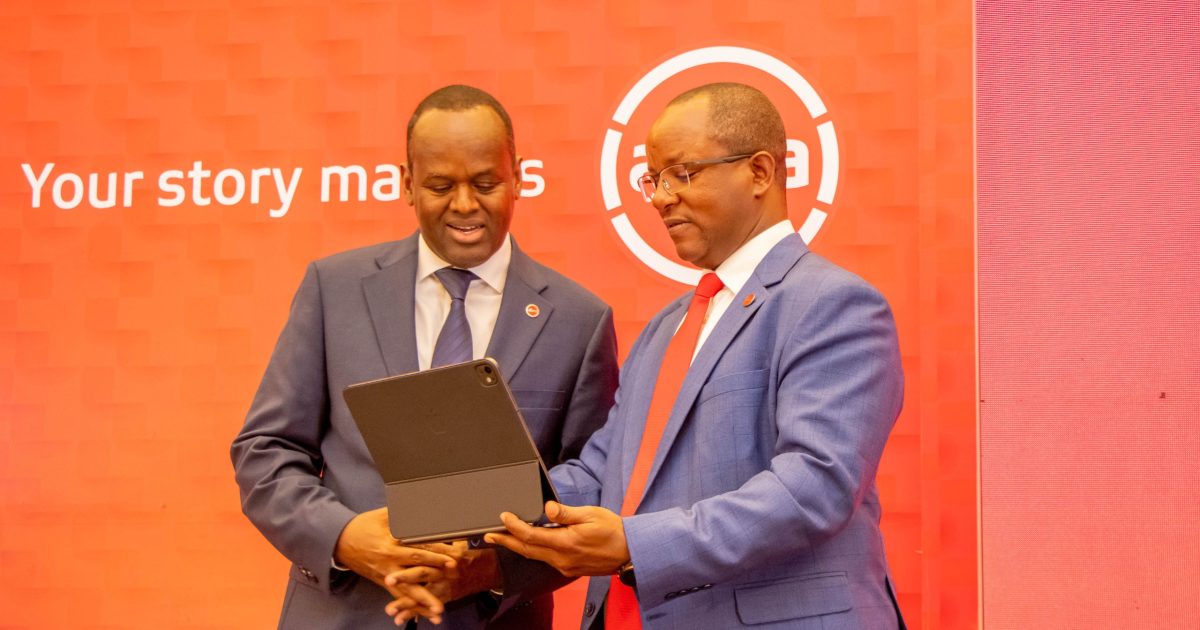
Speaking during the bank’s half-year financial results briefing in Nairobi, Managing Director (MD) and Chief Executive Officer (CEO) Abdi Mohammed said the performance reflected resilience in a challenging macroeconomic environment.
“Our focus has been on ensuring customers benefit from the Central Bank’s monetary policy easing, while positioning the bank for sustainable growth in the second half of the year. We have passed on the 700 basis-point reduction in our base lending rate to customers, making credit more affordable and stimulating private sector activity,” stated Mohammed.
He observed that Kenya’s economy remained on a positive trajectory, with Gross Domestic Product (GDP) growth forecast at around 5 percent for 2025, driven by agriculture, infrastructure, telecommunications, and tourism.
According to the CEO, inflation had eased into the target range, supported by strong agricultural output and monetary policy interventions, enabling a gradual reduction in the Central Bank Rate (CBR).
Further, he noted that stable foreign exchange rates over the past two years had boosted investor confidence, while improved credit conditions were expected to spur lending in the second half of the year.
Mohammed added that Absa’s people agenda remained central, with continued investment in talent, diversity, and inclusion.
“Women account for nearly half of senior leadership roles, and the bank has stepped up recruitment and training for persons with disabilities,” highlighted the MD.
Additionally, he announced that Absa has expanded its footprint with the opening of its 87th branch in Kawangware and continues to grow its agency network to improve accessibility for SMEs.
Notably, Mohamed announced that lending in the first half stood at Sh77 billion, targeting diverse sectors from micro-businesses to corporates, with Sh1.3 billion in restructured loans to help customers in financial distress recover.
Also, he pointed out that the bank also intensified non-financial support, including skills training and market exposure for its 7,000 business club members.
“We are balancing commercial growth with our sustainability agenda, especially for women-led enterprises,” reported Mohammed.
“We are proud to be growing alongside the communities we serve, our strategy is anchored on growth, innovation, talent development, and sustainable impact,” he added.
From the presentation, Absa’s consumer banking segment recorded double-digit growth in both interest and non-interest income, driven by digital lending, asset management, bancassurance, and the credit card business.
Likewise, assets under management in the asset management arm rose to Sh30 billion, ranking the bank among the top three in the sector within two years of launch.
Business banking initiatives included targeted Islamic banking products, capacity building for SMEs, and expansion in the mortgage market.
In corporate banking, the custody business, launched in early 2025, had already attracted Sh40 billion in assets under management.
In global markets, the bank reported a tenfold growth in retail foreign exchange volumes and introduced new investment products in partnership with the Nairobi Securities Exchange, including the dual listing of a world Exchange-Traded Fund (ETF).
In his remarks, the Chief Finance Officer (CFO) Yusuf Omari disclosed that the 9 percent profit growth was achieved despite a 1 percent drop in revenue, as the bank cut costs and reduced impairment charges by 8 percent.
“The sharp drop-in interest rates from 17 percent to about 8.9 percent on six-month T-bills compressed margins, but we cushioned the impact by lowering our cost of funds by 21 percent and growing transactional deposits to 63 percent of total deposits,” Omari explained.
The CFO noted that customer deposits grew 2 percent year-on-year, while total assets rose by 10 percent to Sh532 billion, supported by a 70 percent increase in investments in government securities.
On the other hand, Omari revealed that lending declined 4 percent to Sh305 billion, reflecting reduced private sector appetite for long-term facilities, although foreign currency lending accounted for nearly 30 percent of the portfolio, benefiting from stable exchange rates.
He at the same time mentioned that non-funded income grew by 3 percent, supported by new revenue streams in asset management, securities trading, bancassurance, and card usage, which offset a 14 percent drop in foreign exchange trading income.
“Operating costs rose just 1 percent, well below inflation, as technology investments and automation reduced back-office expenses,” revealed the CFO, adding that the cost-to-income ratio improved to 46.4 percent, with 94 percent of transactions conducted through alternative channels.
Meanwhile, he revealed that loan impairment charges fell by 38 percent, improving the loan loss ratio to 2.1 percent from 3.3 percent a year earlier. According to the CFO, stage 1 loan repayments increased, while the bank strengthened its coverage ratio to reassure investors of its credit risk position.
Similarly, he affirmed that the bank’s return on equity stood at 16.5 percent, above its 18 percent cost of equity target, while liquidity rose to 45 percent, well above regulatory requirements.
Looking ahead, Omari asserted that Absa would maintain focus on growing low-cost deposits, expanding private sector lending as credit demand recovers, and sustaining efficiency gains.
“Our aim is to deliver shareholder returns at least 5 percentage points above our cost of equity in the medium term,” claimed the CFO.
He also reaffirmed the bank’s commitment to community initiatives through the Absa Foundation, focusing on entrepreneurship, education, and sustainability projects.
By Naif Rashid