Education Cabinet Secretary Julius Migos Ogamba has urged universities to accelerate the realignment of their academic programmes with the Competency-Based Curriculum (CBC), saying higher education institutions must be ready to receive CBC learners transitioning to university from 2029.
Ogamba said by now, all universities should be at advanced stages in comprehensive curriculum review, upgrading of teaching and research facilities, and rigorous training of academic staff to handle the new crop of learners.
In a speech read by Dr David Watene, Director of Education, State Department for Higher Education, during the JKUAT–PAUSTI joint graduation ceremony, the CS said teaching should by now have been shifted towards more competency-based, student-centered, and interdisciplinary learning to be well positioned for the transition.
Ogamba urged vice-chancellors and university councils to work closely with the Ministry of Education to ensure the transition to CBC-aligned higher education is smooth, coordinated and responsive to Kenya’s development needs.
He said the government expects universities to redesign courses to emphasise practical skills, innovation and problem-solving, the key pillars of CBC to ensure graduates are better prepared for the country’s rapidly evolving labour market.
“I wish to challenge our universities to undertake necessary adjustments to facilitate seamless transition driving socio-economic growth. By now, a lot should be taking place in terms of this alignment to be well positioned for this change,” Ogamba said.
JKUAT Vice-Chancellor Prof Victoria Ngumi assured that the institution is well prepared for the CBC takeoff in institutions of higher learning, highlighting milestones including curriculum reviews and training staff on the curriculum demands among others.
On aligning programmes to the national priorities, the VC said the institution had scaled up its training programmes nationally that will ensure they produce graduates ready to drive the government’s development agenda.
Among the flagship programmes is the Bachelor of Science in Marine Engineering, which the VC said is critical for the expansion of Kenya’s blue-economy, turning territorial waters into a new engine of national wealth and innovation.
“Kenya needs a specialised workforce that can unlock opportunities in maritime transport, shipbuilding, offshore energy and port operations.
Our marine engineering graduates are already contributing to this agenda. The institution has produced 200 graduates equipped to serve as seafarers, marine engineers, and managers of critical port infrastructure,” said Prof Ngumi.
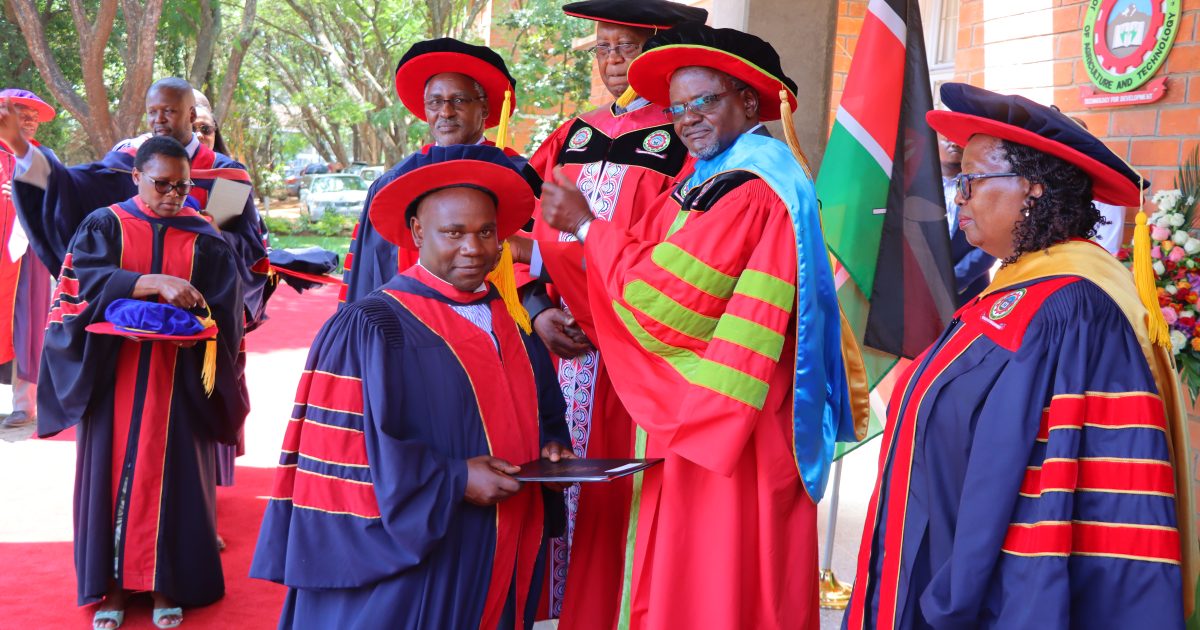
The joint graduation ceremony saw 4,541 graduates conferred with degrees, diplomas and certificates.
By Muoki Charles