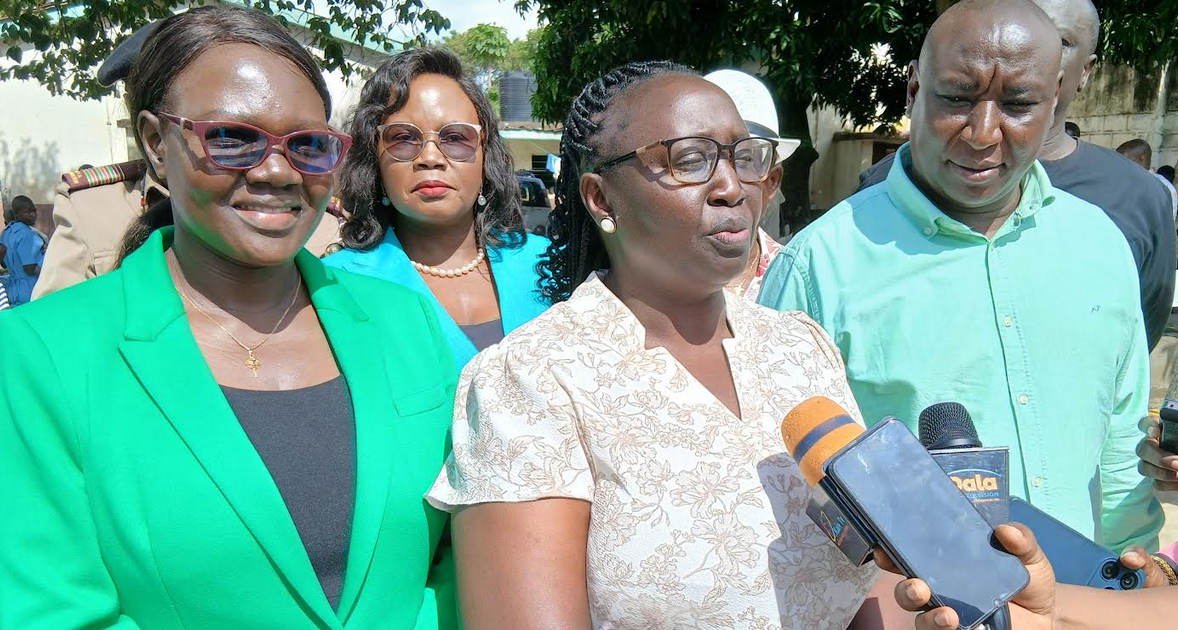
Cabinet Secretary (CS) for Gender, Culture, the Arts and Heritage Hannah Wendot has raised concern over the prolonged stay of children in government institutions, revealing that some minors in conflict with the law were being held for over two years—far beyond the legally stipulated six months.
Speaking at the Kisumu Children Remand Home on Wednesday during an inspection tour of children’s homes and gender-based violence rescue centres across Nyanza and Western regions, the CS said the situation reflects systemic gaps in case handling, infrastructure and funding.
“We have children who are supposed to stay here for a maximum of six months, but some have been here for over two years. That is a serious concern,” said Wendot.
She noted that the 14 institutions across the country host vulnerable children, including those living with disabilities and those referred by courts while their cases are ongoing.
The CS attributed the prolonged stays to delays in court processes, weak inter-agency coordination and limited resources, calling for urgent policy interventions to fast-track cases and decongest the facilities.
A key concern, she said, is the presence of foreign minors particularly from Uganda whose cases have already been concluded but remain in custody due to lack of facilitation for repatriation.
“We require resources to facilitate their return to their countries. That is one of the key issues we are raising,” she said.
Wendot also cited logistical constraints, including lack of dedicated transport to escort minors to court, noting that children in conflict with the law must be handled in a manner that protects their dignity and privacy.
Staff shortages were also flagged, with the CS warning that overstretched caregivers and teachers are unable to provide adequate supervision and support.
“These are children who need constant attention. We need more caregivers, teachers and support staff to ensure they are well taken care of and do not deteriorate further,” she said.
The inspection further revealed deteriorating infrastructure at the facilities, with the CS outlining both immediate and long-term measures to address the situation.
In the short term, the ministry, she said, plans to carry out renovations, including repainting and upgrading key amenities, subject to budgetary approval by Parliament.
Long-term plans include the construction of modern, integrated institutions equipped with schools, playgrounds and residential units to provide holistic care.
“We are looking at how to utilise available land to build state-of-the-art facilities where all services are centralised,” she said.
Wendot emphasised the need for a coordinated approach involving national and county governments, as well as the education, health and justice sectors, to ensure timely case resolution and improved welfare outcomes.
The tour, conducted alongside members of the National Assembly Departmental Committee on Social Protection, forms part of parliamentary oversight on the welfare of children in conflict with the law. The team also visited similar facilities in Kakamega.
She said the field visits were in line with a directive by President William Ruto for Cabinet secretaries to undertake ground assessments and provide practical solutions.
The findings are expected to inform upcoming budget allocations and policy decisions aimed at improving the welfare of children in institutional care.
By Chris Mahandara