In the dry landscapes of Tharaka Nithi County, where trees have long been sacrificed for survival, a quiet transformation is taking root.
For years, communities in this semi-arid region have relied heavily on charcoal for cooking fuel. The result has been relentless deforestation, stripping the land of its tree cover and exposing it to erosion, drought, and declining agricultural productivity.
However, a local initiative is now offering a cleaner, more sustainable path forward.
At the centre of this change is Friends of Mother Nature, a grassroots organisation founded in 2016 with a mission to protect the environment while uplifting livelihoods.
Their latest innovation in briquette production turns everyday waste sorghum and millet husks into an alternative source of fuel, reducing dependence on charcoal and firewood.
Inside a modest production site, agricultural waste, charcoal dust, and organic residues are compressed into compact, slow-burning briquettes.
With support from Village Hopecore International, the group now operates a machine capable of producing up to three sacks per hour, an output that is already making a difference in local households.
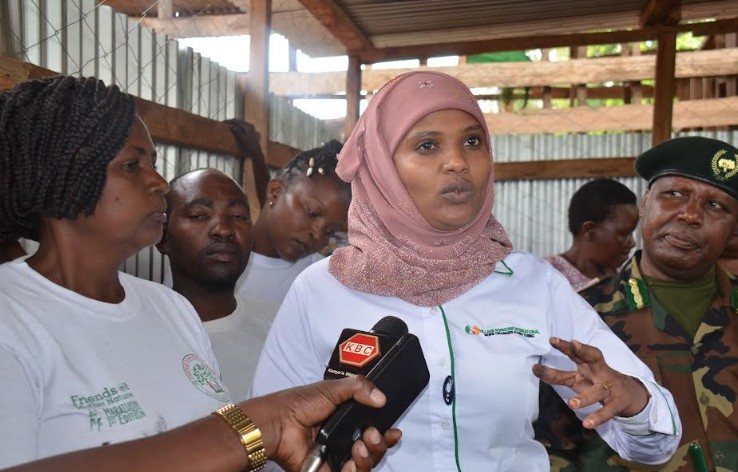
“We saw poverty driving people to cut down trees. Briquettes give families a cleaner, cheaper alternative,” said the group’s Chairperson Ms Sarah Karimi.
Unlike traditional charcoal, briquettes burn longer, produce less smoke, and are made from recycled materials.
For families struggling with rising fuel costs, they offer both economic relief and a healthier cooking environment.
Local forest officials led by the County Forest Conservator Reuben Muigai have welcomed the project, noting that reducing demand for charcoal is key to easing pressure on already fragile ecosystems.
In regions like Tharaka, where tree cover has dwindled significantly, every alternative energy source counts. For members of Friends of Mother Nature, the project is also a source of income.
Women and youth involved in production earn money while gaining new skills, strengthening both household resilience and community cohesion.
Village Hopecore International, which helped fund the briquette machine, sees the initiative not only as an environmental intervention but also as a climate-smart innovation in action.
The organisation’s Managing Director Kawira Mathu, said the project addresses environmental conservation, economic empowerment, and clean energy access all at once.
As word spreads, demand for briquettes is growing. Nearby communities are beginning to take notice, and the group hopes to expand production and train others to replicate the model.
By Dickson Mwiti