The Competency-Based Curriculum (CBC) has received a significant boost in its co-curricular pillar following the formal integration of chess into the 2026 National School Sports and Co-Curricular Activities Calendar. Education leaders say the move will sharpen critical thinking, strategic reasoning and learner discipline from an early age while expanding structured pathways for intellectual sport across the country.
The milestone was marked at Kericho High School during the official opening of a county chess coaching induction course that attracted more than 30 trainees, mainly teachers and games instructors. The participants are expected to spearhead the implementation of the programme in primary and junior (lower secondary) schools across Kericho County.
Under a Ministry of Education circular and addendum to the 2026 calendar, chess will now be contested during Term Two games for primary and junior schools, aligning it with the already established secondary school structure under the Kenya Secondary Schools Sports Association (KSSSA). The harmonisation creates a clear and progressive competition pathway for learners, firmly situating chess within the national school games framework.
The directive, issued to Regional, County and Sub-County Directors of Education, requires all schools to organise, prepare and participate in chess competitions at sub-county, county, regional and national levels. Schools will field teams in age-based categories, including Under-10 and Under-12 in primary schools, to ensure systematic talent identification and inclusive participation. Outstanding teams will earn the opportunity to represent Kenya at regional platforms such as the Federation of East Africa Secondary Schools Sports Association (FEASSA) Games.
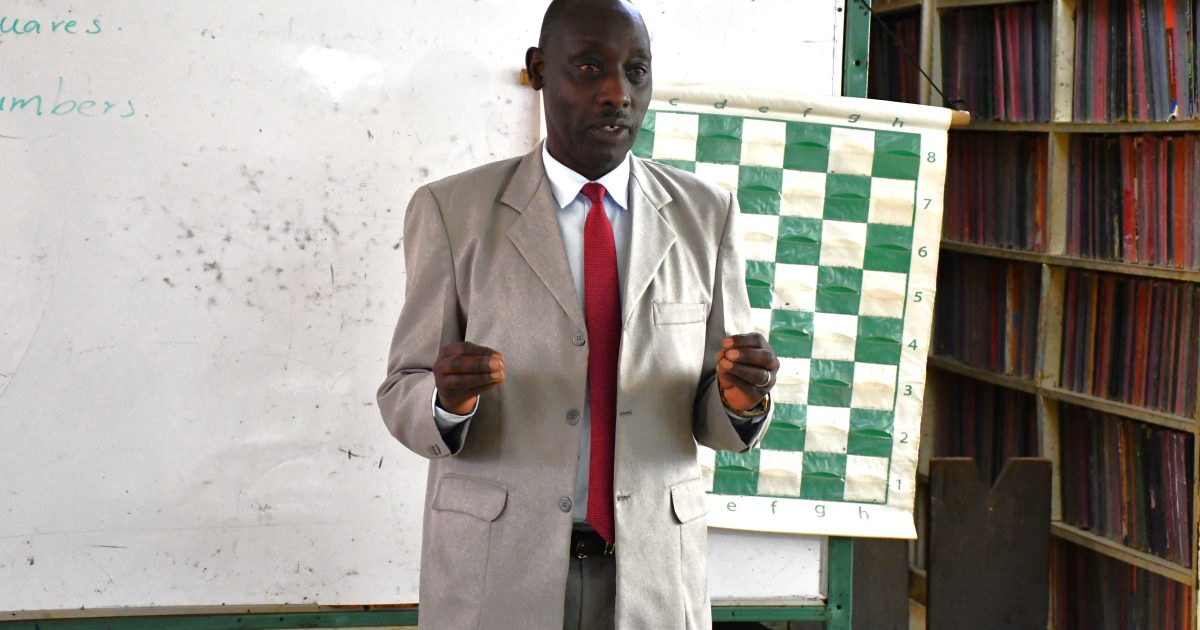
Presiding over the opening ceremony, Dr. Kiptum Chemagut, the County Projects Coordinator and Quality Assurance and Standards Officer, underscored that the introduction of chess is anchored in CBC’s emphasis on nurturing competencies beyond academic content mastery. He said chess advances core CBC values including problem-solving, collaboration, concentration and resilience, positioning classroom learning and co-curricular engagement as complementary spaces for holistic development.
“Chess is a visitor sport in our primary and junior schools, and we must welcome and embrace it. When the matchbox meets the matchstick, fire is sparked, creating warmth. In the same way, when learners meet chess, their minds are ignited,” said Dr Chemagut.
Tracing the heritage of the game, he noted that chess originated more than 1,500 years ago in India as Chaturanga before spreading through Persia to Europe and evolving into its modern form under the stewardship of the International Chess Federation (FIDE). Over centuries, the game has earned global recognition as an intellectual discipline that sharpens foresight, memory, patience and calculated decision-making.
Dr. Chemagut challenged the trainees to approach their assignment with professionalism and purpose, stressing that coaching within the CBC framework requires mentorship that builds character alongside competence.
“Chess is not just a game. It is a tool to build strategic thinkers, resilient problem solvers and future leaders. Your role as coaches is to guide, inspire and ignite curiosity. Let us make a difference, one move at a time,” he said, urging them to become ambassadors of the sport within and beyond Kericho County.
Meanwhile, Kericho County Chess Secretary Gladys Langat described the Ministry’s decision as a watershed moment for structured talent development. She said embedding chess in the formal school games calendar eliminates fragmentation and establishes a clear competitive ladder from grassroots to national and regional stages.
Langat observed that mandatory participation at sub-county, county and regional levels will standardise coaching quality and broaden access to the sport. She noted that age-based categories ensure equitable exposure for younger learners while promoting early talent nurturing. According to her, sustained engagement in chess cultivates discipline, analytical reasoning and measured decision-making — attributes that reinforce CBC’s learner-centred aspirations.
In a reflective conclusion, Dr. Chemagut shared the story of a young player whose performance improved after he was tasked with teaching the game to his younger sister. By explaining strategies and anticipating counter-moves, the learner deepened his understanding of the board and strengthened his confidence.
He encouraged coaches to adopt similar mentorship approaches, including peer teaching, guided reflection and structured practice scenarios, as practical methods of reinforcing comprehension and strategic awareness among learners.
“By the powers conferred upon me by the Ministry and the entire Senate of Co-Curricular, I now give you the authority to coach and do all that pertains to the game of chess. I hereby declare this workshop officially opened,” Dr. Chemagut announced.
With chess now firmly embedded in the CBC co-curricular framework, education leaders in Kericho expressed confidence that the programme will not only expand participation in intellectual sport but also cultivate a generation of learners equipped with the discipline, focus and strategic insight required in an increasingly competitive world.
By Gilbert Mutai