Before colonization, African communities were guided by unwritten customary rules, which were integrated into the day-to-day lives and passed from generations to generations through actual cases, tales and proverbs.
Members of the communities acted collectively; whether it was securing water points, raising children, hunting or even resolving disputes among parties within them.
Their way of resolving disputes was anchored on restorative justice by bringing together the victims, offenders, and community members to address and resolve disputes.
This nurtured offender accountability, compensation to the victim, and full participation by the affected community members thus keeping their ties and family bonds together even after the disputes.
Post-colonial and subsequent constitutions slowly lugged the societies from their traditional ways and started embracing the state laws, whether arbitrated or enforced by local administrators (assistant chiefs, chiefs, and assistant county commissioners) at the community level to tribunals and courts of law.
The court processes in the country have proved to be lengthy accompanied by tedious litigation, high appeal rates, recurrence of conflicts, and adversarial win-lose outcomes.
To address some of these gaps in the formal legal system of dispute resolution, the Judiciary in 2020 launched Alternative Justice System (AJS) Policy, officially recognizing Alternative Justice Systems as legitimate and constitutional avenues for dispute resolution.
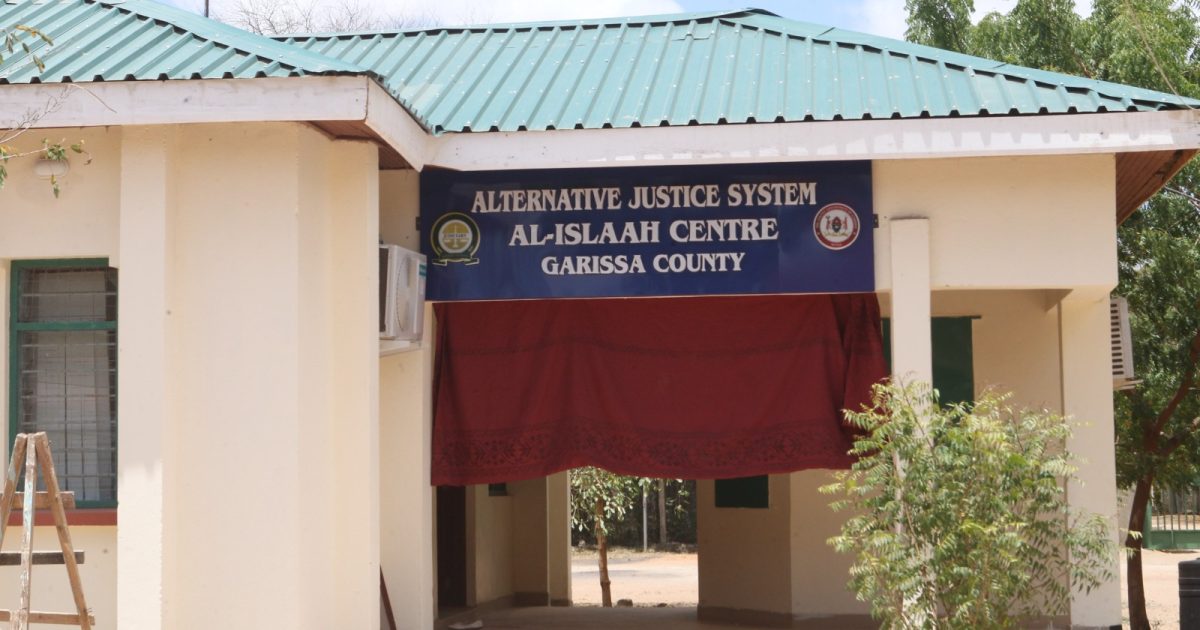
Since then, several Alternative Justice System halls (Ukumbi) have been set up in various counties including Nakuru, Kajiado, Trans Nzoia and Mombasa with Garissa set for launch of its division on September 2.
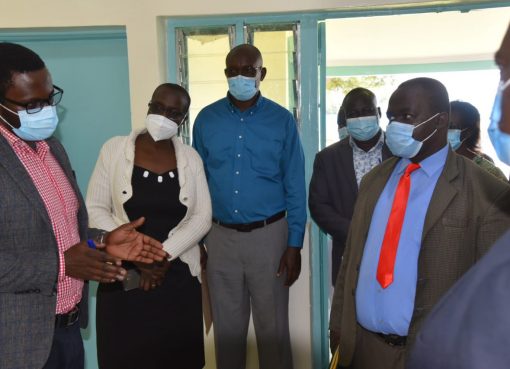
As he takes us around the fully furnished building where the AJS will operate from, Garissa law court’s Chief Magistrate Thomas Mwangi says that the AJS is very important because it anchors its pillar social justice, which encourages delivering justice to the vulnerable people – the marginalized, the disabled, women and children.
“There are non-state laws which are mostly unwritten but govern our lives from birth till death. Imagine a situation whereby in a village or an estate, if you decide to go naked, there may be no law preventing you from doing so but you know it is unwritten rule that you shouldn’t walk naked, or you shouldn’t commit adultery with somebody else’s wife or graze livestock in someone’s land,” Mwangi said.
“When these things happen and the society feels that you have done something wrong, our unwritten code of conduct will come to apply to you. You will be taken to either the estate officials, or your parents or your clan elders to resolve those issues,” he added.
The Chief Magistrate tells us that the elders who will be adjudicating in the AJS in the county have already been sensitized and trained on the roles and the cases that under law they should not entertain.
Mwangi said that the AJS in Garissa will adopt the Maslah model of Somali culture and called upon the area residents to embrace the system, once the Chief Justice Martha Koome officially launches it next week.
“AJS is a win – win situation. There is no loser because everybody wins. It is a system that has democracy in it in the sense that the parties in the dispute choose for themselves that doorway to solve their dispute. There is no coercion, and if none of them is interested in that system of resolution then we cannot force them,” he said.
“It is speedy and the parties avoid the difficult court procedures that our courts use. There is no backlog of cases and there is an element of morality because our systems of laws when it comes to the legislature, we have to comply with decisions but in AJS you can propose the solutions you want,” he added.
James Maina and Mohamed Aden are part of the elders who sit in the AJS court in Garissa. They tell us that the work that they have been doing has no salary and want the Judiciary to recognize and offer them some benefits.
They said that AJS has been serving justice to people in the communities who were otherwise afraid of going to the courts because of the long processes and the cost of legal activities.
“We should be made judicial officials because what we are doing now is voluntary and has no remuneration. We want to be recognized because we are helping the courts reduce backlogs and sometimes, we handle cases at night and even at the villages where disputes arise,” Maina said.
“There are people who have been afraid to launch cases in the courts, but now we are giving them a lifeline by ensuring that they get justice through AJS.
There are also those who are in far flung areas and lack transport, we will make calls and go to those areas, listen to both parties and resolve the dispute,” Aden added.
By Erick Kyalo