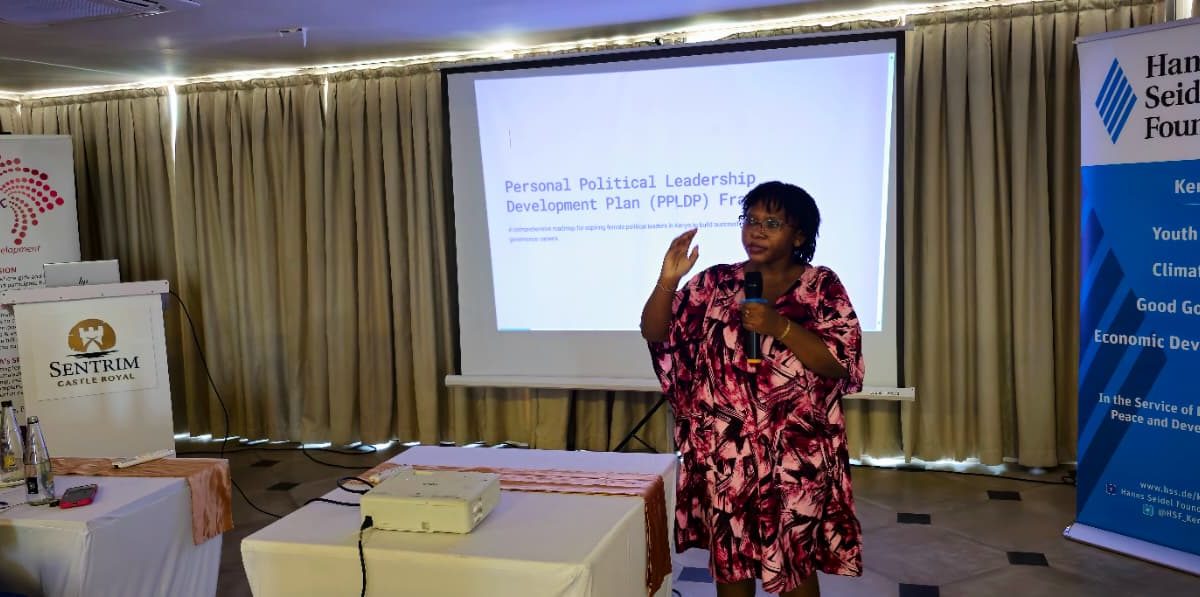
Women leaders from the Coast region have undergone a one-day multisectoral training in Mombasa to strengthen their leadership skills and prepare them for elective positions in the 2027 General Election.
The forum, held at Sentrim Castle Royal Hotel, brought together around 30 women leaders, including elected and nominated MCAs, women representative aspirants, MP aspirants, and former leaders from Mombasa, Lamu, Tana River, Taita Taveta, Kilifi, and Kwale counties.
The training was organised by the Democracy Trust Fund (DTF) in collaboration with Echo Network Africa and the Hanns Seidel Foundation.
Speaking at the forum, DTF Executive Director Julia Kioo urged the women to make long-term plans and prepare adequately before entering the election race. She noted that poor planning often results in financial strain and emotional distress among unsuccessful aspirants.
“It is painful when elections are over and you have lost after spending all your money. This has led to cases of depression, broken families, and financial ruin. Some aspirants have even suffered strokes or worse due to a lack of proper planning,” she said.
On the other hand, Governance and Elections Expert Joseph Mathai emphasised the importance of persistence and consistency in leadership. He advised participants to remain connected with voters beyond the election cycle.
“Do not appear only during the campaign season. Voters know who is genuine and who is only seeking votes. Be accessible to your constituents at all times,” he stated.
Mathai also cautioned against projecting flashy lifestyles on social media while communities face challenges such as a lack of water and basic needs. He encouraged women leaders to leverage opportunities within political party structures, such as women and youth leagues, and to develop strong election day management strategies, including empowering polling agents.
Former Kwale Woman Representative Zuleikha Hassan underscored the importance of building networks and alliances to expand influence. She urged women to maintain visibility in both parliamentary and community spaces.
“Be a vocal leader and make sure people feel your presence. Befriend the media to publicize your work, develop a clear manifesto, and brand yourself uniquely,” she advised. She also highlighted the role of religious leaders and opinion-shapers in mobilizing community support.
Lamu Woman Representative Aspirant Ruweidha Mohamed, however, expressed concern over the lack of mentorship from women leaders who have already secured elective positions. She said many view upcoming leaders as threats instead of offering guidance.
“We should be building each other up instead of tearing one another down. When you succeed, you should hold the hands of others and mentor them,” she said.
Participants were also taken through the development of a Personal Political Leadership Development Plan (PPLDP), which included political and social content analysis, setting strategic goals, capacity development, networking and mentorship strategies, and monitoring progress for long-term success.
by Sitati Reagan & Joyce Hadrine