A major regional water management programme has turned its focus to the growing sanitation crisis around Lake Victoria, warning that untreated waste flowing from rapidly expanding lakeside cities is steadily degrading the lake’s water quality.
The Lake Victoria Basin – Integrated Water Resources Management Programme, being implemented by the Lake Victoria Basin Commission (LVBC), seeks to reduce untreated effluent entering the lake while strengthening long-term management of water resources across the basin.
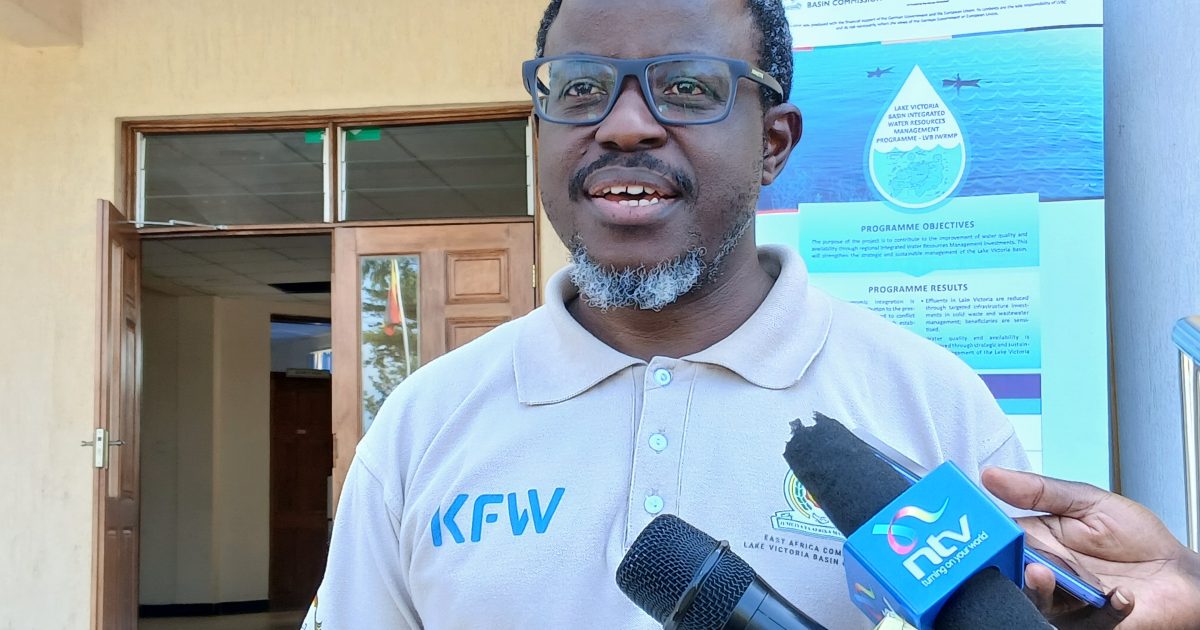
Project coordinator Arsene Mukubwa said the programme is focusing on sanitation infrastructure in informal settlements, which remain a major source of pollution into the lake.
“Water quality is becoming a serious issue in Lake Victoria because of increasing pressure from urban centres around the lake,” he said in an interview ahead of this year’s World Water Day.
Mukubwa said rapid urbanisation in cities such as Kisumu, Mwanza and Kampala has led to large populations settling in unplanned neighborhoods’ where sanitation systems are either inadequate or nonexistent.
“In many of these cities, more than 60 per cent of residents live in informal settlements. Without proper sanitation infrastructure, a lot of untreated waste eventually finds its way into the lake,” he said.
Lake Victoria supports more than 45 million people across the basin and produces about 1.1 million tonnes of fish annually, making it one of East Africa’s most important economic resources.
However, Mukubwa warned that the gap between water supply and sanitation coverage continues to worsen pollution levels.
In Kisumu, for example, he said, water supply coverage stands at over 90 per cent, but sanitation coverage is estimated at only about 19 per cent.
“When water is supplied to households, only a small portion is actually consumed. The rest becomes wastewater, which must be collected and treated. Without proper systems, that wastewater ends up in the environment and eventually in the lake,” he said.
To address the challenge, Mukunwa said the programme is implementing sanitation projects in key cities surrounding the lake.
In Kisumu’s Manyatta A informal settlement, the project will construct 550 household sanitation blocks and facilities for four schools, benefiting an estimated 10,000 residents.
Mukubwa said the project has already completed feasibility studies, engineering designs and environmental impact assessments, and is now entering the procurement phase.
“We expect to open tenders by the end of March and, if the process proceeds smoothly, construction will begin soon after,” he said.
In Mwanza, Tanzania, the programme will invest about €13 million (approximately Sh1.9 billion) to extend sewer lines by about 15 kilometres and connect roughly 1,600 households to the sewer network.
In Kampala, Uganda, efforts will focus on rehabilitating wastewater ponds and expanding sewer systems in the Nakivubo catchment to reduce the volume of untreated waste entering the lake.
Meanwhile, Kigali, Rwanda, will benefit from the construction of a faecal sludge treatment plant to ensure waste collected from septic tanks is safely treated before disposal.
The programme is jointly funded by the German government through its Federal Ministry for Economic Cooperation and Development and the European Union.
Mukubwa said Germany has committed €60 million to the initiative while the EU has contributed €8.9 million, bringing the total funding to about €68.9 million.
The initiative also includes the development of a regional water information system to support evidence-based decision-making in water resource management.
Mukubwa said the platform will help governments monitor water quality, track pollution sources and prioritise investments across the basin.
“You cannot manage water resources without reliable data,” he said. “The system will help us determine where interventions are most needed and how to address emerging challenges.”
LVBC, he said, has also produced its first State of the Basin report documenting the environmental status of Lake Victoria and providing a baseline for monitoring progress in future years.
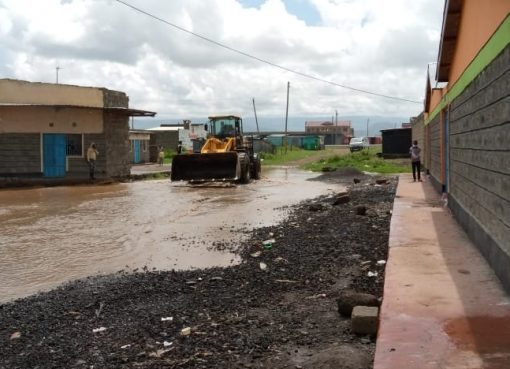
He added that safeguarding the lake will also require behavioural change among communities, particularly in the management of solid waste that often clogs drainage and sewer systems.
Through the programme, he said, the commission is working with local governments and communities to promote hygiene awareness and responsible waste disposal through public campaigns, including radio programmes and social media outreach.
“If one country protects its section of the lake while others do not, the problem will remain. Lake Victoria is a shared resource and protecting it requires collective action from all the countries and communities that depend on it,” he said.
By Chris Mahandara