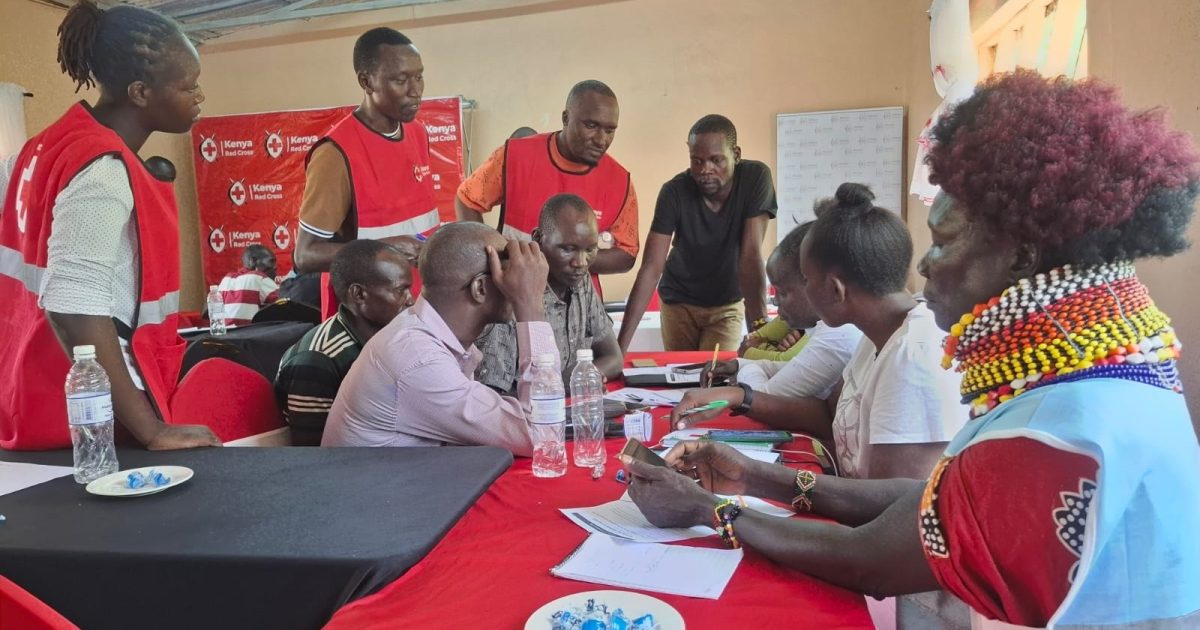
Turkana County Government has in collaboration with the Kenya Red Cross Society (KRCS) through the PREPARE Project concluded a five-day training on epidemic preparedness at the grassroots level.
The training brought together 30 community-based workers including Community Health Promoters (CHPs), Community Disease Reporters (CDRs), Community Health Assistants (CHAs), environmental and climate change champions, as well as KRCS volunteers from Lokichoggio and Lokiriama cross-border sub-counties.
The programme focused on three core areas: Epidemic Preparedness and Response in Communities (EPiC), Community-Based Surveillance (CBS), and Community Engagement and Accountability (CEA).
Using the Epidemic Control Toolkit (ECV) — a mobile USSD code (38460#) — participants were trained on practical approaches to detect and report potential diseases and disasters.
They were also equipped to recognise early warning signs, report epidemic-prone conditions, and create community awareness for timely response and prevention.
County One Health Coordinator Rotich Kipkorir emphasised the need for scaling up to other sub-counties.
“We have only covered 7 percent of the population so far. More partners are needed to extend this training to other sub-counties,” he said.
He explained that the USSD tool does not require airtime or Internet, enabling uninterrupted alerts from any location, with real-time feedback to supervisors at sub-county, county, and national levels for swift intervention.
Participants shared how the training would transform their work at the community level moving forward.
Sylvia Lorna, a CHP from Napetan Village in Lokichoggio, stressed the importance of the outreach saying, “Community dialogues will help us deliver key health messages widely and encourage our people to work with us to raise alerts early.”
Moses Ewoi, a CDR from Nadapal, focused on preventing animal-to-human disease transmission stating, “I now know how to educate pastoralists not to consume dead or infected animals so we can detect and contain diseases at the border.”
Gertrude Lowoi, a CHP from Lokiriama, underscored protecting children. “I have learnt how epidemics can devastate unprepared communities. I will prioritize identifying unvaccinated children under the age of five and quickly link them to care,” she stated.
Joseph Ekalale, an environmental and climate change champion at Konoo Irrigation Scheme in Loima, highlighted environmental risks. As Chairman, he oversees 800 farmers and over 1,000 households at the Konoo Irrigation Scheme.
“Communities that neglect the environment suffer the consequences. I am now ready to educate households and farmers on the need for clean surroundings and prepare adequately for unknown conditions,” he expounded.
Cyrus Mutai, a Programmes Officer at KRCS, who facilitated the training, explained that “Surveillance is key given the mobility of pastoralists across borders, which increases disease importation risks.”
He further noted that communities knowledgeable on case definitions are better placed to prevent outbreaks.
The initiative is part of the county’s ongoing efforts to strengthen the One Health approach by integrating human, animal, and environmental health. It is expected to amplify the role of communities in safeguarding public health, particularly in cross-border and hard-to-reach areas, prone to outbreaks.
In her closing remarks, Chief Officer for Preventive and Promotive Health Services Janerose Tioko summed up the county’s vision saying, “By equipping frontline workers with knowledge and practical tools, we are building resilient communities that can detect, report, and prevent epidemics before they spread.”
CCO Tioko explained that the overall goal was to ensure that Turkana is better positioned to respond quickly, coordinate effectively, and protect vulnerable populations, including refugees and host communities.
At the end of the training, four participants were recognised for excellence in EPiC and CBS modules, receiving awards for best overall, best performing, and most improved in each category.
Other facilitators present included Fredrick Chepkwony, Project Officer PREPARE (KRCS), Dr Erenius Nakadio (Deputy Director, Veterinary Services) and Phoebe Ekal, Director Environment.
By Peter Gitonga