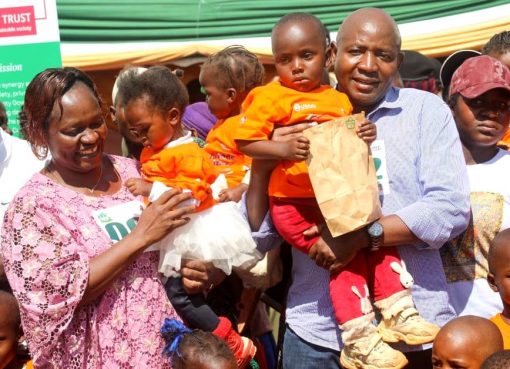
The County Government of Nakuru is working on a new policy aimed at combating food insecurity, addressing malnutrition, and improving the overall health and socio-economic development of the residents.
The Draft ‘Nakuru County Multi-Sectoral Nutrition Policy’ emphasises the importance of a multi-sectoral approach, rooting for collaboration across different sectors such as health, agriculture, education, and social protection, among others, to improve nutrition outcomes in the region.
Chief Officer for Public Health Ms. Joyce Ncece said that the draft Policy’ aligns with national priorities, including Universal Health Coverage, and demonstrates the County’s commitment to the United Nations Sustainable Development Goals (SDGs).
Ms. Ncece stated that the policy, which outlines specific strategies, programmes, and interventions to improve nutrition within the county, was focusing on promoting nutritious food production, improving access to healthcare services and addressing stunting and over-nutrition.
She explained that the document had been developed through extensive collaboration among various stakeholders, including government departments, civil society organisations, development partners and the local communities.
Speaking when she inaugurated a two-day validation workshop for the draft policy, the Chief Officer said the document was designed to provide a comprehensive and coordinated framework that aligns with the Constitution of Kenya and was anchored on key development frameworks, including the National Monitoring and Evaluation (M&E) Policy 2022, County Integrated Development Plan (CIDP) 2023–2027 and Kenya Vision 2030.
Over the past year, the County official further explained that they had been working on the formulation of this strategic policy that would help address persistent challenges of malnutrition and food insecurity across the county.
“This policy will promote a coordinated multi-sectoral approach, bringing together all relevant sectors and stakeholders to ensure successful integration of nutrition objectives into county planning and budgeting frameworks,” the Chief Officer elaborated.
She said the policy centred on tackling the triple burden of malnutrition, including undernutrition, obesity and rising non-communicable diseases, while also prioritising maternal and child nutrition, enhancing food systems, and building resilience against climate change’s effects on food security.
She observed that without food, working systems, reliable data and strong coordination, the fight against malnutrition would be lost, adding that the documents promised a future where no child goes to bed hungry and where mothers are empowered to feed their children well.
The chief officer cited teenage pregnancy, limited access to potable water and inadequate coordination and collaboration among sectors as some of the challenges outlined in the policy document, which she said required immediate attention.
Other Key strategies contained in the document include promoting healthy diets, enhancing food security, strengthening health systems and engaging communities in the implementation of nutrition interventions.
The strategies aim at encouraging the consumption of diverse, safe, and nutritious foods, implementing sustainable agricultural practices, enhancing the capacity of health services to provide nutrition-related care and involving communities in planning and monitoring nutrition programs.
Ms. Ncece said the policy was comprehensively addressing several key Sustainable Development Goals, including SDG 2 on Zero Hunger, by aiming to end hunger and ensuring access to safe, nutritious and sufficient food, and SDG 3 on good Health and Well-being by promoting healthy lives and well-being for all at all ages.
She said it has also addressed SDG 5 on Gender Equality by ensuring equal opportunities and addressing nutritional needs specific to women and girls and SDG 17 on Partnerships for the Goals by fostering multi-sectoral collaboration and partnerships to achieve sustainable development.
The policy is also said to highlight the critical role of stakeholder engagement, including community contributions and advocacy, to foster ownership and ensure the long-term success of nutrition interventions.
The Chief Officer indicated that through the policy, Governor Kihika’s administration aims to address the political, economic, social, and institutional challenges hindering sustainable progress in nutrition across the life cycle, including among vulnerable groups such as children under five years of age, pregnant and breastfeeding women, and the elderly.
She voiced the County’s acknowledgement of the impact of climate change on nutrition, saying that they were committed to integrating climate change perspectives into nutrition programmes even as they seek to make the County become a food- and nutrition-secure place.
Ms. Ncece urged all stakeholders to support the implementation process, stressing that nutrition was a matter of human rights and equity. “We must now move from strategy to action. Let us mainstream nutrition into our budgets and the work plans of our sector,” she advised.
The Chief Officer pointed out that in modern healthcare, integrating various disciplines was essential for effective and comprehensive patient care. Among these, she noted, nutrition played a pivotal role in improving health outcomes, reducing recovery time and enhancing quality of life.
This, she added, was especially critical in managing the dual burden of communicable and non-communicable diseases that are prevalent in Kenya.
Ms. Ncece said the Draft Policy provides a strategic roadmap with clear objectives, strategies and actions to scale up nutrition-specific interventions, promote nutrition-sensitive approaches across sectors, enhance resource mobilisation, and create an enabling environment for sustainable development.
The policy the Chief Officer noted emphasises the importance of robust monitoring and evaluation mechanisms, guided by national standards and frameworks, to ensure data-driven decision-making and effective programme implementation.
Key strategies include capacity building, the use of participatory approaches and the integration of nutrition objectives into county development plans.
She said financial sustainability was prioritised through dedicated budget allocations across all relevant sectors, external partnerships and innovative financing mechanisms.
If approved, the County Monitoring and Evaluation (M&E) unit will oversee the implementation of this policy, coordinating with departmental M&E committees and the Nakuru County Food and Nutrition Technical Coordinating Committee (NCFNTCC).
Nutrition is more than a lifestyle choice; it is a cornerstone of health. According to the World Health Organisation (WHO), malnutrition contributes to nearly half of all deaths in children under five globally.
In Kenya, malnutrition exacerbates the rising burden of non-communicable diseases such as diabetes, hypertension and cancer, which require nutritional interventions for prevention and management.
For instance, diabetic patients need carefully managed diets to regulate blood sugar levels. Cancer patients undergoing chemotherapy benefit from high-protein and high-calorie diets to combat weight loss.
Similarly, post-surgical patients require adequate nutrients to support wound healing and recovery. Ignoring these needs increases complications, prolongs hospital stays, and worsens outcomes.
A 2020 report by the Kenya Health Policy Framework linked poor dietary habits and malnutrition to 20 per cent of the country’s disease burden. Despite such findings, most healthcare facilities in Africa treat nutrition as an afterthought, focusing instead on pharmacological interventions.
By Esther Mwangi