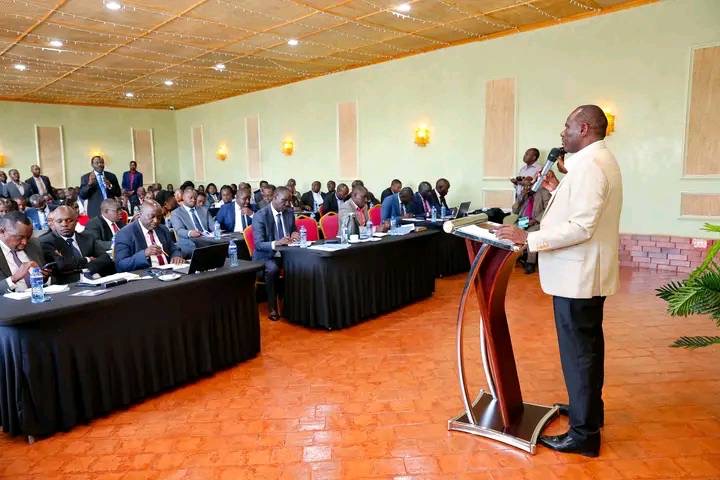
The County Government of Uasin Gishu has taken a significant step in reviewing the progress of its public investment projects as part of a midterm development review.
During the mid-term review, Governor Dr Jonathan Bii Chelilim called for renewed commitment to strengthening oversight and coordination across departments to fast-track the implementation of stalled projects.
“This is our time to redeem ourselves and realign our development goals. We must ensure all ongoing and upcoming projects reflect the priorities of our people and are delivered efficiently,” alluded the governor.
Deputy Governor Evans Kapkea echoed the same sentiments on the need to outline a strategic plan focused on accelerating stalled projects, improving accountability in service delivery.
In a session aimed at evaluating performance and realigning priorities, CECM of Finance Micah Rogony presented a comprehensive update on projects implemented over the last two years.
The review highlighted the county’s efforts since the inception of these projects, tracking their progress, current status, and plans moving forward.
The Finance CECM lauded the county’s development agenda which is driving significant transformation across Uasin Gishu County. He noted that the administration has made notable strides that emphasise transparency and community engagement.
Rogony, while appreciating the efforts of all departments, emphasised the importance of structured planning and accountability in public investment.
“We appreciate you finding time for this update and project review. This is a critical opportunity to reflect, refine and chart a better way forward,” he stated.
A key focus of the session was the implementation of a new Public Investment Project Regulation. This regulation mandates that all public projects must now begin with a Concept Note, a structured document that justifies the need, scope and expected impact of a project.
“This regulation provides a legal framework for an efficient and effective public investment management process,” said Rogony. “It introduces distinct, sequential stages that must be followed from project identification and planning, through pre-feasibility and appraisal, to full feasibility studies.”
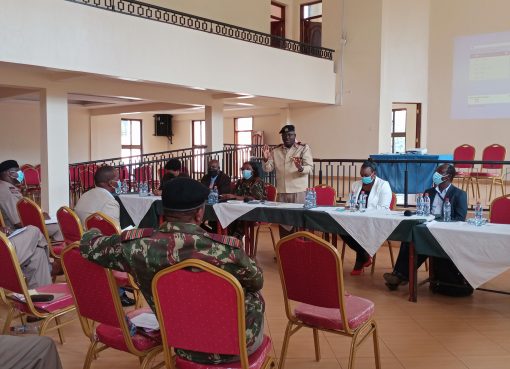
Others present were County Secretary Philip Meli, County Executives, Chief Officers, Legal team, Directors, Sub County and Ward Administrators, Water and Road Engineers and Communication team.
By Ekuwam Sylvester