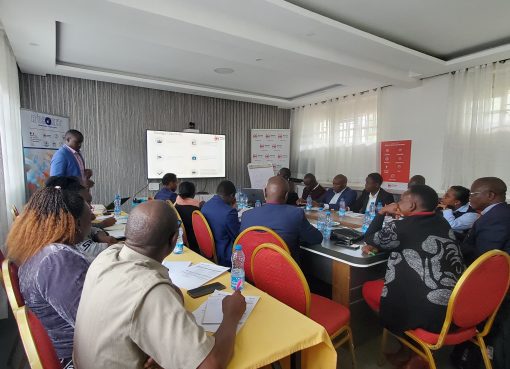
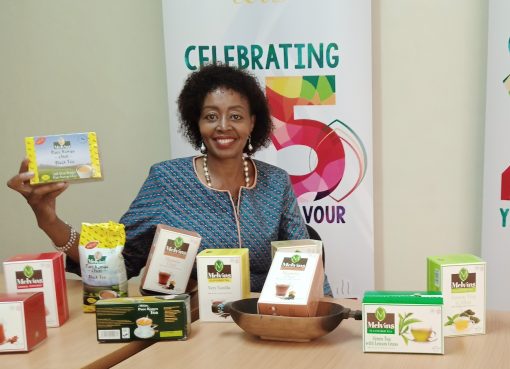
Kenya’s Agriculture and Livestock Production Cabinet Secretary, Mutahi Kagwe, announced Kenya’s first Orthodox tea auction at the East African Tea Trade Auction (EATTA) in Mombasa.
The launch marks a major milestone for more than 650,000 tea farmers, as the government seeks to diversify from traditional CTC (Crush, Tear, and Curl) teas and tap into the rapidly growing global demand for specialty teas.
CS Kagwe urged factories, traders, and exporters to capitalize on the government’s target to increase tea earnings to Sh270 billion, in line with the Head of State’s directive.
For instance, to fast-track the transition, the Tea Board of Kenya (TBK) has licensed 22 factories to manufacture Orthodox teas, with 13 new government-supported processing lines already in place.
TBK has established a Tea Quality Assurance Laboratory in Mombasa, offering real-time quality testing, advisory services, and food-safety certification.
Additionally, CS Kagwe termed the launch a great milestone for the tea industry and for more than 650,000 tea farmers, amid dwindling prices for (Crush, Tear, Curl) CTC teas at the auction.
“By launching Orthodox teas at the auction today, we confirm to the world that Kenya is no longer just a CTC powerhouse; we are now a serious and competitive player in the global Orthodox market,” said the Agriculture CS.
Kenya’s tea sector recorded record earnings of Sh215 billion last year, up from Sh180 billion in 2023 and Sh138 billion in 2022. The figures, CS Kagwe says, confirm that Kenyan farmers are hardworking, resilient, and capable of producing teas that the world admires.
Yet, as proud as we are, we cannot ignore the reality: the global tea market has changed. CTC teas, our traditional mainstay, now face flat demand and depressed prices at the Mombasa Auction,” stated the CS.
Furthermore, he explained that the mismatch between production and consumption has led to unsold stocks and lower earnings, despite the excellent work of farmers.
“It is for this reason that the Government, under the Bottom-Up Economic Transformation Agenda (BETA), is spearheading reforms to diversify into Orthodox and Specialty teas, a lucrative niche growing by six per cent annually, and currently dominated by Sri Lanka, India, and China,” he said.
In 2024, the total Orthodox production was 7.51 million kilograms (Kg), of which 5 million kg were exported. This was lower than the 12.34 million kg produced in 2023. The reduction is attributed to challenges with the Iranian market, in which high-level discussions are ongoing to allow Kenyan tea in that market.
The number of licensed orthodox manufacturers in the country is projected to increase twofold to 42 by 2027 from the current 22.
For 2024, the Kenya Tea Development Agency (KTDA) Orthodox prices ranged between USD 3.40 (Sh439) and USD 4.16 (Sh537) per kg, with an average of USD 3.70 (Sh478) per kg, while the CTC tea prices are an average of USD 2.28 (Sh294) per kg for bulk CTC teas at the Mombasa Auction.
“As we launch the auction of 2,925 packages equivalent to 91,798 kg of Orthodox tea, we are not just selling tea; we are making history. These teas are expected to fetch between USD 3 (Sh387) and USD 10 (1292) per kg, delivering better earnings for farmers and raising Kenya’s profile in global specialty markets,” stated CS Kagwe.
CS Kagwe affirmed that the Ministry’s ambitious target is to grow installed Orthodox capacity from 15 million kg in 2024 to 200 million kg by 2030.
To increase transparency, improve farmer returns, and ensure Kenya remains globally competitive, the Mombasa Tea Auction is going to leverage technology.
“This digital transformation will allow buyers from across the world to participate in real time, enhance price discovery, reduce cartels, and firmly position Kenya as a modern, efficient tea-trading hub,” said the CS.
TBK CEO Willy Mutai said they are keen to ensure the country produces the best tea for local consumption and for the global market. He promised to ensure the country’s tea access to more global markets.
EATTA Managing Director George Omuga confirmed that traders are ready, and the launching of the Orthodox tea auction is an opportunity for Kenya and Africa to diversify and reduce overreliance on CTC teas.
“It’s our time to show the globe that the best orthodox tea on earth exists. What happens in this auction sets the pace for the global tea trade and tea price,” he stated, calling for support from stakeholders.
by Sadik Hassan