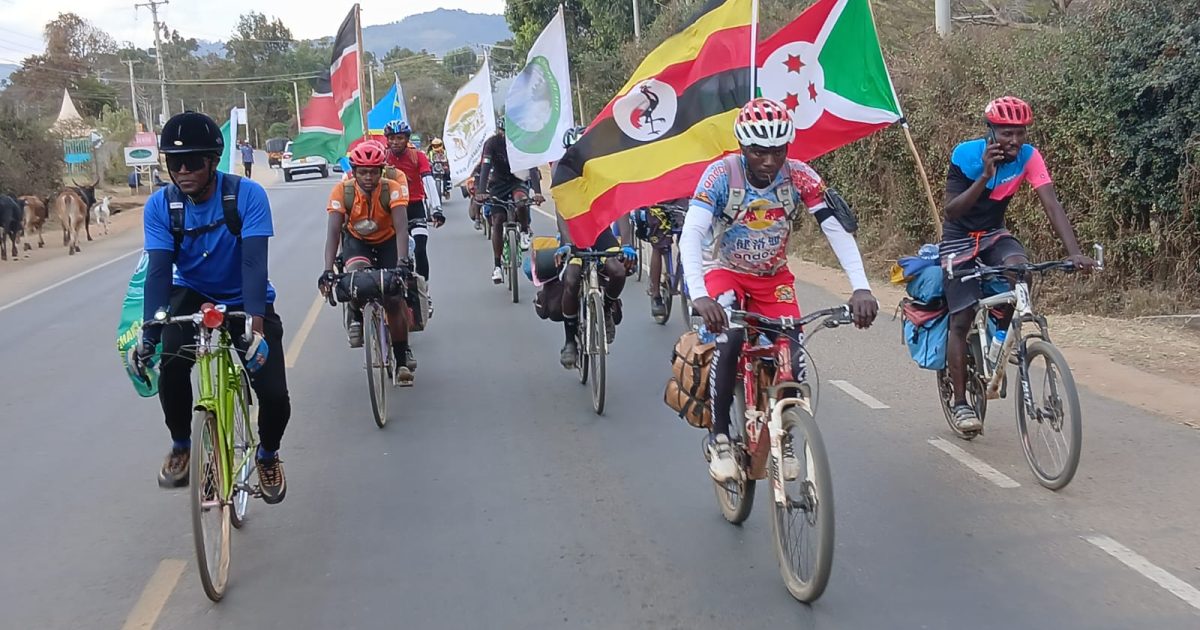
Twelve cyclists from five East African countries are on a mission to cycle 6,000 kilometers across the region in 55 days, mobilizing communities on climate change action, food security, and East African Community (EAC) unity.
The cyclists drawn from Kenya, Uganda, Rwanda, Burundi, and the Democratic Republic of Congo, are part of the Great Africa Cycling Safari, an initiative held annually in collaboration with Kings Cycling Mind, a group led by Kenyan environmentalists. The campaign raises awareness on environmental sustainability by planting fruit trees in schools, villages, and arid areas across the region.
Speaking at Machakos High School, where they planted fruit seedlings, team leader John Baptist said the group began the journey in Kampala in early August 2025 and has already passed through Rwanda, Burundi, Congo, and Tanzania before entering Kenya via the Namanga border.
“This is our eighth year since we started in Uganda in 2017. Climate change is a disaster that needs urgent action, and this cycling safari is one way to educate and unite communities across East Africa,” said Baptist.
He emphasized the impact of climate change, including severe droughts and floods, which continue to threaten food security. By planting fruit trees, they aim to provide a sustainable food source and contribute to climate resilience.
Julius Mwenda, founder of Kings Cycling Mind, urged East African leaders to eliminate border restrictions and allow free movement across the region. He argued that freedom of movement would enhance regional integration and unity.
“The best way to strengthen EAC integration is by removing document restrictions when crossing borders. This will promote real unity among citizens,” Mwenda stated.
Highlighting inclusivity, Mwenda also revealed that one of the cyclists in their team is blind. He called on Persons with Disabilities (PWDs) to join the climate action movement, noting that everyone has a role in addressing environmental challenges.
The 55-day cycling journey is expected to conclude in Kampala on September 20, 2025, covering a total of 6,000 kilometers across East Africa.
By Anne Kangero