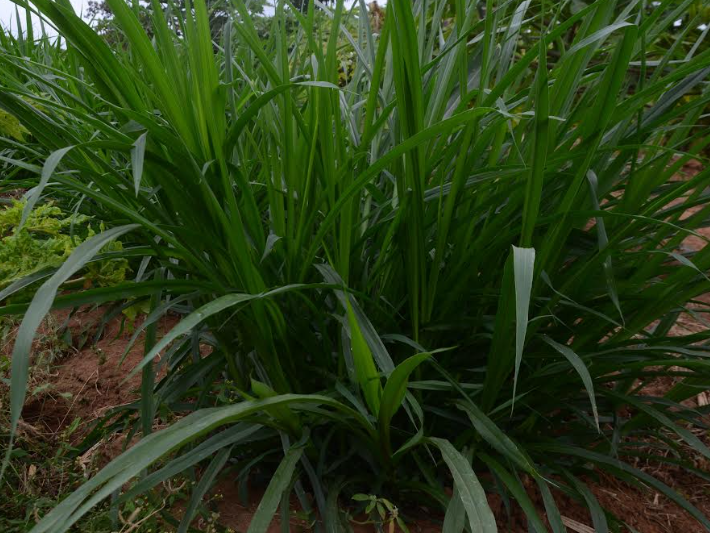
As the long rains continue to pound various parts of the country, dairy farmers in Murang’a have been urged to leverage on the current fodder availability to avoid post-harvest losses.
Apart from using fodder that is easier and quick to mature, the farmers must be able to preserve it for the day of scarcity and to avoid perennial losses.
Soil analyst Bernard Ndung’u observes that the rains have significantly impacted fodder production promoting growth and increasing the quality of the available feed and farmers need to take advantage of this.
Ndungu outlines some of the fast-maturing fodders that dairy farmers can incorporate in their farming while noting that the fodder should also offer all the nutrients to the animals for maximum yields as feeds contribute up to 60 percent of a farmer’s success.
He says it is important to adopt fodders that offer a more balanced ration which in turn will promote faster growth and higher productivity in their animals.
“Choose fodder that is sustainable and that regenerate faster after cut while still have fast maturity and easier establishment,” he said.
“Some of the fodders a dairy farmer can consider include Napier grass, maize, desmodium, Rhode grass and sorghum,” he said.
“Nappier grass which is mainly planted through stem cuttings or split is drought resistant, is easily propagated and has high crude protein and fiber for good palatability depending on the stage of growth”
He concedes that there is a more superior variety of the Nappier grass known as such as Pakchong 1.
“Packchong 1 also known as supper Napier is a hybrid obtained by crossing the ordinary nappier with pearl millet and is preferred because it is fast growing, highly vegetative, with a protein content of 18 percent which is double the amount of protein in ordinary Napier,” he said.
Moreover, napier grass as a fodder during the utilization stage can be chopped or stored as a whole for the day of scarcity.
The Fadhili Africa Ltd co-founder notes that farmers can also plant Maize and use it as fodder as it has proven to be a superior crop to most of the dairy farmers as most of them use it for silage making or for storage as dry fodder.
Farmers can consider the Desmodium which is a leguminous crop and can be integrated with other fodder crops and have a maturity period of 3-4 months.
Sorghum and Rhode grass are perennial grasses whose stem is fine and leafy, with heights ranging between 0.5 and 2 meters high. They are most preferred for hay making for sale and storage to use during scarcity.
Small scale farmers can secure silage bags which they can use to prepare the silage from maize and preserve it for the day of scarcity while maintaining the nutritional content.
“Silage-making is the process of fodder preservation through the fermentation process and this is done using grass family or maize to create a nutrient-rich feed for the livestock” he says.
After harvesting the crop, it is allowed to wilt under the shade to reduce water moisture before chopping it into small sizes whose goal is to achieve uniform particle size for effective fermentation.
“The chopped material is then tightly packed into silos or plastic bags and wrapped into an airtight environment so as to remove oxygen from the silage mass, creating an anaerobic (oxygen-free) environment necessary for fermentation.
Fermentation happens under anaerobic conditions, lactic acid bacteria naturally present on the crop begin to convert sugars into lactic acid. This acid production lowers the potential of Hydrogen (pH) and preserves the forage by inhibiting the growth of spoilage-causing microorganisms
The silage can be used for months but it is crucial to remove the silage from the silo in a controlled manner to minimize exposure to air and maintain feed quality.
Farmers should ensure they select certified planting materials and do soil testing to get the right information and right recommendation and therefore avoid perennial losses.
By Florence Kinyua