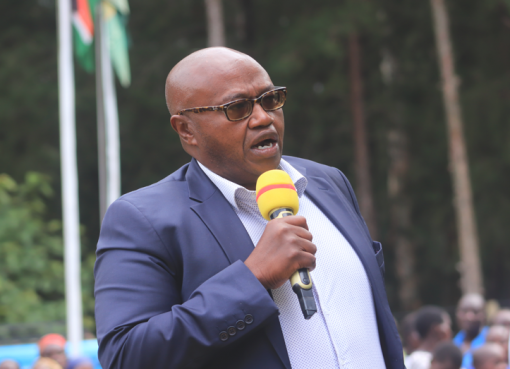
The Director of Public Prosecutions (DPP) Renson Ingonga has defended his office against criticism over its handling of investigations and case withdrawals, stressing that such decisions were pegged on a review of evidence provided by investigative agencies.
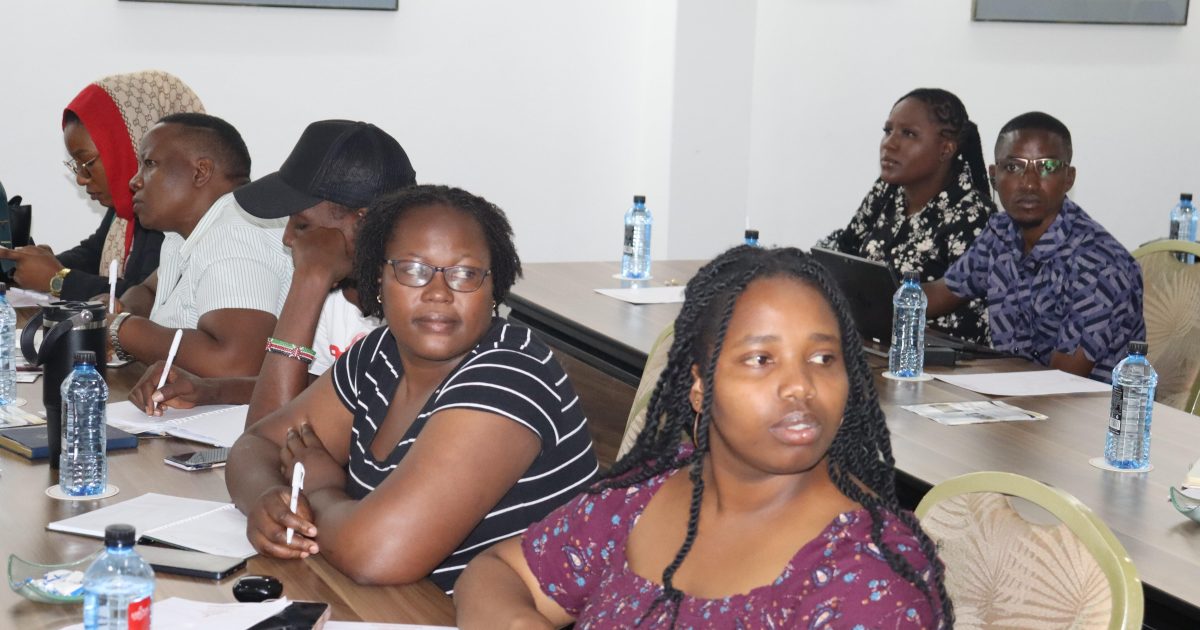
Speaking during a week-long training workshop for journalists at a Mombasa hotel, Ingonga clarified that the ODPP does not investigate crimes but determines whether the evidence submitted meets the threshold for prosecution.
“The ODPP does not carry out investigations. We review files submitted by investigative agencies. At Shakahola, bodies are still being exhumed and post-mortems are pending. Until those processes are complete, no charges can be confirmed,” he explained.
Ingonga also distanced his office from police detentions, noting that arrests and holding suspects fall squarely under the police.
“It is the police who arrest. If a suspect is held beyond 24 hours, that responsibility lies with the police. Only when they seek more time after 24 hours do we move to court for pre-trial detention orders,” he said.
He emphasised that prosecutions can only succeed if evidence is “watertight”, revealing that incomplete files are often returned to investigators for further work.
“In criminal cases, evidence must meet the threshold of beyond reasonable doubt. That is why we sometimes return files for additional investigation. Our priority is to avoid weak cases that collapse in court,” the DPP added.
On case withdrawals, Ingonga invoked Article 157 of the Constitution, which empowers the DPP to withdraw charges before judgement with court approval.
He argued that withdrawals protect the state from costly compensation claims arising from wrongful prosecutions.
“If a case proceeds with weak evidence and ends in acquittal, the accused can sue the state for malicious prosecution. Withdrawal prevents such losses to taxpayers,” he said.
Citing the corruption case against Trans Nzoia Governor George Natembeya, Ingonga noted that initial allegations of Sh1.4 billion were scaled down to Sh3 million after a review of evidence.
“We only proceed with what is supported by evidence. Inflated or unsubstantiated figures collapse cases,” he explained.
The DPP acknowledged capacity gaps, pointing out that the ODPP is understaffed by about 50 prosecutors.
He however dismissed claims of a massive backlog, saying the office is currently reviewing 185 files from the Independent Policing Oversight Authority (IPOA).
Ingonga further revealed that cases are continuously reviewed, even after trials have begun, and that suspects may be turned into witnesses if their testimony strengthens a case.
“Our role is to ensure justice is served through credible prosecutions. Where evidence is insufficient, we direct further investigations or withdraw to safeguard the integrity of the justice system,” he affirmed.
By Chari Suche and Sitati Reagan