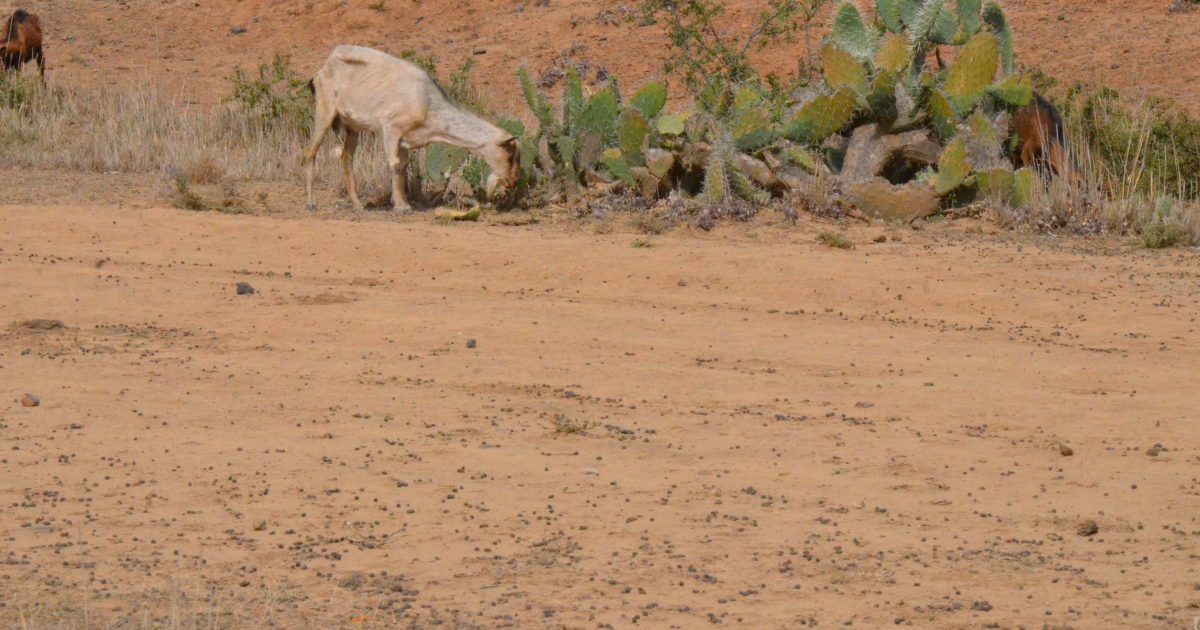
Kieni constituency, Nyeri county, is sliding into early alert stages of drought, following a failed short rain season, according to preliminary findings of the 2025 food security assessment.
Officials have said that although Nyeri County was not among the list of 22 counties that have been hit by drought, current indicators in Kieni constituency could deteriorate if early mitigation measures are not put in place.
According to county National Drought Management Authority coordinator, Abdi Yussuf, the findings from the assessment indicate an increasing vulnerability in Kieni constituency.
He warned that the water, food and pasture situation could potentially come under severe strain following the weatherman’s prediction of higher temperatures and drier conditions in the coming days.
“Even if the situation is not dire, we need to take into consideration what may happen in the near future if the long rains do not perform well. We could soon experience depletion of resources such as water and livestock feeds so we urgently need to raise interventions,” said Yussuf, while addressing the Nyeri County Steering Group meeting.
The findings from the assessment conducted after the short rains of October-November-December, show Mugunda and Gakawa wards are the most affected with an estimated 25-30 per cent of the population in need of aid.
In Thegu River and Gatarakwa, an estimated 15-20 per cent of the population will require drought intervention, while Endarasha, Mwiyogo and Mweiga, 10-15 per cent of the population will require assistance.
In Naro Moru, Kiamathaga and Kabaru, between 5 and 10 per cent of the population will require drought interventions.
The water resources available are already under strain with the available supply expected to last for one and a half months.
The findings show that rivers in the constituency are flowing below normal rate due to excessive water and failed short rains.
In some areas among them Gikomo, Muthuini in Kieni-West and Gatuanyaga, Mureru and Kabati in Kieni-East, the impact of the dwindling water supply is already being felt with reports indicating that locals are relying on water vendors for water supply.
“In the mixed farming zones, flows are approximately 50 per cent, while in the marginal mixed farming they are flowing at about 30 per cent of normal rates,” says the report.
The report indicates that although the short rains supported limited pasture regrowth, the available stocks will last for only a month and a half.
It further shows that pressure is expected to intensify in the coming days following the migration of 3000 head of cattle and 1000 sheep from neighbouring Laikipia to Keini East.
Similarly, the county is staring at increased cases of conflict between the local and the immigrating herders, amidst imminent disease transmission as cases of foot and mouth disease have already been reported.
“Locals are unhappy because the livestock are competing with their herds for water and pasture. We are likely to end up with conflict, as some livestock have already encroached into Solio ranch. Cases of human-wildlife conflict might also emerge as wildlife start moving into people’s farms in search of food,” said Jane Njuguna, the Acting Chief Officer for the County Department of Agriculture, while giving her remarks before the committee.
On the other hand, the food reserves are also not looking rosy either. The preliminary findings show that maize production in the county is expected to drop by 15,015 bags. This is a 32.54 per cent drop from the long-term average indicating the anticipated strain on the staple.
Kieni East Deputy County Commissioner Martin Mauki said that the committee will continue to monitor the constituency to safeguard livelihoods.
He said the committee also intends to roll out targeted interventions, which include provision of food and non-food support to the most affected residents.
A report by NDMA shows that 23 counties are adversely affected by drought, with fears that the situation could get worse in the coming days due to the harsh weather.
The report says that Mandera is the hardest hit with the situation in Turkana, Wajir, Garissa, Tana River, Kilifi, Kwale, Isiolo, Kajiado and Marsabit deteriorating by the day.
The other affected counties include Samburu, Taita Taveta, Tharaka Nithi, Kitui, Laikipia, Baringo, Makueni, Narok, Embu, Meru, Lamu and West Pokot.
By Wangari Mwangi