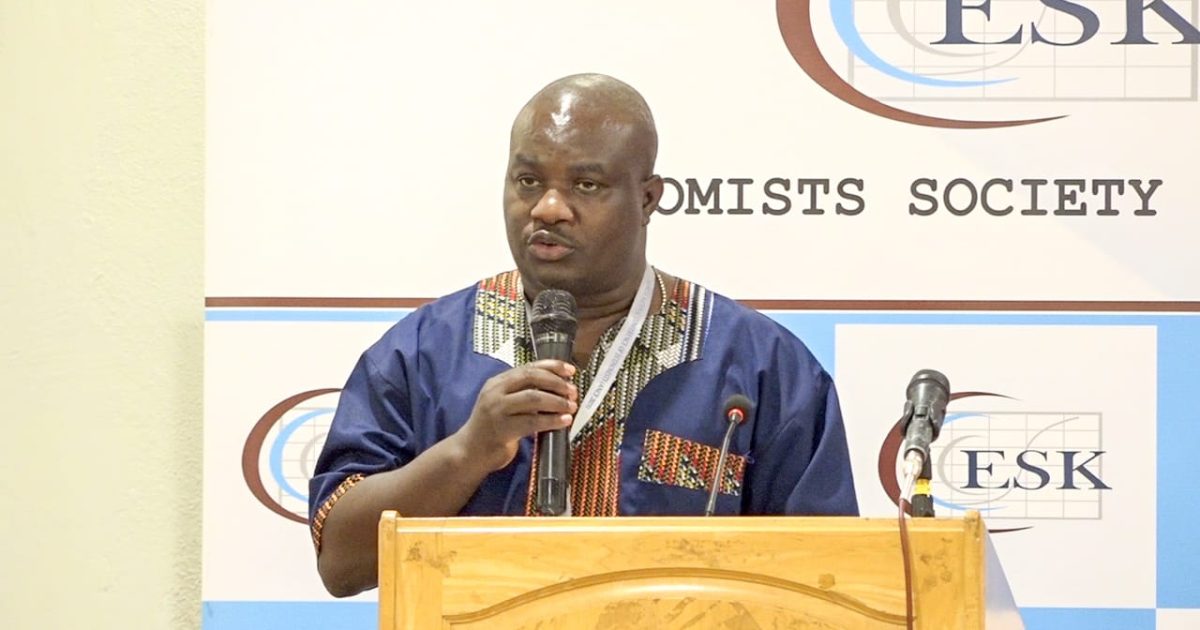
The Chairman of the Economic Society of Kenya (ESK) Dr. Ulwodi Dustone has urged policymakers and economists to anchor Kenya’s development agenda on strong institutions that promote sustainability, inclusion, and trust in governance.
Speaking during the Second Annual National Conference of Economists 2025 at Diani Reef Beach Resort and Spa in Kwale County, Dr. Dustone said that the country’s economic future depends not only on natural resources or demographics, but on the country’s ability to build and sustain effective institutions.
“We must recognise that markets do not exist in isolation. They are embedded in rules, norms, organisations, and governance systems that either enable or constrain development,” he said, noting that institutions serve as the “rules of the game” while citizens and organisations are the “players”.
He pointed out that while Kenya has made significant strides through institutional reforms over the past decades, challenges such as weak enforcement, economic informality, and short-term policy thinking continued to hinder progress.
“The Kenya we want must be anchored on institutions that promote sustainability,” Dr. Dustone emphasised.
“This extends beyond environmental stewardship to embedding long-term thinking into our economic governance,” he added.
The ESK Chairman further underscored the importance of inclusion, arguing that growth does not automatically translate into shared prosperity.
He called for institutions that expand access to education, safeguard property rights for women and marginalised groups, and enforce fair taxation.
“Where rules remain unevenly applied or where enforcement is limited, growth risks leaving some behind,” he warned.
Dr. Dustone noted that trust in public institutions is critical for Kenya’s economic performance.
He expounded that when citizens believe justice is impartial, contracts are enforced, and public resources are responsibly managed, they are more likely to invest, innovate, and productively participate in the economy.
Economists were also urged to embrace institutional economics not just as a theory, but as a practical framework for shaping policy in line with this year’s theme, “The Kenya We Want: Achieving Sustainable Development for Inclusive Prosperity.”
“Our task is to nurture institutions that foster innovation, while managing risk that balance efficiency with equity, and that bridge present needs with future aspirations,” Dr Dustone said.
“Kenya’s prosperity must not be fleeting, but enduring; not exclusive, but inclusive; not short-lived, but sustainable,” he added.
By Sadik Hassan