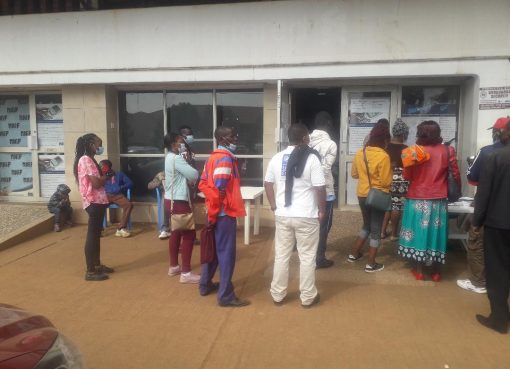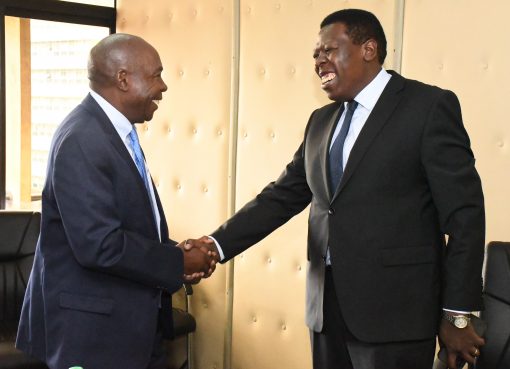
The Energy and Petroleum Regulatory Authority (EPRA) held a public consultative forum at the Eldoret National Polytechnic to gather views on the proposed Kenya Pipeline Company (KPC) Transportation and Secondary Storage Tariffs for the period 2025/26 to 2027/28.
The forum sought stakeholder input on KPC’s application to increase transportation tariffs by 3.8 percent per litre, a move that could translate to an additional 15 to 16 cents at the pump if approved. Once determined, the new rates will apply for the next three years.
EPRA Director General Daniel Kiptoo underscored the significance of the consultations in ensuring transparency and inclusivity in the tariff review process, noting that the Authority is hosting public meetings across the country to gather feedback from citizens and industry players before making a final decision.
Kiptoo emphasised that the exercise is a constitutional requirement to uphold fairness and transparency in the decision-making process.
“Our goal is to strike a balance between enabling KPC to recover costs for critical infrastructure investments and maintaining affordable and reliable petroleum products for consumers,” stated Kiptoo.
He affirmed EPRA’s commitment to a participatory approach, saying the Authority is “listening to stakeholder views to ensure that the process reflects both consumer and industry interests”.
Kiptoo explained that EPRA is reviewing KPC’s request to revise its current tariff of Sh5.44 per cubic metre per kilometre upwards by 2.4 percent over the period from mid-2025 to mid-2028.
According to Kiptoo, KPC has justified the proposed increase as necessary to fund major capital investments, including new storage tanks, flow rate upgrades in Western Kenya, replacement of outdated computer systems, and the establishment of a modern Data and Control Centre.
He said even with the proposed increment, pipeline transport would remain 42 percent to 53 percent cheaper than road transport.
On his part, KPC Managing Director Joe Sang said the company is seeking to raise the overall pipeline tariff from Sh. 5.44 per cubic metre per kilometre to Sh 5.56 in 2025/26, Sh5.75 in 2026/27 andSh6.61 in 2027/28.
“The additional revenue is required to maintain and upgrade the vital pipeline network from Mombasa to Western Kenya and to fund system modernisation and capacity expansion,” Sang said.
He added that the tariff review process, guided by EPRA, is based on KPC’s operational needs and a fair return on assets.
“The proposed tariffs will have a minimal impact on pump prices which are about 12 cents in Nairobi, 14 cents in Nakuru and 16 cents in Kisumu and Eldoret,” he clarified.
Eldoret KPC Depot Manager Eng. Jeremiah Mwangangi explained that the Western Kenya pipeline system, installed in 1994, has outlived its lifespan and urgently requires expansion from its current 570 cubic metre capacity to about 900 cubic metres.
He further highlighted that the company is also constructing a 10,000 cubic metre petrol storage tank and an 8,000 cubic metre jet fuel tank in Eldoret, alongside upgrading the jet fuel filtration system to meet international standards set by the Joint Inspection Group (JIG) and the International Air Transport Association (IATA).
Mwangangi cited inflation, exchange rate fluctuations and the rising cost of imported materials as key pressures on operations, necessitating gradual tariff adjustments of 3 per cent, 2.4 per cent and 2.6 percent over the next three years.
During the forum, stakeholders and members of the public raised strong concerns about the timing and socio-economic implications of the proposed review.
Kepher Odongo, a representative of the Energy Dealers Association, urged KPC to first cut internal costs before seeking tariff hikes.
“KPC should review staff benefits and asset management before burdening the public. Raising tariffs now will only worsen the cost of living and could lead to job losses,” he cautioned.
Dennis Kiptanui, a resident of Uasin Gishu, said any increase should be minimal, gradual and considerate of rural consumers.
Fred Kemboi, another participant, questioned the basis of the 3.8 percent increment, asking why the company had not considered a smaller increase or even a reduction.
EPRA noted that all feedback gathered from the consultations would be presented to its Board before a final determination is made.
The Authority reaffirmed its legal mandate under the Energy Act, 2019, to regulate petroleum tariffs while ensuring efficiency, fairness and stakeholder inclusion.
Stakeholders and members of the public are encouraged to review the proposals and submit their feedback via EconomicRegulation@epra.go.ke
By Fredrick Maritim and Mariam Saleh