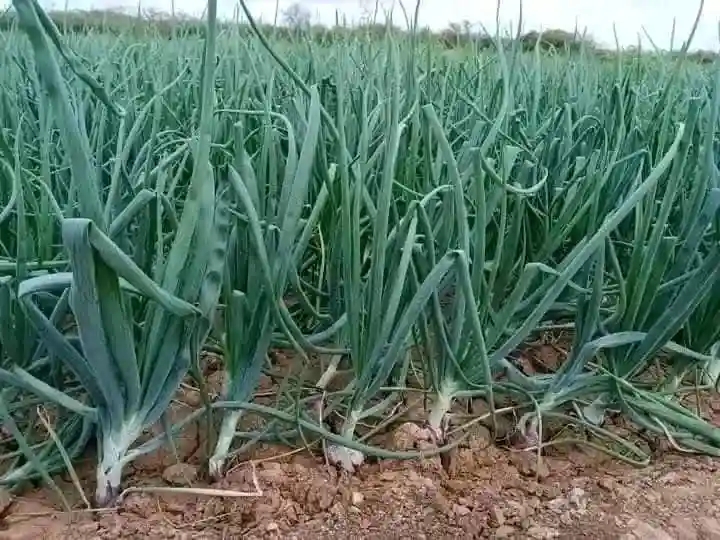
Farming remains both a way of life and a daily gamble with the weather for most rural households, but in Meteitei location in Tindiret Sub County, John Kirui is rewriting the script of his agricultural story.
On his modest two-acre farm, he has made a deliberate decision that reflects both experience and survival instinct; one acre is under maize, and the other is under onions.
For Kirui, this is not just a change in planting patterns but a response to years of uncertainty brought about by increasingly unpredictable rainfall patterns. Like many smallholder farmers in the area, he depends entirely on rain-fed agriculture, meaning every season begins with earnest hope and usually ends with uncertainty. There are no irrigation systems to fall back to, no guaranteed water supply, only the skies above and whatever they decide to give as precipitation.
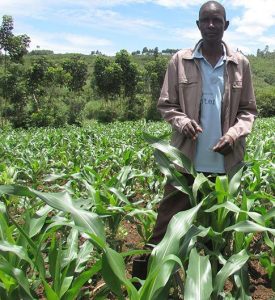
Over the years, Kirui has watched his maize crop suffer under shifting weather patterns. In some seasons, long dry spells would strike just as the crop was nearing maturity, leaving plants withered and yields drastically reduced. In other years, heavy rains would flood his fields, slowing growth and encouraging crop diseases. Each failed or poor harvest came with the same consequence: loss of income and deepening vulnerability.
It is from these experiences that his decision to diversify emerged. Instead of continuing to rely solely on maize, Kirui introduced onions on half of his land, hoping to spread the risk and increase his chances of at least partial success regardless of how the rains behave.
“I realized that depending on one crop is too risky,” he says, standing between rows of maize on one side and young onion shoots on the other. “If the rains fail, everything fails. But if I have different crops, I may not lose everything.”
The structure of his farm now tells a story of balance and adaptation. One acre is dedicated to maize, a staple crop that remains essential for household food security. The other acre is under onions, which he sees as a strategic backup and a potential source of income even when maize underperforms. While maize continues to anchor his food needs, onions represent flexibility in a system that has become increasingly unpredictable.
Onions, he explains, were not chosen randomly. Unlike maize, which is highly sensitive to rainfall timing and distribution, onions can tolerate a degree of moisture variation and often perform better under careful management. They also offer a quicker return cycle and can fetch reasonable prices at local markets when conditions are favorable. However, Kirui is quick to note that the onion crop is not without challenges, especially in a purely rain-fed system like in his case.
Farming in Meteitei and the wider Tinderet Sub County has become more complex in recent years. Farmers speak of seasons that no longer follow predictable patterns, where rains may start late, stop abruptly, or become too intense within short periods. For farmers like Kirui, who rely entirely on rainfall, such changes have made traditional farming approaches increasingly unreliable.
Without irrigation or modern water management systems, Kirui relies on observation and experience to guide his planting decisions. He watches the sky closely, feels the soil, and makes judgment calls that determine the fate of his crops for the season. Yet even with this experience, uncertainty remains a constant companion.
“I cannot predict the weather like before,” he says. “Sometimes you plant expecting rain and it delays. Other times it comes too much. You just adjust as you go.”
The introduction of onions on his farm represents a broader shift in thinking among farmers in the area. While maize remains dominant due to its cultural and dietary importance, there is a growing realization that depending on a single crop is increasingly risky. Diversification, once seen as optional, is now becoming a practical necessity.
On Kirui’s farm, the contrast between the two crops is striking. The maize stands upright in neat rows, waiting for the next phase of rainfall cycle to determine its outcome. The onions, closer to the ground, grow steadily in their own rhythm, offering a different kind of hope, one that is not tied entirely to a single outcome.
He describes his new approach simply, “The maize is for food, the onions are for backup. That is how I see it now.”
This dual strategy does not eliminate risk entirely. Both crops still depend on rainfall, and a prolonged dry spell or excessive rains could still affect them simultaneously. But Kirui believes the difference lies in reducing total dependence on one outcome. Even if maize fails, onions may still come in as an option to salvage the season.
Agricultural practices in the Sub County are gradually evolving as farmers respond to climate uncertainty. Extension officers in the region note that more farmers are adopting intercropping and crop diversification as coping mechanisms. These changes are not driven by formal programs alone but by lived experience by seasons of loss that force reconsideration of long-held traditions and practices.
For Kirui, the shift has been gradual but firm. He has not abandoned maize, nor has he fully committed to a new crop system. Instead, he has chosen balance. His two-acre farm now functions as a micro experiment in resilience, where survival depends on spreading risk rather than concentrating it.
As he walks through his farm, moving from maize to onions, Kirui reflects on how much has changed. Farming, he says, is no longer just about planting and waiting for harvest. It is about adjusting, learning, and making difficult decisions based on experience rather than expectation.
“We used to trust the seasons,” he says. “Now we trust what we have learned from the seasons.”
His story reflects a wider reality facing smallholder farmers across the region. Climate variability is reshaping agriculture in ways that require new thinking, even in the absence of advanced technology or irrigation systems. In such settings, adaptation is not a choice for the future but instead it is a necessity for the present.
For Kirui, the success of this season will ultimately depend on the rains. But unlike before, his fate is no longer tied to a single crop. Instead, it is distributed across two possibilities, offering at least a measure of security in an increasingly uncertain environment.
by Sammy Mwibanda