Smallholder farmers in Kirinyaga are experiencing a remarkable transformation in agricultural productivity following the launch of the Kandeki Irrigation Project in July 2023, a model initiative that officials say could be replicated nationwide.
The project, a partnership between the Kenya Government, Equity Bank, the German Government, and KfW Development Fund, has already delivered water to over 225 acres of farmland, directly benefiting 246 farmers, with more than 800 smallholders expected to benefit in the near future.
The German Government contributed €2.5 million, while Equity Bank provides financing and capacity-building support.
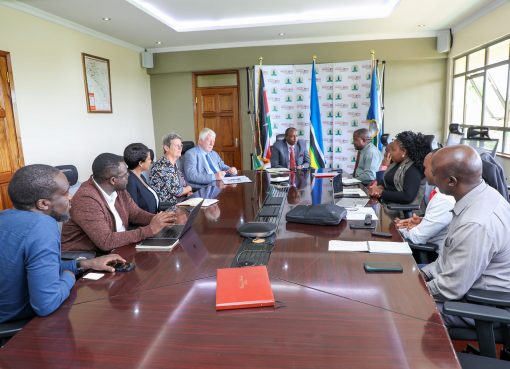
Speaking during the commissioning of the Kandeki Project, Water, Sanitation, and Irrigation Cabinet Secretary Eric Mugaa emphasised the transformative potential of irrigation farming.
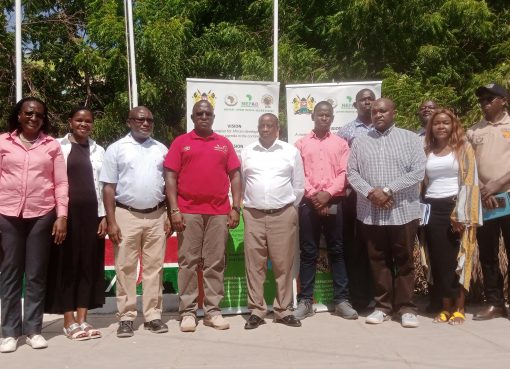
Joining him were Kirinyaga Deputy Governor David Githanda and other stakeholders, including Germany Ambassador Sebastian Groth and Equity Bank CEO Dr. James Mwangi. The Cabinet Secretary highlighted that beyond increased yields, the projects aim to create jobs and boost household incomes
Cabinet Secretary Eric Mugaa emphasised the government’s commitment to linking farmers with markets and agribusinesses, in partnership with county governments.
“The National Government and county Government is working to ensure that farmers are connected directly to aggregators and buyers. This is part of a new value chain we are developing, which will improve efficiency, increase profits, and create sustainable livelihoods,” he said.
“Kandeki Irrigation Project was designed to support 245 acres of farmland, directly benefiting 246 farmers, but the vision goes beyond this,” he noted.
The CS also highlighted Kagio as a model of a 24-hour working economy, reflecting the potential of irrigation to transform agriculture into a continuous, high-output enterprise.
He further stressed the importance of partnerships in driving sustainable agriculture.
“Irrigated farming is the future. These community-led projects provide a clear model that can be scaled across the country. With water from Thiba Dam, farmers in Mwea are now able to harvest more than three times a year,” he said.
Principal Secretary in the Ministry of Water, Sanitation and Irrigation Ephantus kimotho emphasized that sustainability and farmer empowerment are central to the project’s long-term success.
He explained that the Kandeki Irrigation Project was not only about delivering water to farms but also about equipping farmers with knowledge, skills, and organizational structures to maintain productivity for decades to come.
“Water alone is not enough. Farmers need to understand modern farming techniques, adopt crop rotation, manage soil fertility, and integrate livestock and crop production for maximum sustainability. This project was designed to encourage such practices while creating a framework that ensures long-term benefits for the farmers and the environment,” said Kimotho.
He highlighted the innovative financing model, noting that 50% of the loan comes from the German Development Fund, 10% from the farmers themselves, and 40% through Equity Bank’s Equity Foundation. This structure ensures ownership, accountability, and shared responsibility, which are key for sustainable farming.
“The idea is to create farmers who are not just recipients of aid, but entrepreneurs in agriculture. By engaging farmers in cooperative structures, training them on governance, and linking them to the market, we are building a resilient agricultural system that will continue to thrive even in adverse conditions,” he added.
The PS also stressed capacity building as a cornerstone of sustainability. He noted that the ministry, together with partners, has organized training sessions on modern irrigation techniques, soil and water conservation, pest and disease management, and post-harvest handling.
Farmers are encouraged to adopt agronomic advice, use technology, and plan their cropping calendars in alignment with both seasonal conditions and market demand.
“We call our Farmers work together, form cooperatives, and leverage expertise from agronomists and extension officers. These interventions increase productivity, reduce risk, and ultimately secure income for smallholder households,” he said.
On sustainability, the PS underscored environmentally friendly practices by calling farmers to diversify crops, integrate livestock, and maintain soil health. For instance, planting leguminous cover crops enriches the soil naturally, while irrigation ensures water-efficient farming, reducing wastage and protecting our natural resources,” he explained.
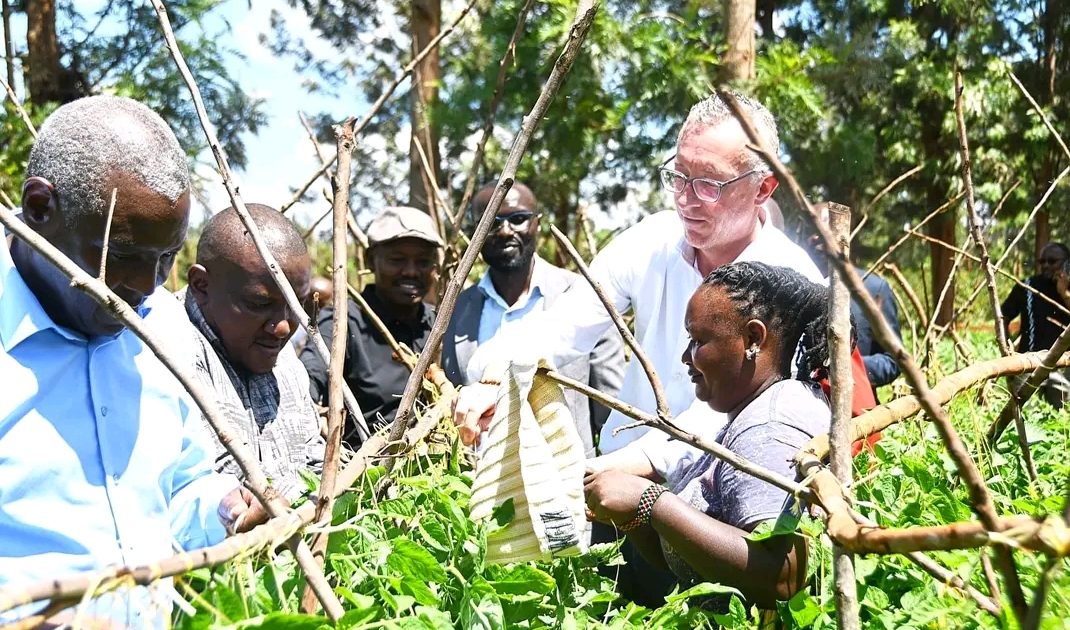
Daniel Muriuki, the Kandeki Irrigation Project has been nothing short of transformative. Once reliant on unpredictable rain-fed maize farming, Muriuki now manages 300 coffee stems, each yielding an average of five kilograms last year, with expectations of higher production this year thanks to irrigation.
“I could never have imagined such results. With reliable water, I can plan my planting seasons, practice crop rotation, and plant French beans alongside tomatoes. This allows me to harvest three times a year. Our income has increased significantly, and I am able to invest in my family and farm,Muriuki said.
Muriuki sees agriculture not just as a means of survival, but as a business and a source of jobs. He has also employed casual workers to help manage his expanded farm and has hired an agronomist to optimize production.
“Agriculture can be profitable if we plan well. We no longer wait for rain; we have water on demand, and that changes everything,” he said.
He has also embraced sustainable mixed farming, planting Muruto grass between coffee trees to feed his cows and growing 40 macadamia trees producing about 30 kilograms as per last year.
“Macadamia has been a great investment. Profits help me reinvest, hire workers, and support my children’s education. I now see farming as a full-time business, not just a seasonal activity,” he added.
Muriuki emphasized the importance of continued support. “Government subsidies on fertilizers and farm chemicals have lowered costs, but we need more guidance on market linkages and crop pricing. If farmers are organized and have access to water, knowledge, and markets, agriculture can be a major source of employment and wealth in our communities,” he said.
Other farmers have reported similar experiences. In Mitooini, farmer Jane Wanjiku has diversified her crops, integrating vegetables, fruits, and poultry.
“I no longer depend on unpredictable weather. I plan my planting calendar, harvest consistently, and sell produce in local markets. The project has empowered us to treat farming as a business and a career. It is providing jobs, boosting incomes, and giving hope to young people who want to remain in agriculture,” said Wanjiku.
Wanjiku highlight the broader impact of irrigation on community development. Reliable water supply encouraging youth to engagement in farming, leading to small-scale agribusiness ventures such as nurseries, vegetable packing, and storage solutions.
Deputy Governor David Githanda praised the strong foundation laid by the Kandeki Irrigation Project, noting that the government has walked with farmers every step of the way.
“We have supported our farmers from planning to implementation, ensuring they have the tools, knowledge, and resources to maximize productivity,” he said.
He emphasized the importance of youth engagement in agriculture. Saying for too long, the young people have seen farming as a last resort.
“Projects like Kandeki show that agriculture can be innovative, profitable, and aspirational. Young people are now challenged youth to get back to farms, starting agribusinesses, and embracing modern techniques, which not only boosts productivity but also creates employment opportunities,” he noted.
Githanda also highlighted the economic impact of irrigation on households and the county at large. Saying Reliable water supply allows farmers to plan better, increase yields, and invest in value addition. We are seeing smallholder farmers move from subsistence to commercial farming. Saying this shift will transform local economies, creating jobs in transport, marketing, and agro-processing.
“We encourage farmers to diversify crops, maintain soil fertility, and adopt water-efficient irrigation. Our vision is to ensure that the gains from these projects are not just temporary but sustainable for generations. Agriculture must remain productive without degrading our natural resources,” he noted.
He also said the Kirinyaga county government is committed in supporting agribusiness development and market access.
“We are linking farmers to modern markets through initiatives such as the Sagana Industrial Park and supporting cooperatives to invest in storage, packaging, and transport. This ensures farmers can earn competitive prices, reduce post-harvest losses, and scale up their businesses,” said Githanda.
German Ambassador Sebastian Groth emphasised the importance of monitoring impact on the ground.
“Agriculture remains the backbone of Kenya’s economy. We want to see how this program is improving livelihoods at the grassroots level,” he said.
Equity Bank CEO Dr James Mwangi reinforced the bank’s commitment to making irrigation commercially viable for smallholders.
“We have financed 24 irrigation schemes and aim to support more than 200 across the country. Community-led irrigation diversifies risk, improves crop quality, and provides a clear pathway to prosperity,” he said.
Mitooini, Cooperative Chairman Evan Muriuki Ngari echoed the benefits.
“Our 500-member group now produces at least 1,200 kilograms of bananas, has invested in a cooler, and hired an agronomist. This project has truly transformed our community. It has turned farming into a sustainable business and a source of jobs for our youth,” he said.
By David Wandeto