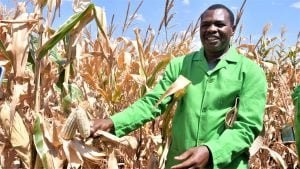
Maize farmers across Kenya are calling for an end to the prolonged legal battles over genetically modified (GMO) crops, specifically Bt maize, and urging the courts to lift the ban that has stalled its adoption.
Farmers and industry stakeholders stress that the technology is vital for boosting yields, reducing the cost of production and losses associated with the insect pest, especially FAW, and strengthening resilience against climate change.
The legal status of Bt maize has been marked by years of uncertainty, with shifting court rulings following the government’s 2022 decision to lift a decade-long ban on GMO cultivation and importation. That decision was later overturned in 2025, reigniting disputes that continue into 2026.
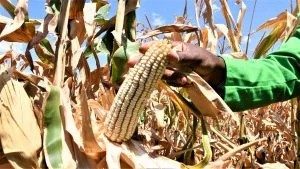
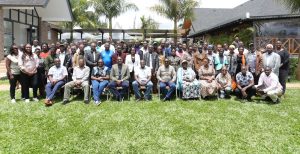
Despite the stalemate, farmers remain eager to embrace Bt maize. During a recent meeting organized by KALRO, CGA, and AATF, farmers emphasized that the technology is not a replacement for conventional crops but a voluntary tool to combat devastating pests such as stem borers and fall armyworms.
Speaking at the Agri-Tech Forum in Kitale, smallholder farmers highlighted the urgent need for improved seed varieties. Pauline Choge noted that climate change has severely reduced yields; “It is high time farmers are given a chance to access improved maize varieties that can withstand harsh conditions, pests, and diseases and deliver better harvests,” she said.
Farmers at the workshop expressed growing confidence in biotechnology, with some admitting they had shifted from skepticism to support after learning how Bt maize builds on natural processes to manage pests.
Scientists reinforced this message, pointing to TELA maize, a drought-tolerant, insect-resistant maize hybrid, as a proven solution capable of delivering 30–50% higher yields under stress conditions. Dr. James Karanja of KALRO, Njoro, warned that Kenya’s maize demand is projected to more than double by 2050, underscoring the need for innovation.
“Bt technology reduces pesticide use, improves harvests, and strengthens resilience. This is not just science; it is about equity, sustainability, and securing our food future,” Dr. Karanja said.
Globally, Bt crops are among the fastest adopted agricultural innovations, cultivated in over 34 countries on more than 190 million hectares. Farmers in Kenya argue that continued delays in adoption risk leaving the country behind, costing billions annually in crop losses and imports.
Countries like Nigeria, Ethiopia, and South Africa have successfully adopted this technology. Kenya must act now to unlock similar benefits for farmers and the economy.
Industry leaders and farmers alike are united in their call: end the legal battles, lift the ban, and allow Kenya’s farmers and the nation to benefit from modern agricultural technologies.
by Wangari Ndirangu