Hass (Avocado) Farmers in Kisii county are brokenhearted following destruction of their source of livelihood by an unknown disease.
The farmers are now calling upon the ministry of agriculture to urgently intervene and find a lasting solution, lest they incur unthinkable losses after planting over 20,000 seedlings within two sub-counties in the last two months.
The seedlings were donated by Esther Okenyuri Nyaituga Foundation to Bomachoge Borabu and Bomachoge Chache constituencies and distributed through local coordinators and area chiefs.
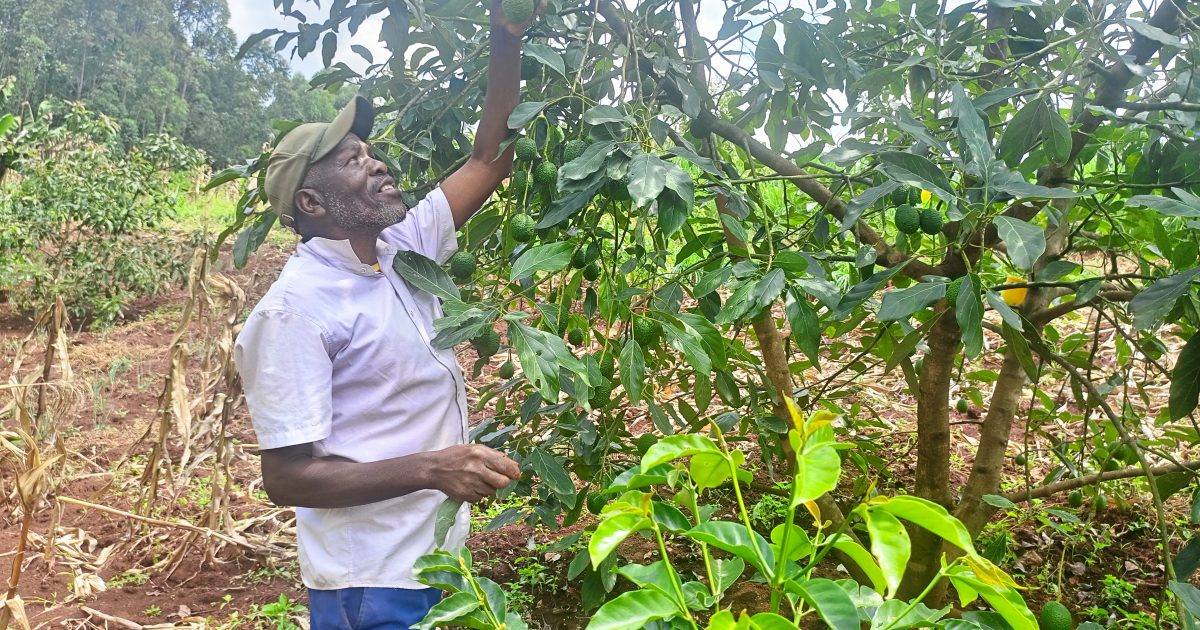
A spot check in various farms in the constituencies revealed that the leaves were developing black spots and lines at the base before drying and later shedding off leaving the stem to die.
Speaking from his farm in Iwera Sub-location, Bokimonge ward, in Machoge Borabu, Jeremiah Mbaka who has farmed the fruit on his three-acre farm since 2016 said he has always harvested the 500 trees successfully but his profits are now dwindling since the disease attacked in March this year.
Mbaka expressed disappointment saying the available chemicals were not effective, and the disease was causing his revenue to dip from Sh120 per kg last year to Sh70 per kg since March this year.
Mbaka lamented how he was not expecting any harvest beginning August season which ends in October this year, even after spending a fortune looking for effective chemicals from the capital city Nairobi.
Kennedy Ongaga from Ibencho Division in Gucha Subcounty explained how his effort of four years has been wasted as out of 100 trees only 20 are surviving.
Ongaga wants the relevant authorities to move fast now that he has planted over 50 more trees donated from the Nyaituga foundation increasing his tree population to 125, with at least 17 being under harvest.
Accusing the authorities of laxity in finding a remedy for the strange disease, Ongaga cited a myriad of other challenges like lack of ready market and exploitation by middlemenwho buy the fruit in bulk but at low prices.
“We are travelling many kilometers, from machoge chache to Bobasi Constituency to look for market even as we grapple with these disease challenges!” he quipped.
He urged the patron of the foundation, nominated senator Esther Okenyuri to assist with more seedlings adding that farmers were not able to purchase the seedlings which cost Sh300 each.
Ongaga said he deemed the Hass species superior to the original giant species in that the former grows faster, occupies less space, has better returns, tastes sweeter and is preferred by buyers.
During the peak season, he said, one tree produces between 150 and 200 avocado fruits converting to sh. 6000, and a minimum of sh. 14,000 per year.
Ezra Onyango of Ibencho ward said he started farming 4 years ago with 65 trees but only a few managed to grow after the disease attack, and now he is harvesting only 10 trees.
He said he needed 30 more seedlings to add to the 25 he got from the donation by the senator.
“I need more seedlings because I have space for 30 more in my garden and I need to be able to educate my children,” he said.
Machoge Masaba location in Kenyenya subcounty area Chief Eric Onsare said farmers had embraced the crop but many can’t buy the seedlings for lack of resources.
He explained that an industrial park was under construction to enable the farmers to sell the crop fast.
He added that the fruit was helping improve food security in the area, complementing bananas, tea and sugarcane whose earnings were meager because of the smallholder farms.
However, the Kenyenya Subcounty Crops officer Fred Karanja, noted that the farmers needed to know the correct spacing of the Hass avocado tree which is 7 m by 7m in order to give it an ample canopy for good production.
Karanja acknowledged that the crop was being attacked by a parasite dubbed Persian mite, which was causing mass destruction of the crop and lowering its uptake.
He urged the farmers to seek advice from his office concerning the correct farm inputs, including use of organic manure in place of the common chemical fertilizers, because the soils had become very acidic and there was an urgent need for liming to improve yields on the farm.
According to Senator Okenyuri, farmers are losing their livelihoods, and even the recently donated plants could go down the drain if ministry of agriculture doesn’t move fast to arrest the anomaly.
Okenyuri urged the officers to go to the farmers instead of calling farmers to their offices, even as they await the outcome of a bill in senate that seeks to establish a framework through which these services can be offered effectively at county and national levels.
“We are supporting a bill in senate that seeks to establish a framework through which these services can be offered effectively without farmers being forced to travel to government offices,” she said.
Okenyuri also underscored the importance of ample civic education for farmers to know the benefits of Hass, which include having higher yields and growing within a shorter period unlike the other species.
According to a recent speech by County Governor Simba Arati, Hass Avocado Production currently accounts for 20% of avocado production in the county, but the goal is to increase it to 70%.
Arati said there was global demand for Hass avocados, and Kisii was well-positioned to benefit from both domestic and export markets.
He said Kisii County had the potential to produce more than 60 metric tonnes per hectare, but current average production stands at 16.5 metric tonnes per hectare, indicating room for improvement with better planting materials and farming practices.
A Hass avocado tree can start yielding fruit within 2-3 years when grafted and reach peak production between 3 and 5 years, with a lifespan of 25-40 years.
The local Jumbo (Giant) avocado variety is currently dominant in Kisii, covering an estimated 1,564 hectares.
By Jane Naitore