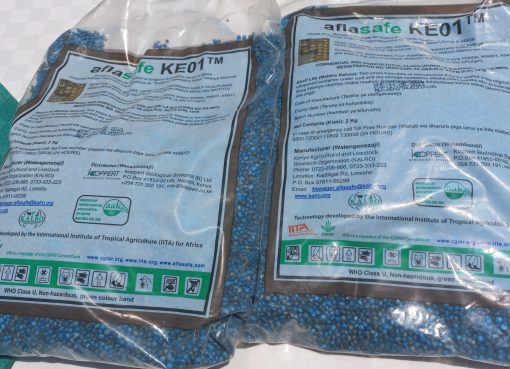
Kenya has been facing a significant challenge with the unsafe use of pesticides, leading to health risks for consumers and environmental contamination.
Concerns have been raised over high levels of hazardous pesticides (HHPs) and inadequate monitoring making it difficult to assess long-term health effects and ecological impacts.
Many farmers also lack proper training in safe pesticide use, leading to incorrect application, storage issues, and improper disposal, exposing both themselves and the environment to high risks.
Stakeholders in agriculture are now providing training and education to farmers on the safe use of pesticides and detecting counterfeits.
The aak-Grow, an association focused on promoting the responsible use of crop protection products and food safety in Kenya, has been collaborating with regulators to curb the entry and sale of counterfeits within the country.
aak-Grow CEO Dr. Eric Kimunguyi says that counterfeits pose a big threat to farmers and the agricultural industry, especially when it comes to the quality of production.
Speaking during a recent media training and tour of a farm in Salgaa, Nakuru county, where they have been training farmers on proper use of pesticides, the CEO said because of imbalances in different regulatory regimes among countries, there is always a possibility of gaps and routes that are easier to bring products through, especially porous borders.
He, however, noted that despite the different regulatory regimes among countries, Kenya in the East Africa region has a proper regulation framework in the way it registers its products as it normally does it from the source.
“We eliminate counterfeits from the source, both the supply side and the demand side. The demand is educating the farmers in terms of making sure they know how to identify counterfeits,” Kimunguyi said, adding that consumers also need to buy products from registered shops.
Working with regulators and stakeholders from the Anti-Counterfeit Authority, the Pest Control Products Board (PCPB) has been key in ensuring that shops are being licensed and accredited to sell genuine products and also working at the cross-border level and this has seen the rate of counterfeit products coming in from outside the country go down by almost 60 percent.
Dr. Kimunguyi confirmed that there is a regional harmonisation of registration processes that is currently under discussion in the East African Community, and this, he said, will reduce loopholes that allow for counterfeits to go through or circulate.
Aak-Grow has been providing comprehensive training to farmers, extension agents, agro dealers, and manufacturers on the responsible and safe use of pesticides.
As an initiative of aak-Grow, they have been training Spray Service Providers (SSPs), who in turn offer professional pesticide application services within their communities.
Velma Wekesa, a Stewardship Officer at aak-Grow, said that the initiative was started because of a gap that exists amongst farmers with pesticide use.
“Farmers are the ones who feed Kenya, and you will find out that the majority of them misuse or overuse pesticides and the main reason has been not reading the pesticide label,” she said, terming the challenge as illiteracy or ignorance in most cases.
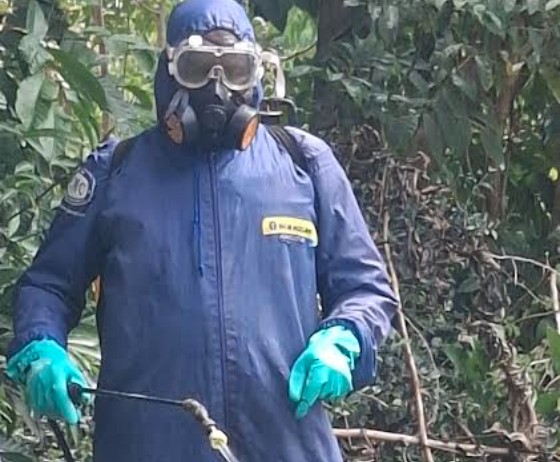
This aspect of SSP came into play because of this, and in collaboration with other partners, we train young men between the ages of 18 and 45 on the proper spray application in line with pesticide, pesticide label reading and, more importantly, using personal protective equipment while mixing and applying pesticides in the farm.
She noted that they have also trained them on identifying counterfeit pest products in the market, as well as on knapsack calibration that ensures the correct herbicide rate is applied to avoid crop damage, pollution, and waste.
“For the farmers using the knapsack to apply pesticides in the farm, if they do not buy a knapsack from the aggregate and go and use it over the years without calibrating, it brings out the aspect of overuse over time and farmers do not know this; thus, the SSP are trained on the practices.
Wekesa noted that the SSPs also act as linkages to empty pesticide collection points, and once they finish spraying, they collect the containers and the sachets, they do the triple rinsing aspect, and then puncture and aggregate the empty pesticide containers and take them to the nearest empty pesticide collection point.
“When the farmer seeks the services of an SSP, then we reduce the risks and we try and close the gap on irresponsible use or misuse of pesticides, and then by the end of the day, we get safe food on the table,” she said, urging the smallholder farmers to reach out to their nearest agriculture office to seek the contacts or linkages to an SSP within their locality.
All registered pesticides in Kenya contain all the safety information, running from the pre-harvest intervals all the way to the safety and personal protective equipment that one is supposed to have done before mixing and applying, all the way to expiry and therefore the SSP initiative in itself is a win-win situation,” she explained.
“We are not only helping the farmer put safe food on the table, but also the spray service provider makes some small earnings and because it’s community-based, the paid service, which is affordable, is an agreement between the farmer and the spray service provider depending on the service one wants,” she added.
Wekesa said they have so far trained over 2,600 SSPs across 16 countries that are actively engaged in agriculture and that the SSPs normally charge between a minimum of Sh50 per spray pump to Sh100.
“We do not advocate or encourage women to handle pesticides because they are homemakers. They handle food and also children at home and we want to avoid a high risk of contamination of the entire household.
Joel Mutai, who handles regulatory policy and standards at aak – Grow said they have been working towards reducing exposure to pesticides for farmers by ensuring adherence to dosage rates.
“aak-GROW emphasises the importance of proper handling and created empty pesticide containers to ensure environmental safety and human health using the Empty Pest Site container management just to enhance that there’s a proper life cycle management of pest control products and containers.
A new initiative is however overtaking this one and there is one called extended regulator that they are implementing and requires that the industry take responsibility for waste management.
“We call it Producer Responsibility Organization, (PRO) and they establish and operate collection and recycling systems, manage waste streams, and ensure proper disposal of designated materials. Prepare and submit necessary reports to regulatory bodies on behalf of producers as well as conduct public awareness campaigns and educational initiatives to inform consumers about proper waste disposal and recycling practices.
Eric Kamau, PCPB, Principal Compliance and Enforcement Officer, said they are encouraging the use of SSPs, saying this brings sustainability and more effective pesticide application to agriculture.
“We are hoping that this model will be replicated in various counties and that the uptake will be good enough to assist farmers who are not literate, who may not be able to apply pesticides for themselves or who may not even have access to personal protective equipment,” Kamau said.
Kamau said that soon they will be rolling out a hybrid labeling system going forward, there is something called the Globally Harmonised System (GHS) for Classification and Labelling of Chemicals and so that one will even add more visual elements to the label.
“We will have some signal words and some caution symbols that we hope will be able to communicate more to the end users,” he said.
The Enforcement officer mentioned that there is a pest control products bill that is currently in parliament, having gone through cabinet approval and so it’s supposed to go to the house and that it reinforces requirements that are already existing and also adds regulations in the pesticide space.
Last month, the Ministry of Agriculture and Livestock Development withdrew 77 pesticide products from the market and restricted the use of 202 others due to safety concerns and the presence of harmful active ingredients.
The action follows a comprehensive review of 430 pesticide products conducted by the Pest Control Products Board (PCPB), which identified products posing unacceptable risks to human health, crops, livestock, and the environment.
By Wangari Ndirangu