As heavy rains continue to pound Kiambu County, farmers are being encouraged to adopt proven conservation methods from Ondiri Wetland to curb the growing threat of soil erosion.
The ongoing downpours, being experienced across many parts of the country, have heightened fears among farmers in Kiambu county over the loss of fertile topsoil, a key component in sustaining agricultural productivity in one of Kenya’s leading food-producing regions.
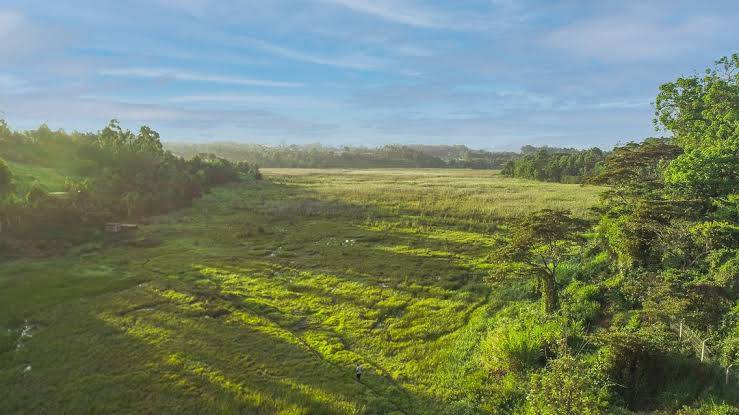
Ondiri Wetland, the only subterranean peat bog in the country and a critical source of both the Nairobi and Athi rivers, has in recent years become a model for successful environmental conservation through simple, nature-based solutions.
Efforts led by the Kenya Forest Research Institute in partnership with community groups such as Friends of Ondiri Wetland Kenya have focused on restoring and protecting the wetland from degradation caused by runoff and human activity.
Among the key interventions is the planting of vetiver grass and bamboo along erosion-prone sections of the wetland and its surrounding buffer zones. Vetiver grass, known for its deep and dense root system, helps bind soil together and reduces the speed of surface runoff, while bamboo stabilizes riverbanks and prevents further soil loss.
These measures not only protect the wetland but also help trap sediments before they enter water systems, improving water quality and preserving biodiversity.
Speaking to Kenya News Agency in Githunguri sub-county, farmer Mark Kamau said the heavy rains had worsened soil erosion on farms, affecting crop production.
“During these rains, a lot of topsoil is washed away. The soil becomes less fertile, and it becomes difficult to maintain good yields,” he said.
Kamau noted that adopting conservation practices similar to those used at Ondiri could help farmers safeguard their land against further degradation.
Agriculture officer James Kiprotich said the Ondiri model offers practical and cost-effective solutions that farmers can easily implement.
“Farmers should plant grasses such as vetiver and maintain proper ground cover to reduce the impact of runoff. These methods help conserve soil and maintain its fertility even during heavy rains,” Kiprotich said.
He warned that continued loss of topsoil could lead to declining farm productivity and increased reliance on fertilizers, raising the cost of farming and threatening food security.
Environmental experts have also raised concerns over the broader impact of soil erosion, noting that sediment washed into rivers and wetlands can disrupt aquatic ecosystems and reduce water quality.
The conservation efforts at Ondiri Wetland demonstrate how community-driven initiatives and sustainable land management practices can effectively address environmental challenges while protecting vital natural resources.
With rainfall expected to continue in the coming weeks, farmers in Kiambu are now being urged to borrow from the Ondiri experience to mitigate soil erosion and ensure sustainable agricultural production.
Recent data paints a worrying picture of the country’s soil health. According to a 2025 Soil Atlas report, Kenya loses up to 26 tons of soil per hectare annually due to erosion, with only 20 per cent of land considered suitable for food production. Experts warn that in some regions, soil loss exceeds 90 tons per hectare, underscoring the urgency of adopting sustainable land management practices.
By Grace Naishoo