Marsabit County is described as a region synonymous with climate change owing to its recurrent droughts, floods, soil erosion, drying of water sources and the rising levels of Lake Turkana, resulting in the disruption of sources of livelihoods for the predominantly local pastoral communities.
The situation has, over time, made the majority of the residents vulnerable to food insecurity with high rates of malnutrition, almost becoming a permanent feature.
Livestock keeping and animal trade, the main economic activity and source of food for the local communities, has greatly suffered a blow owing to frequent droughts, which have killed their animals and destroyed pastureland.
Efforts to diversify by engaging in crop farming, where the county government of Marsabit and development partners provide free seeds for a variety of fast-growing crops like maize and beans, have not borne much fruit because the rain has become erratic with unpredictable weather patterns.

The above scenario therefore called for a deliberate move to address and reverse the trend, which saw the World Food Programme (WFP) sponsor the generation of the county strategic plan (CSP) to engineer the development of sustainable solutions.
WFP supply Chains Officer Albert Mwambonu says the organisation entered into a memorandum of understanding (MoU) and a plan of operation (PoO) with the county government in order to achieve this endeavour, where the two entities work together in both the investment and implementation of the planned activities.
Mwambonu told the Kenya News Agency (KNA) in North Horr subcounty, where WFP and the county directorate of fisheries are actively engaged in the promotion of smallholder fish farming, that the move is aimed at enhancing food security and resilience among local pastoralist communities, who have for long depended on food aid.
He said that the adoption of aquaculture is purely a climate adaptation and an alternative source of livelihood for pastoralists in the arid areas of the county.
Local communities who are predominantly keepers of livestock that include camels, cattle, sheep and goats never had fish in their menu, as their culture prohibited them from consuming fish.
To propel climate-smart agriculture, a lot of awareness creation through training and sensitisation meetings on the benefits of fish farming and eating had to take place, hence the positive results.
“We have so far managed to establish fish farms in the very arid areas of North Horr, Moyale and Saku constituencies, where eating and trading in fish is now unbroken,” Mwambonu said, adding that the economic and nutritional value of the venture were real.
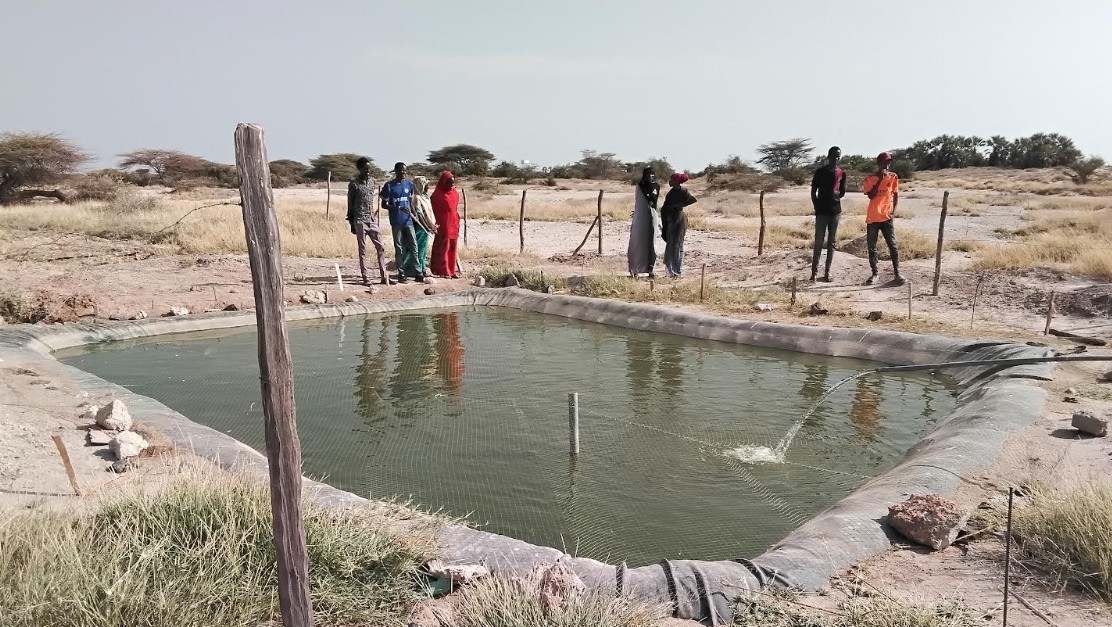
At the same time, a 40-member-strong self-help group, the Chalbi rural development initiative run by both men and women fish farmers, is running successful ponds that are stocked with 500 fish of the tilapia species.
The group leadership says it ventured into the activity, which traditionally was associated with those afflicted by poverty in the society, after being educated by officials from WFP and the fisheries department on its importance.

Hadija Guyo, the Chairlady of the Group, said that fish farming has made them food secure, besides offering a source of income made from sales of mature fish.
She pointed out that persistent droughts had wiped out their livestock, exposing them to all manner of vulnerability, as they had to depend on food aid from the government and donors for their survival.
Guyo says many locals who are in fish farming have been able to regain their dignity, which they had lost because of begging for food and other forms of basic support.
“Members of this group get dividends from fish sales after every harvest, which we also use to pay school fees for our children and to start small businesses,” she said with a broad smile of satisfaction.
The members also save a fraction of the sales for table banking, which they use as a revolving kitty.
The transformation is now three years old and the number of locals who want to be enlisted in the venture is growing by the day.
For Katelo Guyo, who initially reared a combined herd of camels, cattle and shoats numbering about 500 animals but currently has only a handful of goats after the stock was wiped out by three consequent droughts, now says there is always adequate water to support tilapia fish farming.
He underlined that the activity is not labour intensive, as once a pond has been established and stocked with fingerlings, the farmer’s work is reduced to just feeding, which is done once a day, while refreshing of water in the ponds is done every two weeks.
“I like this activity because it is quite friendly in terms of time saving because it is less demanding and located within our villages, hence giving one room to attend to other errands,” said Guyo, who also attested to tasting fish for the first time, while aged over 50 years, courtesy of WFP.
The county Fisheries Officer Sostine Wanjala says tilapia fish is well suited for rearing in arid and semi-arid areas, as it does not require a big supply of water and can survive in ponds under hot climatic conditions, which can be refreshed biweekly.
“Tilapia fish is highly resistant to diseases and does well in hot climatic conditions, which makes it ideal to rear in this county, as far as the participants have been capacitated and the water is available,” said Wanjala.
The main sources of water to farm fish in the region are boreholes, springs and shallow wells, though the Fisheries Officer says it can be boosted through rainwater harvesting.
He expressed optimism that the eat fish awareness campaigns being jointly carried out by the county government and WFP were winning over pastoralist communities, whose cultural beliefs hindered them from eating fish.
“We have purposely and relentlessly waged the campaign not only on the need to turn to fish eating instead of only focusing on red meat like beef, but also through provision of pond liners, predator and fishing nets,” Wanjala pointed out.
And to build resilience among the climate change-hard-hit pastoralist communities, the necessary capacity building in terms of training at the Sagana-based National Aquaculture Research Development and Training Centre (NARDTC) has been facilitated for various farmers who in turn pass the knowledge gained to others.
Wanjala disclosed that the resilience initiative has yielded much gain, with the number of fish farmers having increased from 15 people to more than 100 in the past three years.
He said that the number was projected to grow given that upcoming farmers could now buy finger rings from the established farmers, hence saving them the cost of transporting the same all the way from Sagana.
“Sourcing for the finger rings locally also helps in reducing mortality rates, as they are already accustomed to the local environment and there is no mechanical damage that results from transportation,” he noted.
Additionally, at North Horr Technical and Vocational Training Institute, ponds have been established and stocked with fish after students pursuing agriculture courses requested WFP to be considered for the programme.
Anastacia Mutiti, a social work and nutrition tutor at the facility, termed the idea to promote fish farming as a game changer in the fight against what she termed as widespread malnutrition in the arid areas.
She added that fishpond farms could provide a quality source of food, especially for the children and also help in harnessing integrated agriculture, where water drained from the ponds is used to support food crop irrigation like that of vegetables and fruits.
Fish is a source of white meat, which does not only help in improving the diet owing to its richness in proteins and amino acids but also offers a reliable source of income to the diversifying pastoralist communities.
“Aquaculture has been embraced as a part of the curriculum that blends agriculture here at the institute,” said Mutiti, adding that the endeavour could also be used to support tree growing and appealed to donors to emulate the World Food Programme by aiding climate adaptation actions.
Agriculture students at the institute led by Adho Game pointed out that many of them had never eaten fish previously because it is not prized among pastoralist communities but was now their favourite source of meat.
The students called for more focus on fish farming ventures, which they viewed as a potential source of employment for the many jobless youths.
The sentiments were echoed by the Institute’s Deputy Principal Sammy Malingu, who was emphatic that the availability of fish ponds at the school accords the students a rare opportunity to gain hands-on skills about fish farming through practical lessons.
Malingu pointed out that the students were now turning out to be ambassadors of aquaculture in their home areas, which are normally hunger-stricken.
At Odha in Moyale subcounty, a pioneer aquaculture farmer, Musa Hassan Dida, is a happy man, as the venture turned out very lucrative after he made Sh75,000 within six months in his first trial with 300 fingerlings.
Dida, who is about to harvest another 500 mature fish, which he intends to sell at between Sh250 and Sh300 per piece, attributed his success to the support given by WFP and the county government in terms of materials and training.
“I am able to take care of my family from what I make out of this undertaking, including medical needs for my hypertensive father,” he disclosed, adding that he now intends to register them for the Social Health Authority (SHA) using the proceeds.
A spot-check by the KNA at a fish eatery in Moyale town, Ever Fresh Fish Hotel, found customers thronging the joint for lunch, almost elbowing each other, which is a pointer to the growing popularity and change of perception on fish eating among residents.
Fish farmers and residents who now prefer fish to other types of meat due to its competitive pricing and nutritional value have heaped praise on this transformation effort, aimed at cushioning them from famine, besides enhancing their standards of living.
They noted that whereas a kilogramme of beef in the area was retailing at between Sh800 to Sh1,000, a whole tilapia was going for Sh300, thus providing a cheaper alternative for placing a meal on the table.
The journey to fishing has, however, been experiencing some rough times as farmers complained of the high cost of fish feed, which they source from NARDTC in Sagana, Kirinyaga county.
Nevertheless, Wanjala hinted at plans by the county government to assist the farmers to establish milling machines to produce the input locally so that the fishing sector, which is important for food security and income generation, continues without limitations.
Meanwhile, the general assessment shows that rearing of fish is gaining popularity in Marsabit County due to its cost-effectiveness and the subsequent culture change, even as the key traditional sources of livelihoods in the region, including livestock keeping and crop agriculture, continue to be suppressed due to climate change.
By Sebastian Miriti