Governors from Nyeri, Nyandarua, Kirinyaga, and Murang’a counties have announced a full-year business license fee waiver for beneficiaries of the National Youth Opportunities Towards Advancement (NYOTA) programme.
In addition to the waiver, the counties will provide business support training and capacity building to ensure that the youth are well-equipped to run their enterprises.
The move is aimed at reducing the cost of doing business, allowing more funds to be channelled into purchasing stock and improving the survival rate of youth-led businesses.
Nyeri Governor Dr. Mutahi Kahiga explained that the counties’ first priority is to provide space for youth to operate their businesses, followed by waiving business licenses for one year to help them “hit the ground running”.
Nyandarua Governor Dr. Kiarie Badilisha emphasised that the county will assist entrepreneurs in identifying and accessing markets for their products.
He encouraged youth to adopt the slogan Buy Nyandarua, Build Nyandarua, promising that the county would act as a first consumer to support local businesses.
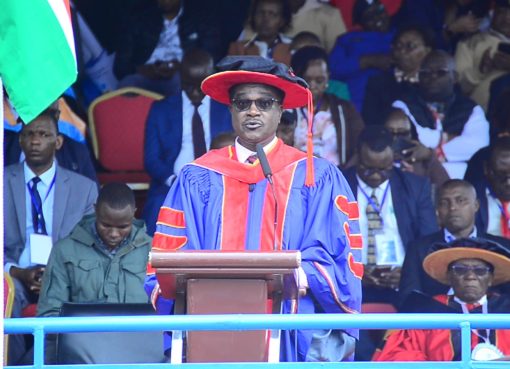
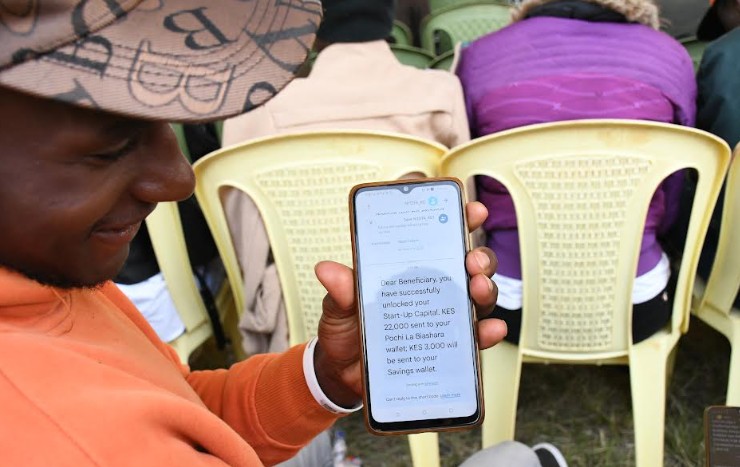
The announcement was made at the Kabiru-ini showground in Nyeri during the NYOTA start-up capital disbursement forum, presided over by President William Ruto. During the event, approximately 6,000 youth from the four counties received Sh22,000 of the total Sh50,000 start-up capital to start their businesses.
Additionally, Sh3,000 was deposited into their National Social Security Fund (NSSF) savings accounts.
The NYOTA programme is a flagship youth empowerment initiative jointly funded by the government and the World Bank. The five-year programme is valued at Sh5 billion and is nationally targeting 820,000 vulnerable and unemployed youth from 1,450 wards. Eligible applicants are aged 18-29 years, with the age limit extended to 35 for people with disabilities.
The programme is structured around three main pillars. The first, On-the-Job Experience, will place 90,000 youth with employers and artisans to gain work experience while receiving a Sh6,000 monthly stipend for six months.
The second component, Recognition of Prior Learning, will allow 20,000 youth to receive formal acknowledgement of skills acquired through informal training. In addition, 600,000 youth will be trained on how to participate in government procurement opportunities.
The third pillar, Business Support, aims to provide up to Sh50,000 in start-up capital to 100,000 youth to launch their own businesses.
The initiative also emphasises mentorship, business training, and market access support to improve business success rates.
Speaking at the forum, Youth, Creative Economy, and Sports Cabinet Secretary Salim Mvurya hailed the programme as a “game-changer” that addresses the unemployment crisis by offering financial support and policy incentives that promote self-employment and job creation.
Mvurya noted that, unlike previous youth initiatives, NYOTA has been redesigned to be transparent and technology-driven, making it easier to track and manage.
He congratulated the 6,000 beneficiaries from the four counties for taking the initiative to apply for the business support component, urging more youth to proactively take advantage of government opportunities.
“I want to assure the beneficiaries that all implementing agencies of the NYOTA programme are committed to ensuring accessibility so that youth can fully benefit. We will continue mobilising young people to participate in transforming Kenya into a first-world country,” Mvurya said.
The programme’s business waiver and support initiatives are expected to stimulate economic activity at the county level while fostering youth entrepreneurship.
By reducing start-up costs and providing market linkages, the counties aim to create a favourable business environment for young entrepreneurs.
The NYOTA programme, through its comprehensive approach of training, mentorship, and financial support, is designed to equip the youth with practical skills, access to capital, and opportunities to thrive in the formal economy. Officials believe that this model can significantly reduce youth unemployment while promoting sustainable local enterprise growth.
The forum in Nyeri not only marked the disbursement of start-up capital but also underscored the government’s commitment to youth empowerment, economic inclusion, and the development of a new generation of entrepreneurs capable of driving local and national growth.
By Wangari Mwangi and Samuel Maina