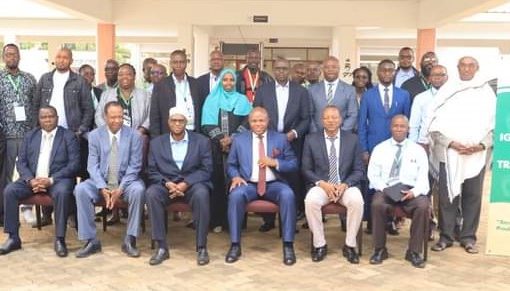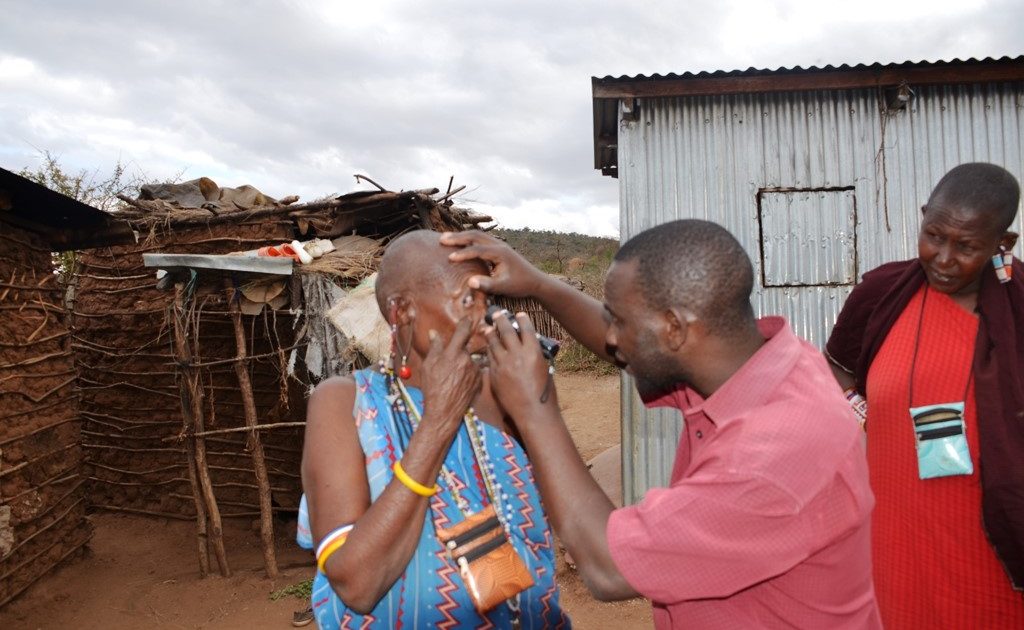
As the globe marked the annual World Sight Day, hundreds of Kajiado residents went home smiling after various stakeholders organised a free eye clinic in the county.
The free eye screening exercise held in Kajiado town, was funded by Operation Eyesight in partnership with the Kajiado County Department of Health, Christian Blind Mission (CBM) and Kajiado Referral Hospital.
Residents also got an opportunity to get tips on how best to manage their eye complications and on the importance of accessible and affordable eye care.
According to Susan Anjichi, an eye specialist with Operation Eyesight, cataracts account for about 33.2 per cent of all cases of visual impairment in the county, making it the leading cause of sight loss.
“Many people believe cataracts only affect the elderly, which is not true. This misconception prevents young people from seeking treatment,” said Anjichi.
She noted that while the Kajiado Referral Hospital now boasts a modern eye clinic complex, fear of surgery and long distances to eye care facilities continue to deter many residents from seeking help.
Anjichi commended the county government for allowing her organization to work closely with community health workers, who have been instrumental in mobilizing rural residents for screenings.
“Community health workers hold the trust of people in remote areas. Their involvement has greatly improved turnout during our outreach programmes,” she added.
Through the ongoing initiative, more than 700,000 residents have received eye check-ups, with over 1,500 cataract surgeries successfully restoring sight to patients.
“We’ve taken screenings to schools and villages to reach those who would otherwise go untreated. Apart from surgeries, we offer all other treatment options at the screening sites,” Anjichi said.
This year’s World Sight Day was marked under the theme “Affordable, Accessible, Available Eye Care for Everyone.”
For many residents, the event was a long-awaited opportunity to access specialised care.
Riton Ole Kanchori, a resident of Ildamat Ward, said he was grateful for the chance to have his eyes checked.
“With my age and other factors at play, my eyesight is not what it used to be. I’m glad I can explore treatment options here today,” he said.
Another resident, Japheth Kiilu from Saina, urged others to overcome the fear of discovering costly eye conditions.
“Many people avoid screenings because they fear finding out they need expensive treatment like glasses. But it’s better to know and act early,” he said.
Globally, 1.1 billion people live with vision loss due to lack of access to eye care, according to the World Health Organization (WHO). Of these, 43.3 million are blind, while 295 million have moderate to severe vision impairment.
In Kenya, over 80 per cent of blindness is caused by curable and preventable conditions, yet 7.5 million people still lack access to quality eye care.
The Rapid Assessment of Avoidable Blindness (RAAB) 2024 survey shows that the country’s effective cataract surgical coverage stands at 50.7 per cent, while refractive error coverage remains low at 6.2 per cent, a reminder that many Kenyans are still unable to access the vision care they need.
Health officials say visual impairment remains a growing concern in Kajiado, with one in every seven people aged 50 and above, living with some form of sight problem, and two in every 1,000 residents completely blind.
Experts attribute the high cases to the county’s dry, dusty environment and close interaction between humans and livestock, conditions that promote the spread of trachoma, a bacterial infection that affects the eye conjunctiva.
by Lauryn Nailantei