Amid the bustle of Kericho town, where motorbikes weave through traffic and traders’ voices rise in a constant hum, a steady clang of metal rings out from a small workshop, almost lost in the noise. But it signals something powerful.
At just 19, Stephen Ochieng is carving out a future from what others throw away, transforming scrap metal into sturdy, energy-efficient jikos. These stoves do more than cook meals, they keep his ambition burning.
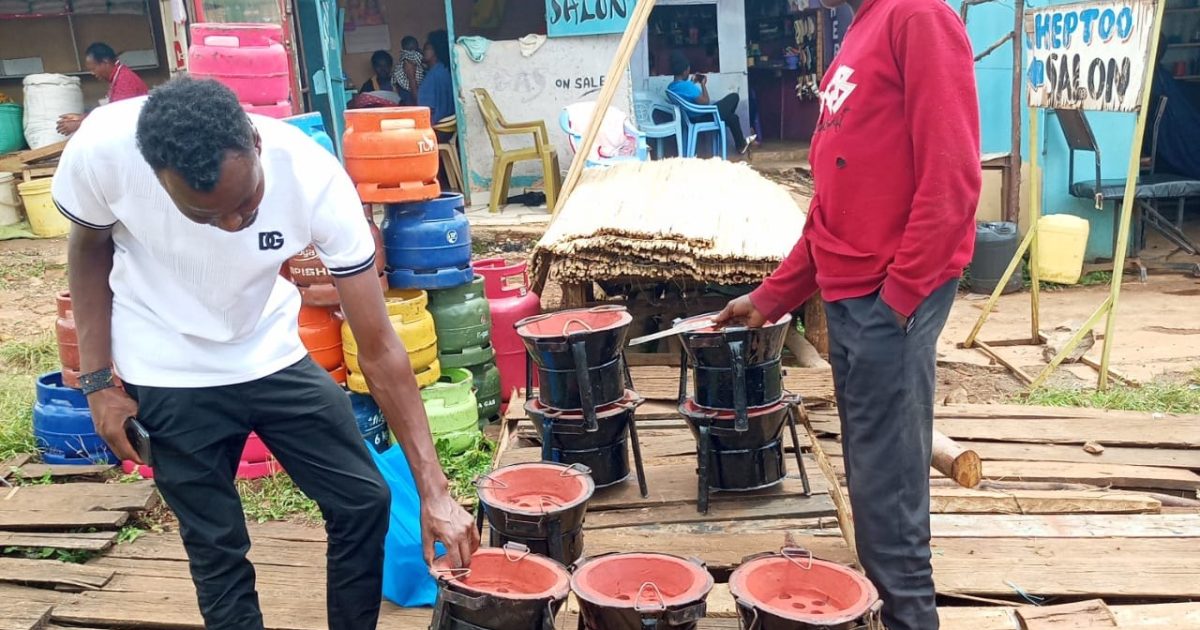
From a humble roadside shed made of timber and tin, Stephen crafts each stove with remarkable precision and care. What begins as rusted scrap is reshaped, relined with clay, and reborn as a functional, fuel-efficient cooking stove. It is honest, difficult work, but for Stephen, it is a lifeline.
“I started this work because I needed to survive,” he says, gripping a hot piece of molded metal. “I couldn’t just sit and wait for someone to help me.”
Stephen’s journey began with quiet observation. As a teenager, he spent countless hours watching a local artisan build jikos, absorbing every detail. Eventually, his curiosity and persistence earned him a chance to hold the hammer himself.
“That was the moment I knew I could do this,” he recalls with a quiet smile.
Now, he produces up to five stoves a week, selling each between Sh200 and Sh300 depending on size and design. His customers are largely women, market vendors and small-scale food stall owners, who appreciate the efficiency and durability of his stoves.
“Most of them tell me my stoves last longer and use less charcoal. That tells me I’m doing something right,” he says.
His stoves feature a unique clay lining that retains heat for longer, reducing charcoal usage and speeding up cooking time. It is an innovation that has made his product stand out.
“I want to help people spend less on fuel and more on their families,” he adds.
A typical day for Stephen begins before sunrise. With a handcart, he makes his way through town collecting scrap from garages and construction sites, then stops by a nearby river to dig clay for the linings. From there, it is hours of welding, cutting, molding, and painting in his small shed, often working late into the evening.
“Sometimes I work until dark, but I don’t mind. This is mine. I built this,” he says.
Still, challenges remain. Working with basic tools limits how many stoves he can produce and how much he can grow.
“If I had better equipment, I could train others and increase production,” he notes. “There are so many young people like me who have no jobs, no one to guide them. I want to change that.”
Stephen dreams of opening a fully equipped workshop where he could teach others metalwork and clay molding, practical skills that offer real income and dignity.
“If I can help even one or two people build a better life, that would mean everything to me,” he says.
While he has received encouragement from locals and admiration from a few seasoned artisans, meaningful support remains out of reach. Still, he remains undeterred.
“Even if no one helps, I’ll keep going. This is more than just work to me. It’s my future,” he says.
He vividly remembers his first sale, to a woman who ran a small café in the neighbourhood. Three months later, she returned to say the stove was still working like new.
“That gave me the confidence to keep going,” he recalls.
Though his hands are worn and his clothes often streaked with clay and soot, Stephen’s eyes shine with purpose. He does not envy peers waiting for white-collar jobs. For him, dignity lies in creation, shaping something with his hands that feeds families, saves money, and sparks opportunity.
Stephen Ochieng’s journey is a powerful reminder that innovation does not always come from high-tech labs or big investments. Sometimes, it starts with scrap, a hammer, and the determination to build a better life one stove at a time.
As the sun dips behind the Kericho hills, casting golden light across corrugated rooftops and swirling smoke, Stephen is still at work. Each clang of his hammer strikes a note in a larger rhythm, one of resilience, hope, and a young man forging a future from what others throw away.
By Gilbert Mutai