Governments in the region can use Political Economy and Policy Analysis (PEPA.AI) as a digital tool to help them quickly generate policies that can be used in implementing Climate-Smart Agriculture (CSA) technologies
A user can use PEPA.AI to define a policy issue, such as low crop yields in a specific region, and then use the tool to analyze the political and economic factors that may be contributing to the problem and suggest potential solutions to improve the situation.
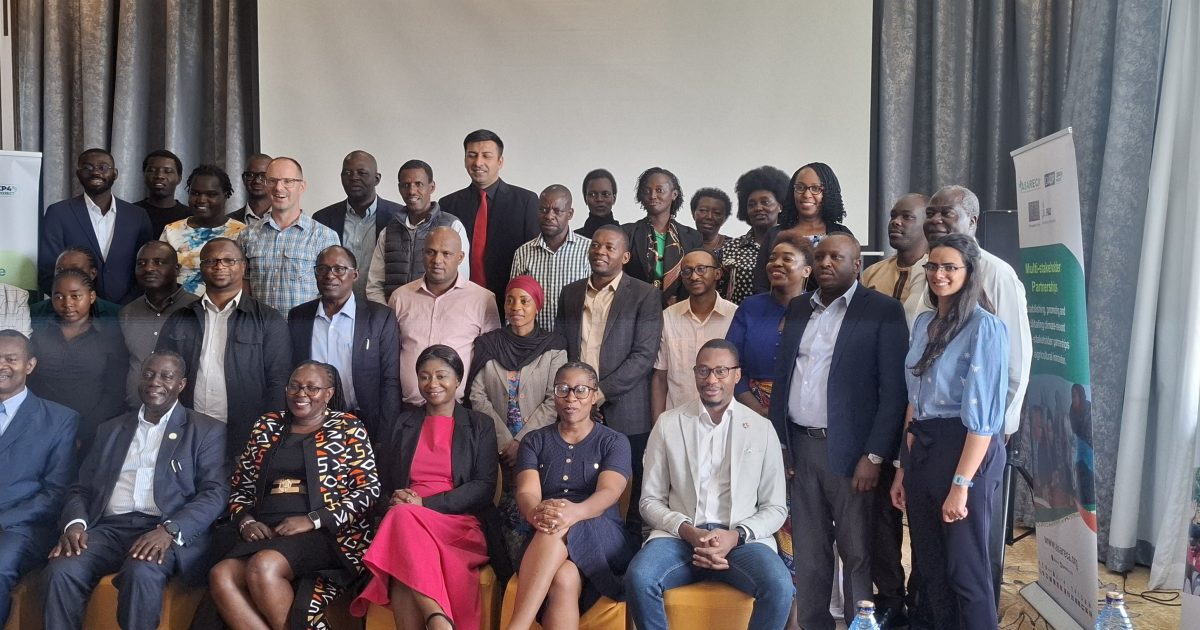
Speaking during a training for scientists and experts from National Agricultural Research and Extension Systems (NARES) from Association for Strengthening Agricultural Research in Eastern and Central Africa (ASARECA) member countries in Nairobi, Executive Director of ASARECA, Dr. Sylvester Baguma, said that the PEPA.AI tool will see increased use of climate foresight data by decision makers to enhance climate adaptation and build reliance on African agriculture.
“We are used to a situation whereby we spend a lot of time cracking data to write something, but here with the use of Pepper AI, we can quickly generate relevant policies and look at institutional mechanisms for implementing climate-smart agriculture technologies within a little time,” he explained.
Dr. Baguma said that the training of the stakeholders from the 15 member countries of ASARECA to use the power behind the PEPA. AI tools could not have come at a better time, as experts can now use the training they undergo to reach farmers, who in turn can produce sustainably and have resilient agri-food systems.
“We are going to intensify technology promotion and innovation in programs that we have to be able to promote technologies within the member states and even beyond, and this is by easily utilizing information available to make us stronger in AI tools,” he said.
As ASARECA, Dr. Baguma said they will be looking at strengthening the use of AI-driven digital tools to make work easier for researchers. enhance their digital literacy, accelerate the adoption to improve decision-making, and also enhance the capacity of stakeholders to interpret climate data visualizations.
Dr. Jonathan Mockshell, a senior scientist in agrifood system and policy from Alliance Biodiversity-CIAT, said the biggest challenge affecting the region currently is the potential to increase the adoption of regenerative agroecological practices.
“These practices are developed to increase productivity but also to reach the last mile of farmers in different areas, but we see a gap in these innovations often being developed and scaled out in different places, but also the institutional arrangements, the governance, the policies, and insights and finance mechanisms to support the increase in adoption of these practices are often limited,” he added.
Dr. Mockshell said that they have developed the PEPA.AI tool, which is based on an artificial intelligence-backed model, to increase the generation of insights in a very rapid manner that helps to determine the enabling environment factors for increasing adoption and scaling out of agroecological practices to support farmers to increase productivity and yield in different parts of the world.
“With this tool you are able to generate insights in a very rapid manner that feed into decision-making, unlike in traditional approaches where you need a lot of time,” he added
Researchers and stakeholders trained in the PEPA.AI tool, Dr. Mockshell said, will be able to determine which practices are important, the policies, and the enabling environmental factors that will help in the adoption of the practices and thus support farmers in making better decisions with regard to the Climate Smart Agriculture (CSA) practices in different areas that the tool is relevant for.
“With this tool we have developed currently, we are starting a new form of partnership to work with national stakeholders, but also to work with farmers in different counties and sub-counties, and what we want to do now is for this tool to be able to reach decision makers across different countries and use the tool to create a platform that will serve as a network with which we are able to scale the use of the tool, but also to scale out the use of evidence-basedscaling out of innovation,” Dr. Mockshell said.
Executive Director for Agribusiness for African Markets Lydia Kimani said that with the speed at which one can generate policy briefs with PEPA AI and get the data they want, problems affecting farmers can be easily addressed, especially now that climate change is real.
“We want to use Pepper AI to generate relevant policy briefs to deal with climate change and variability, so that our farmers are given the right information by the policy makers and the right decisions are made that will benefit them,” she said
Joab Osumba, Agriculture Policy and Resource Mobilization Lead Adaptation, a consortium of state and non-state actors that support the government on policy issues for climate change adaptation and devolve climate finance on community-based resilience programming aid the PEPA. AI tools will see more information and help them move faster and cut down on time compared to what they have been used to, which is the normal analog way of looking for information.
ASARECA is a Sub- Regional Inter-Governmental Organization of the National Agricultural Research and Extension Systems (NARES) of 15 Member States, Kenya being one of them, that implements institutional capital to implement Agricultural Research for Development initiatives in Eastern and Central Africa (ECA).
By Wangari Ndirangu