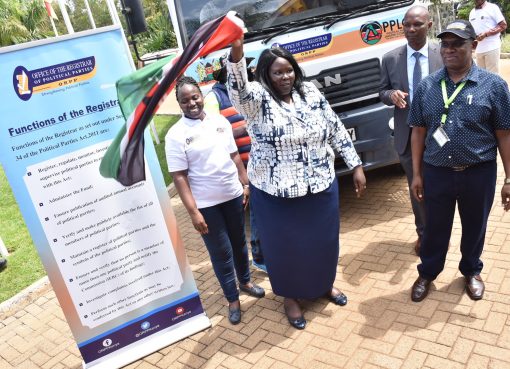
Kwale residents are embracing the Community Forest Association (CFA) model to promote forest conservation and improve livelihoods following the launch of the Gonja Forest CFA in partnership with Plan International Kenya and the Kenya Forest Service (KFS).
The initiative brings together community members and government agencies under a participatory forest management framework aimed at promoting sustainable use of forest resources.
Residents say the formation of the CFA has already begun to transform their relationship with the forest and with conservation authorities.
Priscillah Mueni, a member of Mwalewa Umoja Community-Based Organization and a regenerative agriculture trainer under Plan International Kenya, said the initiative has empowered the community to take an active role in forest management.
“Initially, we saw KFS officers as enemies, but now we understand they are our partners. We will work together to protect our forests so that future generations can benefit from it,” she said.
Mueni noted that community members have received training on tree planting, environmental conservation, and alternative livelihood options.
“We have also been sensitized on beekeeping within the forest. Honey has a ready market and good prices, which will encourage us to plant more trees so that bees can thrive,” she added.
She said the CFA framework allows regulated access to forest resources, helping to reduce destructive practices.
“In the past, we mainly used the forest for grazing, which contributed to its degradation. Now, as CFA members, we can harvest grass in a controlled way, and even sell it to others,” she explained.
Laban Nyundo, a resident of Gonja, said the forest had previously faced pressure from illegal logging, charcoal burning, and uncontrolled access.
“Through Plan International Kenya, we have received education on the importance of the forest. We now understand that it provides clean air, supports our health, and can also generate income if properly managed,” he said.
Nyundo added that the CFA structure will support income-generating activities such as beekeeping, regulated firewood collection, butterfly farming, and harvesting of herbal products and grass.
“We thank Plan International Kenya and KFS for enabling us as a community to participate in managing this forest and improving our livelihoods,” he said.
George Otim County Director Plan International Kenya noted that the programme includes capacity-building initiatives on social issues, including women’s and children’s rights, with a focus on empowering local groups economically.
The CFA model reflects Kenya’s broader approach to participatory forest management, where communities collaborate with government institutions to conserve forests while benefiting from them sustainably.
The Gonja Forest initiative is expected to contribute to environmental conservation while supporting household incomes through sustainable resource use.
By Chari Suche