Following the President’s assent to eight Bills passed by the National Assembly on October 15, 2025, the Government has moved swiftly to address public concerns and clarify timelines related to the legislative process.
The Government has assured Kenyans that the assent was meant to ensure the continuity of government business and compliance with constitutional and international obligations.
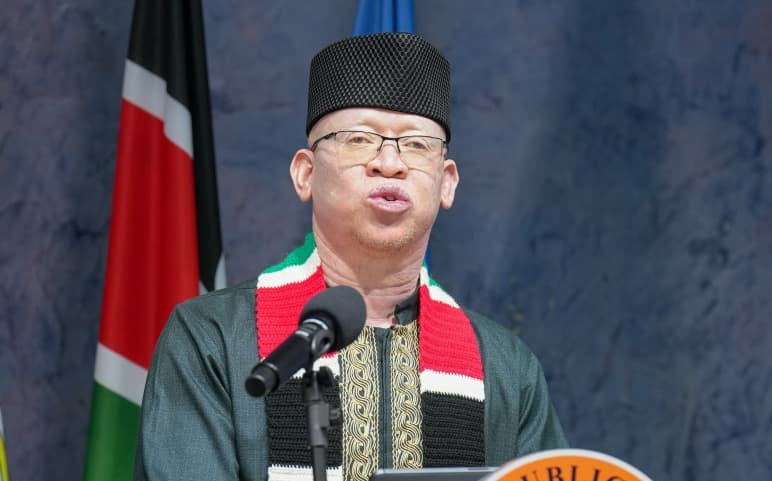
Government Spokesperson Dr Isaac Mwaura explained that the presentation of the Bills for assent was carefully scheduled and pre-arranged to adhere to strict constitutional, statutory, and procedural timelines, as well as Kenya’s international commitments.
The eight Bills assented to include The Computer Misuse and Cybercrimes (Amendment) Act, The Wildlife Conservation Management (Amendment) Act, The National Police Service Commission (Amendment) Act, The Land (Amendment) Act, The National Land Commission (Amendment) Act, The Air Passenger Service Charge (Amendment) Act, The Virtual Asset Service Providers Act and The Privatisation Act.
Addressing concerns over the Computer Misuse and Cybercrimes (Amendment) Act, Dr Mwaura reassured the public that the amendments do not curtail freedom of expression or grant unchecked power to government agencies to silence dissent. Instead, the changes bolster Kenya’s ability to combat growing online threats such as child pornography, terrorism propaganda, cyber harassment, identity theft, and financial fraud.
He highlighted that the National Computer Cybercrimes Coordination Committee’s power to render websites or applications inaccessible is contingent upon proof that these platforms promote unlawful activities. Furthermore, any such directives are subject to judicial review under Articles 47 and 50 of the Constitution.
“This approach aligns with international best practices, where governments have enacted similar frameworks to protect citizens, especially children, from harmful and extremist content,” Dr Mwaura noted.
He reaffirmed that the freedoms of expression and media enshrined in Articles 33 and 34 of the Constitution remain intact, limited only by lawful restrictions aimed at protecting national security, public safety, and morality.
Regarding the Wildlife Conservation Management (Amendment) Act, the Government spokesperson revealed that the law broadens the compensation framework for communities living near marine areas. It now includes attacks by sharks, whales, stingrays, and stonefish as compensable incidents. This measure seeks to ensure fair treatment of coastal communities and strengthen the link between conservation efforts and community welfare.
In response to criticisms that the new Privatisation Act allows the Executive to sell public assets unchecked, Dr Mwaura emphasised that the law actually enhances oversight and accountability. The Act mandates that any sale of government assets or State Corporation shareholdings must first receive approval from both the Cabinet and the National Assembly.
He added that the Act introduces several layers of scrutiny, including mandatory publication of proposed privatisation methods such as Initial Public Offers (IPOs) or preemptive rights, thereby ensuring transparency and preventing unilateral disposal of national assets.
The 2025 Privatisation Act replaces the 2023 version, which was declared unconstitutional by the High Court for insufficient public participation. The new framework addresses this issue comprehensively by incorporating public feedback and reinforcing Kenya’s international commitments to sound fiscal management, efficiency, and accountability in public enterprises.
Dr Mwaura also spoke about the Land (Amendment) Act and the National Land Commission (Amendment) Act, both designed to protect public land. The Land (Amendment) Act requires the Chief Land Registrar to register and gazette all public land allocated to public bodies or set aside by developers for schools, hospitals, and other community amenities. This measure aims to prevent land grabbing and misuse of land designated for public benefit.
Similarly, the National Land Commission (Amendment) Act is intended to reopen the window for addressing historical land injustices. It empowers the Commission to review past land allocations and facilitate fair settlement, particularly for landless communities.
On the National Police Service Commission (Amendment) Act, Dr Mwaura described it as a response to growing concerns about police officers’ mental health. The law mandates the establishment of counselling and psychosocial support units in all counties for both uniformed and civilian police personnel. This initiative aims to reduce cases of self-harm and improve well-being among officers, reinforcing the human security pillar of national development.
He further noted that the Air Passenger Service Charge (Amendment) Act aligns with the ongoing merger of the Tourism Promotion Fund and the Tourism Fund. By eliminating duplication and improving efficiency in the use of tourism levies, the government can better channel resources into tourism development projects.
Regarding the Virtual Asset Service Providers Act, Dr Mwaura stated that the law establishes Kenya’s first comprehensive regulatory framework for virtual assets and cryptocurrencies. This positions the country as a regional leader in financial innovation while safeguarding consumers against fraud, money laundering, and terrorism financing.
The law also responds to Financial Action Task Force (FATF) recommendations to remove Kenya from its ‘grey list’ by improving compliance with international anti-money laundering standards.
On the procedural timeline, Dr Mwaura maintained that the assent of the eight Bills complied fully with constitutional and procedural requirements. Some Bills were even returned to Parliament with reservations under Article 115 of the Constitution, which allows the President to either assent to or refer a Bill back to Parliament for reconsideration, and were resubmitted within prescribed deadlines.
He confirmed that the Privatisation Act and the Virtual Asset Service Providers Act are crucial components of Kenya’s ongoing engagement with the International Monetary Fund (IMF) and other development partners, ensuring the country meets its national and international obligations on time.
Overall, Dr Mwaura reaffirmed that the Executive acted strictly within the law when granting assent under Article 115 of the Constitution. He emphasised that all Bills assented to were products of public submissions, parliamentary committee reviews, and debate, in full compliance with the Constitution.
He added that the President’s assent reflects the Government’s commitment to institutional strengthening, citizen protection, and economic modernisation, consistent with the Bottom-Up Economic Transformation Agenda (BETA) and Vision 2030.
“Let me affirm that no law will be used to suppress legitimate freedoms or to unlawfully alienate national assets. All actions remain subject to judicial oversight, constitutional safeguards, and the sovereign will of the Kenyan people,” Dr Mwaura reiterated.
By Michael Omondi