The government has launched the construction of 3,000 housing units for prison officers in a move aimed at improving their welfare and addressing longstanding accommodation challenges within correctional facilities across the country.
For many years, the Kenya Prisons Service has grappled with inadequate and poor housing conditions, forcing some officers, particularly new recruits, to seek accommodation outside prison facilities. This situation has not only strained officers financially but also affected their efficiency and morale while carrying out their duties.
The new housing initiative is part of a broader programme that seeks to construct a total of 28,000 housing units for prison officers in phases over the coming years. The project is being implemented through a partnership between the State Department for Correctional Services and the Ministry of Housing, with billions of shillings expected to be invested.
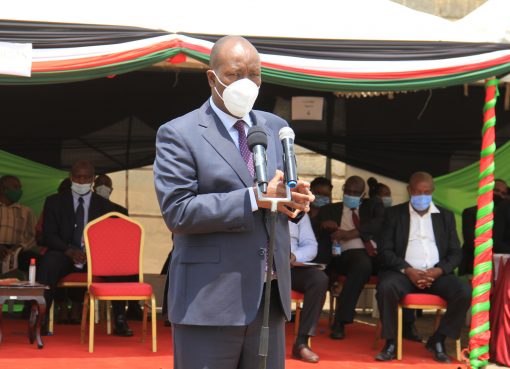
According to the Permanent Secretary for Correctional Services, Salome Beacco, the first phase of the project has already commenced and targets the delivery of 3,000 housing units. She noted that the programme is designed to ensure prison officers have access to decent and secure housing within or near their workplaces.
Beacco emphasized that improving living conditions for prison officers is a key priority for the government, as it directly contributes to enhanced service delivery within correctional institutions. She added that the initiative will also cater to newly recruited officers who often face difficulties securing accommodation.
In addition to the housing programme, the government is also working on improving the remuneration of prison officers. Beacco revealed that plans are underway to implement salary increments as recommended by the Maraga Taskforce, a move that has long been advocated for within the service.
At the same time, the State Department for Correctional Services has intensified efforts to decongest prisons. Through the President’s power of mercy, 4,950 petty offenders have already been released. This initiative is part of broader reforms aimed at reducing overcrowding in correctional facilities.
Further measures include the adoption of alternative dispute resolution mechanisms and crime prevention programmes. These initiatives are intended to reduce the number of offenders entering the prison system while promoting rehabilitation and reintegration into society.
The department has also expanded community outreach programmes targeting schools, churches, colleges, and local communities. These engagements are focused on educating young people about the consequences of crime and encouraging positive behavior. According to Beacco, the programmes are already yielding results, with a noticeable decline in the number of youths being sent to prison.
Currently, the Kenya Prisons Service operates 118 institutions, including 115 for adult offenders and three for youthful offenders. However, the prison population stands at over 54,000 inmates, far exceeding the official capacity of 20,000. This overcrowding has underscored the urgency of ongoing reforms within the sector.
Efforts by the Judiciary have also contributed to easing congestion. Through a Rapid Results Initiative implemented during the 2023/2024 financial year, courts reviewed 6,555 cases, resulting in 2,918 individuals being released under community service orders.
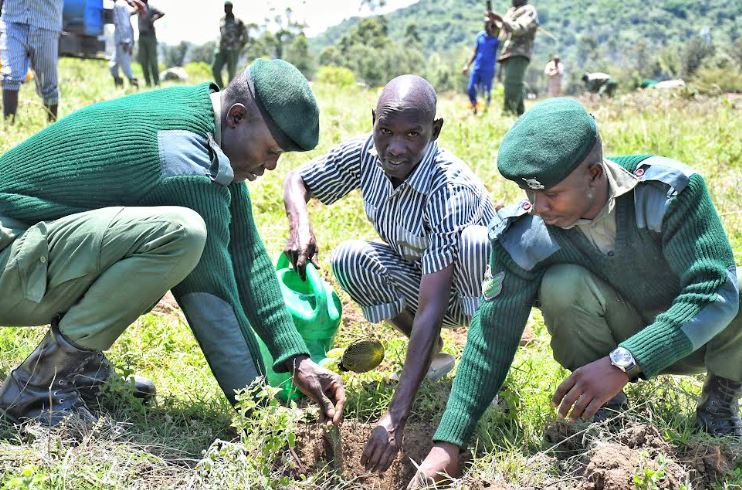
Meanwhile, the correctional services department is also supporting environmental conservation efforts. During a tree-planting exercise at Naivasha Medium Prison, over 7,000 trees were planted as part of a wider plan to achieve 30 percent tree cover in prisons.
Director of Prison Farms Patrick Kariri noted that the department aims to grow 20 million seedlings annually through 66 established tree nurseries. The long-term goal is to raise over 100 million seedlings to support the national target of planting 15 billion trees by 2032.
Captions
By Erastus Gichohi