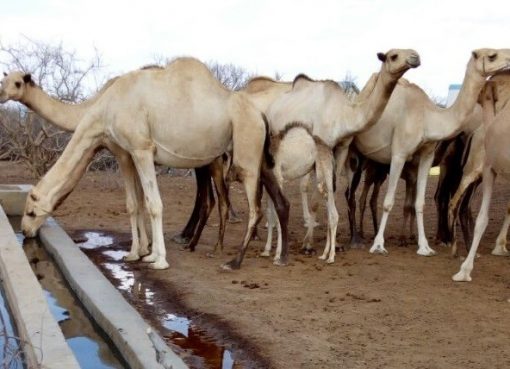
The government has reaffirmed its commitment to strengthening livestock production in Arid and Semi–Arid Land (ASAL) regions because the sector remains central to the country’s economy and livelihoods.
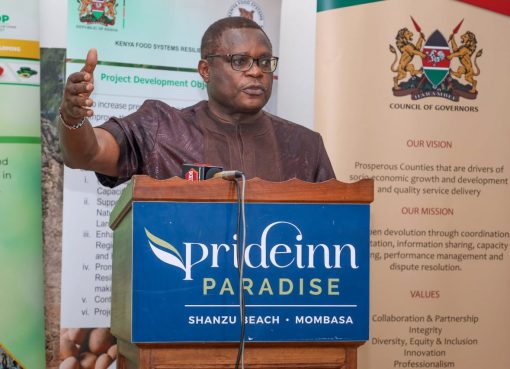
Speaking during the Livestock Training Institute (LTI) Wajir graduation ceremony, Agriculture Cabinet Secretary (CS) Mutahi Kagwe, in remarks delivered on his behalf by the Director of Livestock Production Dr. Bishar Elmi, congratulated the 2025 graduating class and commended the institution for advancing livestock training and community outreach.
“Livestock contributes about 12 percent of Kenya’s GDP and supports the livelihoods of nearly 10 million Kenyans, particularly in ASAL counties. Institutions like LTI Wajir are therefore central to building a sustainable and climate-resilient livestock sector,” Kagwe said.
The CS noted that the ministry is implementing programmes aimed at enhancing skills development and market competitiveness, including the Livestock Commercialization Programme, the National Livestock Identification and Traceability System, and modernization of livestock training facilities.
“The government will continue to support you through internships, extension programmes and opportunities under the TVET Agricultural Empowerment Initiative,” he told the graduates.
Dr. Elmi said the government is working on the second phase of the national livestock restocking programme, in addition to promoting disease control, pasture development, and export market access.
“Livestock is no longer just for subsistence. We want to convert it to a money economy. Targeted investments in feeds, genetics, disease control and export infrastructure will reposition the livestock sector as a strategic economic pillar,” he said.
The Dean of Principals Dr. Samuel Mugo assured that graduates have undergone standardized national examinations and are adequately prepared for professional practice.
“We are confident that the graduates we are releasing to the field today are well trained and will contribute effectively to livestock production and productivity,” Dr. Mugo said, while appealing for continued collaboration with county governments to absorb locally trained livestock professionals.
Kenya Livestock Commercialization Project (KELCOP) Livestock Production Specialist Dr. Augustus Kiema said the project has supported more than 200 trainees at the institution since 2023, including business and technical capacity-building.
“We are proud of your performance and commitment. The project will continue to support you through internships, entrepreneurship grants and provision of animal health kits to encourage self-employment,” Dr. Kiema said.
Kenya Veterinary Board Director of Compliance, Enforcement and Market Surveillance Dr. Benson Kibore reminded graduates to register with the board before deployment for internship.
“Your internship is a supervised practice period, not a license to practice independently. Compliance with the Veterinary Surgeon and Paraprofessionals Act and the Code of Ethics will guide your professional conduct,” Dr. Kibore said.
Speaking during the ceremony, LTI Wajir Principal Ms Josephine Njogu congratulated the graduating class, noting that the class comprised 69 certificate students, 12 of who upgraded from certificate to diploma, and 21 diploma graduates.
She said 84 of the graduates were sponsored by the Kenya Livestock Commercialisation Project from ten project counties and had received additional training in rangeland management, epidemiology, statistical analysis and leadership.
“These graduates are equipped with both theoretical and practical skills to support communities in improving livestock health, rangeland sustainability and value addition,” she said.
By Hamdi Buthul