The government through the Ministry of Culture, the Arts and Heritage intends to renovate and rehabilitate mausoleums in the western region in a bid to attract tourists to such historical sites.
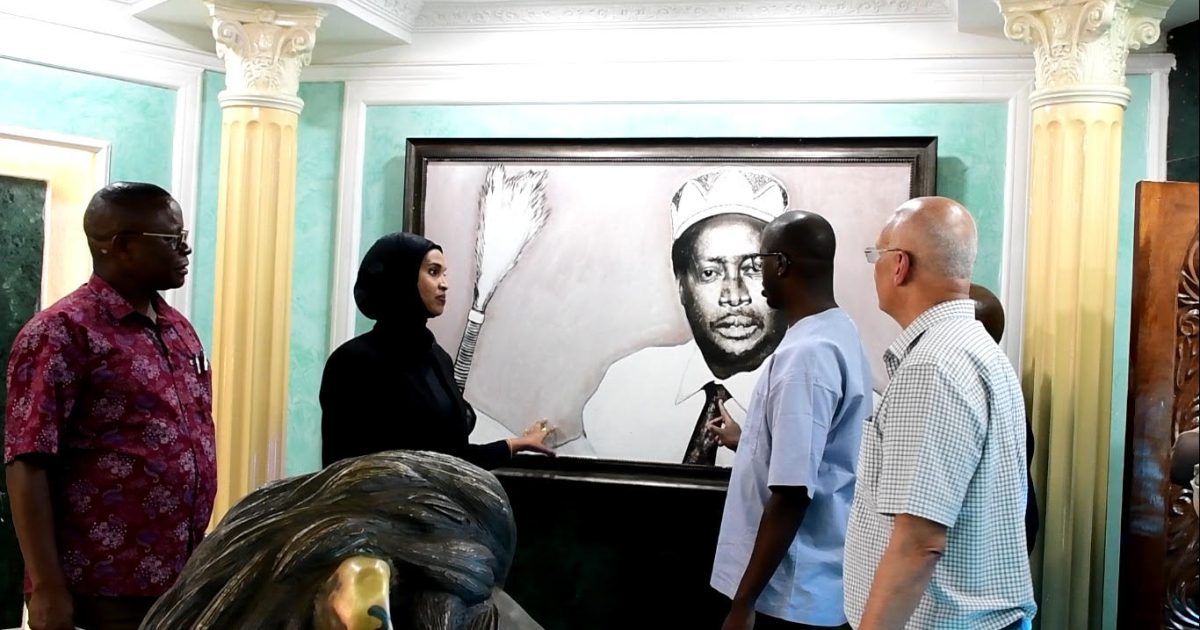
Speaking during a visit to Jaramogi Oginga Odinga Mausoleum in Bondo, Principal Secretary (PS) for the State Department for Culture, the Arts and Heritage Ummi Bashir said the government’s support to the mausoleums would be key to opening up the region economically on maters tourism.
Ummi disclosed that the tourism sector in the country has grown from 1.4 million to 2.5 million tourist annually over the last 3 years in the country and there is a growing need for diversification to tourist attraction options like the mausoleums to attract more visitors.
“Recently in Siaya the government refurbished Nabii Johanna Owalo Mausoleum which has so much to give in terms of religious tourism and today we are here at Jaramogi Mausoleum which is rich in culture and can promote cultural tourism,” said PS Ummi.
The PS, who was flanked by the Chairman of the National Museum of Kenya Mr. Edwin Abonyo, said that with the government’s support to the mausoleums, the country would not only safeguard its heritage but also create job opportunities for the youth.
She disclosed that the State Department was working closely with the family of Jaramogi Oginga Odinga to preserve and package accurate information about the life history about Kenya’s first Vice President and the heritage he left behind for future generations.
Abonyo revealed that the government has plans to put up mausoleums in honour of cultural heroes and heroines across the country not only to promote tourism but also preserve culture and heritage of the communities.
He urged country governments to take the leading role in ensuring cultures of the various communities is preserved amidst threats of globalization which may push other communities to abandon their culture.
“The mandate of museums is with the county governments. They have to use it for education of its people to preserve their culture and languages,” said Abonyo.
By Brian Ondeng