The government is set to promote community-driven wildlife conservation with a view to improving protection of the endangered species like the rhinos.
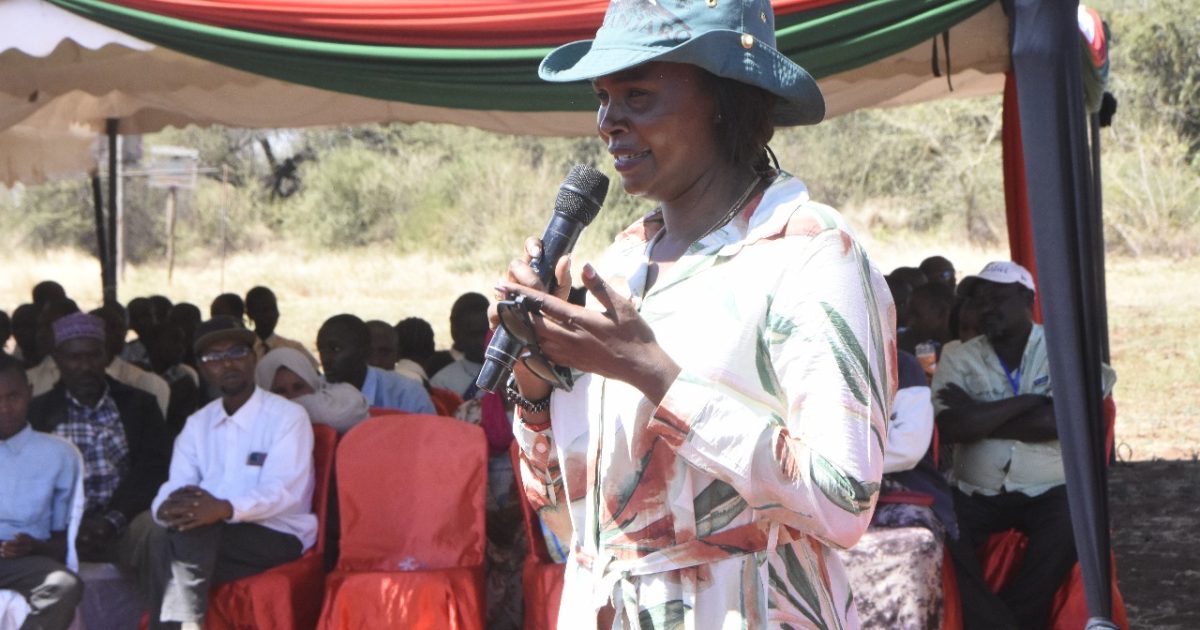
Speaking at the World Rhino Day during the national celebration in Isiolo County Monday, the Principal Secretary for Wildlife, Sylvia Museiya, said there was a great need to promote protection and ensure the number of threatened animals is increased.
She noted that communities that have wildlife conservation in their localities were reaping millions of money from tourism activities and encouraged more populations to establish attraction sites and opportunities that could benefit their people.
The event, held at Elsa Grounds in Burat Ward, Isiolo County, brought together crowds of school children, conservationists, and community members who turned out in large numbers to mark the day on September 22, 2025 whose theme for the year is “Standing Together for Rhino Conservation” in every rangeland.
Ms. Museiya noted that the national event was held in Isiolo so that the local community could be sensitized on the need to establish rhino sanctuaries in the area to tap foreign income like their neighbours from Laikipia, Samburu and Meru Counties.
“It is a pity that Isiolo has a very conducive environment for keeping rhinos yet no single rhino sanctuary is located in the entire county,” the PS observed.
She noted that communities living around Maasai Mara national reserve had a number of wildlife conservancies that earned an average of Sh45,000 per household in a month.
The PS, who represented her Cabinet Secretary Rebecca Miano, said that in the northern tourism circuit that had nearly all the rhino population in the country in early 1970s before the numbers nose-dived due to massive poaching, today has about 1,500 in three Counties of Laikipia, Meru and Samburu.
She noted that Isiolo, which had the highest number of the now endangered species in early 1970s, today has zero.
Most of the animals are found in electric-fenced private wildlife conservancies like Ol Pejeta in Laikipia while in Meru, they are found in the KWS managed Meru national park.
However, according to the PS, there is hope of the rhinos going back to their natural habitats and the community wildlife conservancies taking charge of the conservation of the rangelands.
She added that the government has set aside Sh52 million for compensating some of wildlife attack victims and the remaining ones would be compensated without any delay.
“This day reminds us that rhino conservation is not just about saving an animal. It is about safeguarding our environment and ensuring future generations inherit a living heritage,” she stated.
She said Samburu County had taken the lead by establishing the first such sanctuaries in East Africa when Sera was set up in 2015 with Sera, in partnership with Northern Rangelands Trust (NRT), benefiting from relocation of rhinos from the Lewa Downs Wildlife Conservancy and today has tourist lodges and game reserve where visitors watch on-foot rhino tracking.
“Laikipia has 28 conservancies and if you visit Illigwesi, the tourists who come there pay a lot of money just to watch the rhinos. The communities there benefit immensely from revenue generated from tourism,” she observed.
The PS said the Department of Wildlife was impressed by the successes in Laikipia and Samburu and was ready to support efforts of others who want to chart that path.
To protect the rare animals, Kenya was among the first to be signatory to the Convention on International Trade in Endangered Species of Wild Fauna and Flora (CITES).
Other protocols include the Lusaka Agreement on Cooperative Enforcement Operations Directed at Illegal Trade in Wild Fauna and Flora (LA) and the Convention on Migratory Species (CMS).
To domesticate the international conventions, Kenya came up with the Wildlife Conservation and Management Act, 2013 that provides among others a strong legal foundation for rhino conservation, setting up stringent enforcement measures against wildlife crime.
“To further strengthen conservation, Kenya is reviewing the Wildlife Act, now the Wildlife Bill 2025 which seeks to address emerging issues in wildlife conservation and align with the Wildlife Policy, 2020 and at the same time harmonizing Kenya’s obligations under CITES and CMS Conventions and Lusaka Agreement,” read part of CS Miano speech for the day.
According to the CS, more efforts would take place to have the conservation of the endangered species get down to the grassroots, with the Black Rhino Recovery and Action Plan aligned to expand the rhino range to areas where they were in the 1970s.
“We will continue sustaining and strengthening anti-poaching efforts, maintaining intensive and accurate rhino monitoring systems (ear notching, microchipping, DNA profiling), and mobilizing sustainable financing mechanisms to support rhino conservation in the long term by partnering with local communities,” the CS speech revealed.
According to the 2021 National Wildlife Census report, the country hosts 1,605 rhinos, ranking the country third in Africa behind South Africa and Namibia.
There are 853 black rhinos, 750 southern white rhinos and only two female northern white rhinos.
“This is as a result of concerted efforts undertaken by the government, partner states, conservationists and communities surrounding the wildlife reserves and sanctuaries,” stressed Miano.
The County Executive for Trade and Tourism Dr. Lawrence Mwongela urged the public to take pride in protecting rhinos, calling them a “symbol of heritage and natural balance”.
He revealed that the threats of poaching and habitat destruction in the past had led to loss of culture and economic benefits they were proud of.
He also urged the Kenya Wildlife Service (KWS) and conservancies to be vibrant in conservation fight since tourism activities alone contributed 70 per cent to the county’s revenue.
By David Nduro and Eussania Adhiambo