The government has urged farmers to adopt conservation agriculture practices in efforts to strengthen food security, while also urging maize farmers to release their harvested produce to the government for national reserves.
Speaking during a farmers’ field day at Sasumua Farm in Rumuruti, Laikipia County, Agriculture Principal Secretary Dr Paul Ronoh said the government’s food security strategy was firmly on track and already yielding positive results.
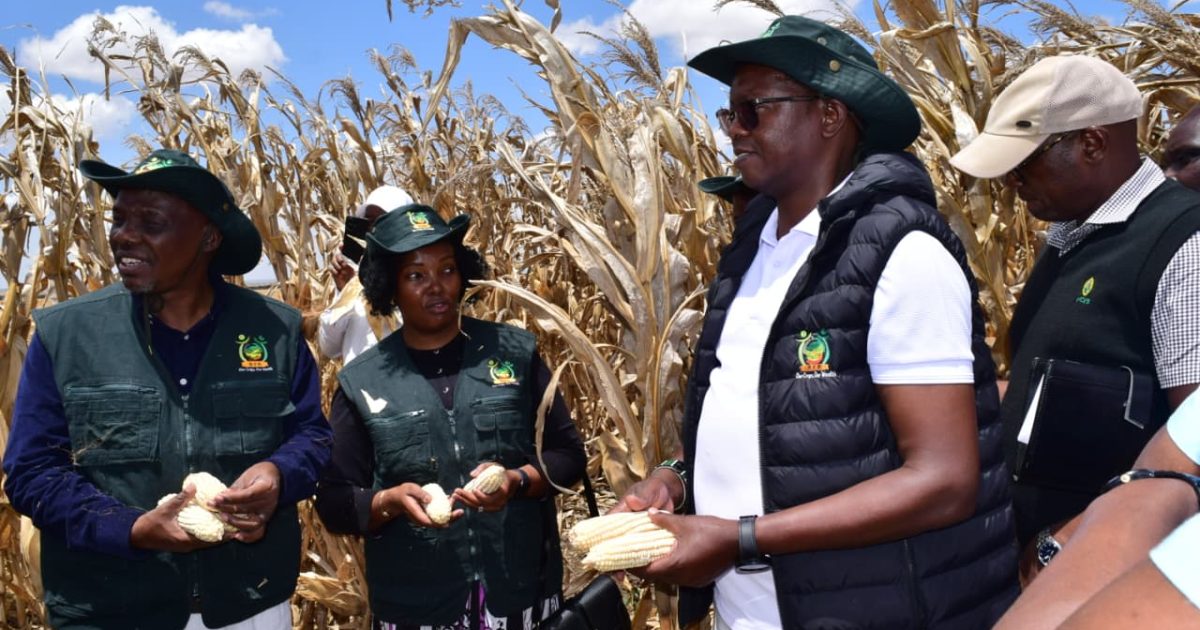
Dr Ronoh addressed more than 300 farmers who visited the private farm, which specialises in conservation agriculture, under the supervision of the Agriculture and Food Authority (AFA).
He said the visit was meant to expose farmers to modern, climate-smart farming methods that improve agricultural productivity and sustainability.
“Today we came with over 300 farmers and have seen the bigger scope of what the government is doing on food security. The plan the government has put in place is on the right track,” said PS Ronoh.
He noted that conservation agriculture, soil conservation, mechanisation and crop rotation were helping farmers increase yields while protecting soil health. In addition to the ongoing fertiliser subsidy programme, the government is partnering with private entities to expand the country’s food security basket.
The PS said demonstrations at the farm had shown farmers various opportunities, including improved post-harvest handling practices that can significantly reduce losses and boost national food supplies.
On maize production, Dr Ronoh said the country had made major gains, with output increasing from less than 40 million bags in 2022 to over 80 million bags per year.
Kenya’s annual maize consumption stands at approximately 62 million bags, creating a surplus that can be stored or exported.
To manage the surplus, the government has reopened National Cereals and Produce Board (NCPB) depots to purchase maize from farmers. He noted that the buying price had been increased from Sh3,500 to Sh4,000 per bag to ensure farmers receive better returns.
“We are asking farmers to release maize to the market and to the government so that we can stabilise prices and strengthen our reserves,” he said.
Wheat production was also highlighted as a critical area, with the government aiming to achieve economies of scale.
Currently, Kenya produces only about eight per cent of its wheat needs, with the remainder imported due to the crop’s large-scale production requirements.
PS Ronoh urged wheat farmers to deliver their produce to the NCPB, after which the Cereal Millers Association (CMA) would handle distribution to ensure farmers receive fair prices.
On rice, the PS said Kenya currently imports about 80 per cent of its consumption, producing only 20 per cent locally. However, he expressed optimism that improved soil conservation and climate-smart agriculture could significantly boost local rice production.
He also revealed that the government had invested heavily in sunflower production, distributing 500 tonnes of sunflower seeds for oil and fodder crops as part of efforts to reduce reliance on imported edible oils and fodder.
PS Ronoh emphasised that climate-smart agriculture initiatives, including those being piloted at farms such as Al Masior Farm, are key to building resilience against climate change and ensuring long-term food security.
Laikipia Woman Representative Jane Kagiri, who also spoke during the field day, lauded the Ministry of Agriculture for its focus on conservation farming, crop rotation and efficient harvest handling. She emphasised that Kenya’s economy remains anchored on agriculture and called for continued support to farmers to maximise productivity.
By Antony Mwangi